
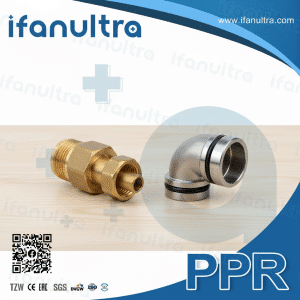
I once watched a plumber struggle with a compression fitting in a tight crawlspace, wishing he had brought his press tool instead. That moment highlighted how the right fitting choice transforms an installation.
Compression fittings create a seal by tightening a nut that compresses a ferrule or ring onto the pipe, while press fittings use a specialized electric tool to crimp the fitting onto the pipe with precise, calibrated force. The key difference lies in the installation method: compression fittings require only basic wrenches but need proper torque, while press fittings demand expensive tools but deliver consistent, fast results.
Understanding these differences helps you choose the right system for your specific project needs. Let’s examine each aspect in detail.
What Are the Key Differences in How Each Fitting Creates a Watertight Seal?
A leaky fitting can ruin an entire project. I’ve seen both types fail, but for very different reasons.
Compression fittings rely on mechanical force to deform a soft metal or plastic ring (ferrule) against the pipe and fitting body, creating a seal through compression. Press fittings use radial crimping force to permanently deform the fitting and pipe together, with an embedded O-ring providing the actual water seal. This fundamental difference affects everything from installation to long-term performance.
How Compression Fittings Work
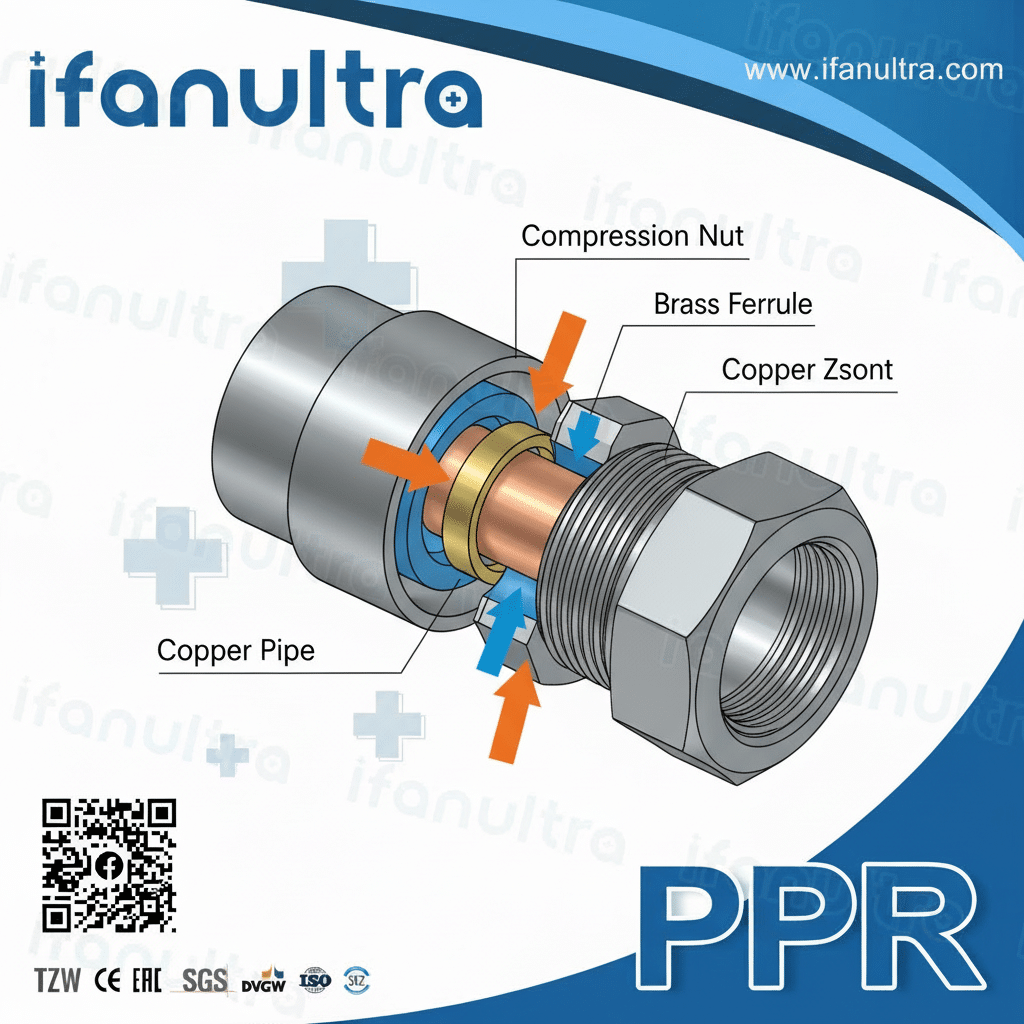
The compression fitting is an elegant mechanical solution. Its design includes three main components: the fitting body, a compression nut, and a ferrule (also called an olive or compression ring).
When you tighten the nut, it pushes the ferrule against a tapered seat in the fitting body. This action forces the ferrule to compress evenly around the pipe. The ferrule deforms slightly, biting into the pipe’s outer surface while simultaneously pressing against the fitting’s internal taper. This dual action creates the seal.
The materials matter significantly here. Common ferrule materials include:
| Ferrule Material | Characteristics | Best Applications |
|---|---|---|
| Brass | Strong, durable, provides good grip | Metal pipes, high-pressure systems |
| Copper | Softer, deforms easily, cost-effective | General plumbing, lower pressure |
| Stainless Steel | Corrosion-resistant, very strong | Aggressive water conditions |
| Polymer/Plastic | Non-corrosive, gentle on pipes | Plastic pipe systems, low pressure |
The seal quality depends heavily on proper installation. Too little torque and the fitting leaks. Too much torque and you can damage the ferrule or pipe.
How Press Fittings Work
Press fittings represent a more modern approach. They consist of a fitting body with a factory-installed O-ring inside a groove, plus a crimpable outer sleeve or profile.
The installation requires a specific press tool with interchangeable jaws that match the fitting size. When activated, the tool applies tremendous radial force, typically between 5 to 20 tons depending on size. This force permanently deforms the fitting’s outer sleeve, compressing it evenly around the pipe. The pipe itself also deforms slightly, creating a mechanical interlock.
Crucially, the O-ring provides the actual water seal. As the fitting compresses, it squeezes the O-ring tightly against the pipe’s outer surface. The O-ring fills any microscopic gaps and maintains constant pressure.
Visual Comparison of Seal Mechanisms
| Aspect | Compression Fitting | Press Fitting |
|---|---|---|
| Primary Seal | Deformed ferrule pressing on pipe | Compressed O-ring inside fitting |
| Installation Force | Manual torque on threaded nut | Hydraulic/electric radial crimping |
| Reusability | Can be disassembled and reused | Permanent, one-time installation |
| Seal Adjustment | Can tighten more if leaks occur | Cannot adjust after pressing |
The table shows a fundamental trade-off. Compression fittings offer adjustability and reuse, but they depend on the installer’s skill to achieve proper torque. Press fittings deliver consistent, factory-specified compression every time, but they commit you to a permanent connection.
Which Method Requires Less Specialized Tooling for Installation and Repairs?
Tool availability often determines whether a job proceeds smoothly or stops completely. I’ve learned this lesson the hard way on remote job sites.
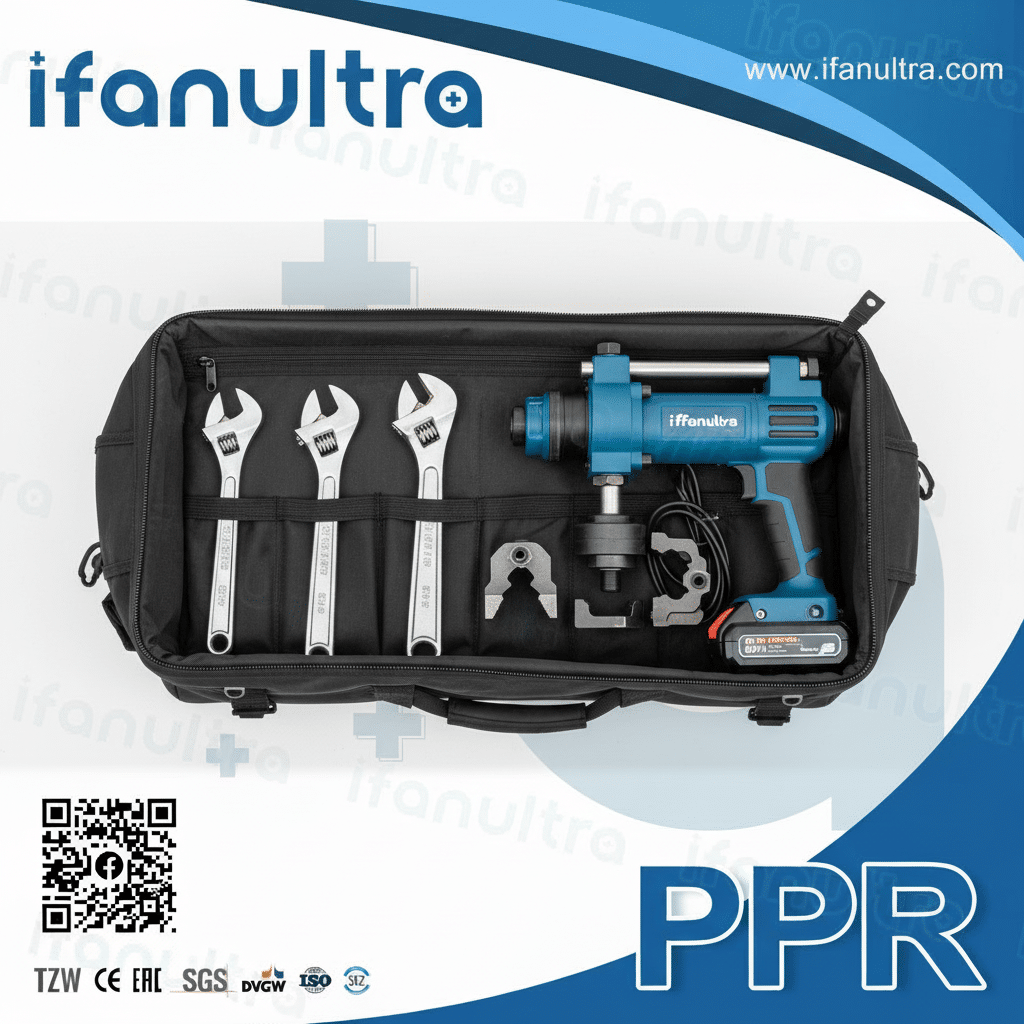
Compression fittings require minimal tooling—typically just adjustable wrenches or spanners—making them accessible for repairs and installations anywhere. Press fittings demand expensive, brand-specific electric or battery-powered tools that can cost thousands of dollars, creating a barrier for small jobs or emergency repairs.
The Tooling Reality for Compression Fittings
Compression fittings win the tooling simplicity contest hands-down. A basic toolkit for compression work includes:
- Adjustable wrenches (two of them)
- Coupe-tube (for clean cuts)
- Outil d'ébavurage (to remove sharp edges)
- PTFE tape or pipe joint compound (optional, for extra security)
That’s it. Any competent plumber already carries these items. For a homeowner doing a repair, they likely have wrenches in their garage already.
This simplicity creates significant advantages:
Emergency Repairs: If a pipe bursts at 2 AM, you can fix it with compression fittings without waiting for a tool supplier to open. This matters tremendously for facilities managers and maintenance teams.
Remote Locations: Job sites far from urban centers may lack access to specialized tool suppliers or replacement parts for press tools.
Incremental Investment: You can buy one fitting at a time without committing to a tool system. This makes compression fittings ideal for DIYers and small contractors.
Multiple Trades: The same wrenches work for countless other tasks. You’re not buying single-purpose equipment.
The Press Fitting Tool Investment
Press fittings tell a different story. The tooling requirement is substantial and brand-specific.
A typical press tool setup includes:
| Tool Component | Approximate Cost | Notes |
|---|---|---|
| Press Tool (Battery) | $2,000 – $4,000 | Includes charger and batteries |
| Press Tool (Corded) | $1,500 – $3,000 | Less portable but cheaper |
| Jaw Sets (per size) | $300 – $800 each | Need different jaws for each pipe size |
| Ring Sets (optional) | $200 – $500 | For certain fitting brands |
| Calibration Tool | $200 – $400 | For periodic tool verification |
| Carrying Case | $100 – $300 | For protection and organization |
A complete kit covering common sizes (½” to 2″) easily exceeds $5,000. And this investment locks you into one brand’s fitting system, since jaws are not interchangeable between manufacturers.
Practical Implications for Different Users
| User Type | Compression Fitting Suitability | Press Fitting Suitability |
|---|---|---|
| Homeowner/DIYer | Excellent – minimal tool cost | Poor – tool investment unjustified |
| Maintenance Technician | Good – can repair anywhere | Fair – if employer provides tools |
| Small Plumbing Contractor | Good – low overhead | Fair – significant upfront investment |
| Large Commercial Contractor | Fair – slower installation | Excellent – speed justifies tool cost |
| Emergency Service Provider | Excellent – works anytime | Poor – tools may not be available |
The decision often comes down to volume. If you install fittings daily, the press tool pays for itself through faster work. If you install occasionally, compression fittings make more financial sense.
How Do Compression and Press Fittings Compare in Long-Term Reliability?
Reliability determines whether a fitting becomes a permanent solution or a future problem. I’ve inspected both types after decades of service.
Both compression and press fittings can provide excellent long-term reliability when installed correctly and used within their design parameters. Compression fittings may require occasional re-tightening in thermal cycling applications but remain serviceable indefinitely. Press fittings offer exceptional vibration resistance and virtually zero maintenance needs, but failed press connections require cutting out and replacing the fitting entirely.
Compression Fitting Longevity Factors
Compression fittings have proven themselves over more than a century of use. Their track record is well-established.
Thermal Cycling Performance: One important consideration is how compression fittings respond to temperature changes. Pipes expand when hot and contract when cold. In systems with frequent temperature changes, the compression nut can gradually loosen. This explains why some compression fittings develop slow weeps years after installation. A simple quarter-turn with a wrench usually solves the problem.
Compatibilité des matériaux : The long-term success of a compression fitting depends heavily on material selection.
| Pipe Material | Ferrule Material | Long-Term Performance |
|---|---|---|
| Copper | Brass | Excellent – compatible metals, minimal galvanic corrosion |
| Copper | Copper | Very good – same metal, but copper work-hardens over time |
| PEX | Brass with insert | Good – requires proper support, insert prevents crushing |
| Stainless Steel | Stainless Steel | Excellent – identical materials, no corrosion concerns |
| CPVC | Polymer | Good – material match, but careful torque required |
Vibration Resistance: Compression fittings handle moderate vibration reasonably well. However, severe or constant vibration can cause the nut to loosen gradually. Anti-vibration locknuts or thread-locking compounds help in these applications.
Corrosion Considerations: The exposed threads on compression fittings can corrode in aggressive environments. Stainless steel or plastic options address this concern for harsh conditions.
Press Fitting Longevity Factors
Press fittings offer different reliability characteristics based on their permanent, non-adjustable nature.
Seal Consistency: The factory-controlled press cycle ensures every connection receives identical compression. This eliminates the human variable of “how tight is tight enough.” The O-ring compresses to the exact specification every time.
Vibration Superiority: Press fittings excel in vibration-prone applications. The mechanical interlock between fitting and pipe resists loosening far better than threaded connections. This makes them preferred for commercial HVAC, industrial processes, and equipment connections.
Zero Maintenance: Once pressed, these fittings require no attention. They don’t need re-tightening or adjustment. This “fit and forget” characteristic appeals to facility owners who want minimal ongoing maintenance.
The Repair Reality: The main reliability trade-off involves failure modes. If a press fitting fails (rare, but possible from improper pressing or damaged O-ring), you cannot repair it. You must cut the pipe and install a new fitting. This contrasts with compression fittings, where you can simply tighten or replace the ferrule.
Comparative Reliability Summary
| Reliability Factor | Compression Fitting | Press Fitting |
|---|---|---|
| Initial Installation Success | Depends on installer skill | Consistent, tool-controlled |
| Thermal Cycling Effect | May require occasional re-tightening | No effect, permanent deformation |
| Vibration Resistance | Good, but can loosen over time | Excellent, mechanical lock prevents loosening |
| Repairability | Easy – can tighten or replace ferrule | Difficult – must cut out and replace |
| Lifespan Expectancy | 50+ years with proper installation | 50+ years with proper installation |
The right choice depends on your priority. If you want maximum reliability with easy repairability, compression fittings serve well. If you want total peace of mind with zero maintenance, press fittings deliver.
What Are the Cost Implications for Materials and Labor Between the Two?
Cost drives many purchasing decisions, but the cheapest option upfront rarely proves cheapest overall. I’ve helped clients analyze this many times.
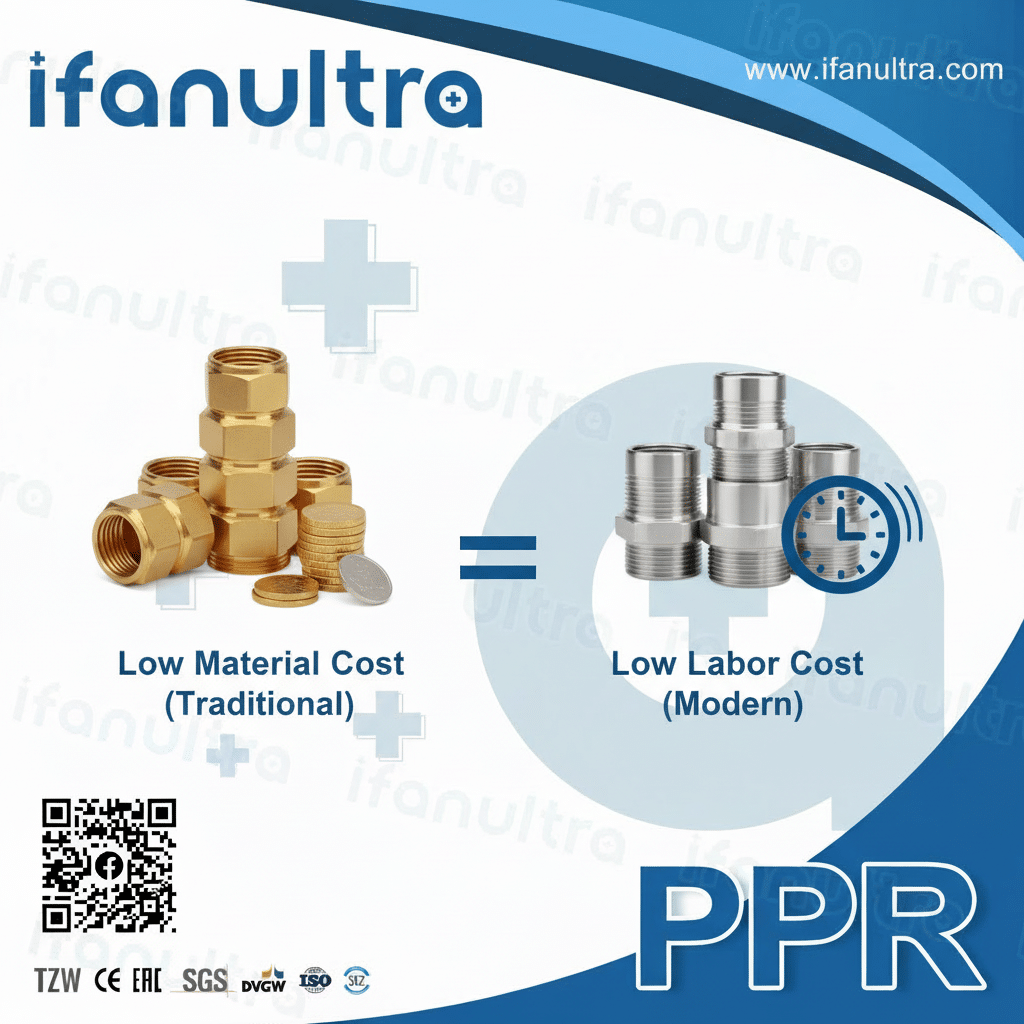
Compression fittings typically have lower material costs than press fittings, but their labor costs run higher due to slower installation times. Press fittings cost more per unit and require significant tool investment, but their lightning-fast installation dramatically reduces labor costs on larger projects. The break-even point usually occurs around 50-100 fittings, depending on local labor rates.
Breaking Down Material Costs
Let’s examine typical costs for comparable fittings in the ½-inch to ¾-inch range commonly used in residential and light commercial work.
| Fitting Type | Compression Fitting Cost | Press Fitting Cost | Difference |
|---|---|---|---|
| Coupling | $3 – $8 | $5 – $12 | Press 50-70% higher |
| Coude à 90 | $4 – $10 | $6 – $15 | Press 50-80% higher |
| Tee | $6 – $15 | $9 – $22 | Press 50-70% higher |
| Adapter | $5 – $12 | $8 – $18 | Press 60-80% higher |
| Valve | $12 – $30 | $15 – $40 | Press 25-35% higher |
The numbers show press fittings consistently cost more. However, material cost alone tells only part of the story.
Labor Cost Comparison
Here’s where the equation shifts dramatically. Installation times differ significantly:
| Task | Compression Fitting Time | Press Fitting Time |
|---|---|---|
| Prepare pipe (cut, deburr) | 30-60 seconds | 30-60 seconds |
| Disassemble fitting | 10-20 seconds | Not applicable |
| Slide nut and ferrule | 15-30 seconds | Not applicable |
| Assemble and tighten | 45-90 seconds | Not applicable |
| Press operation | Not applicable | 5-15 seconds |
| Total per fitting | 100-200 seconds | 35-75 seconds |
At a typical plumber’s labor rate of $75-$150 per hour, these time differences add up fast.
Example Calculation for 100 Fittings:
- Compression: 150 seconds average × 100 = 15,000 seconds = 4.17 hours
- Press: 55 seconds average × 100 = 5,500 seconds = 1.53 hours
- Labor savings with press = 2.64 hours × $100/hour = $264
Now add the tool cost amortization. If the press tool costs $4,000 and serves for 5,000 fittings over its life, each fitting carries $0.80 in tool cost. The 100 fittings in our example carry $80 in tool amortization.
Total Cost Analysis for Different Project Sizes
| Project Size | Compression Total Cost | Press Total Cost | More Economical Choice |
|---|---|---|---|
| Small (10 fittings) | Materials: $80 + Labor: $40 = $120 | Materials: $120 + Labor: $15 = $135 | Compression |
| Medium (100 fittings) | Materials: $800 + Labor: $400 = $1,200 | Materials: $1,200 + Labor: $150 + Tool amortization: $80 = $1,430 | Compression |
| Large (500 fittings) | Materials: $4,000 + Labor: $2,000 = $6,000 | Materials: $6,000 + Labor: $750 + Tool amortization: $400 = $7,150 | Compression |
| Very Large (2,000 fittings) | Materials: $16,000 + Labor: $8,000 = $24,000 | Materials: $24,000 + Labor: $3,000 + Tool amortization: $1,600 = $28,600 | Compression |
Wait, this analysis shows compression fittings winning on cost across all project sizes. But this assumes the contractor already owns the press tool. Let’s adjust for contractors who already own the equipment.
| Scénario | Compression Cost | Press Cost (Tool Already Owned) | Winner |
|---|---|---|---|
| Small Project (10 fittings) | $120 | $135 | Compression |
| Medium Project (100 fittings) | $1,200 | $1,350 | Compression |
| Large Project (500 fittings) | $6,000 | $6,750 | Compression |
| Very Large (2,000 fittings) | $24,000 | $27,000 | Compression |
Even with tool cost sunk, compression still appears cheaper. Why do contractors choose press fittings then?
Hidden Factors Beyond Simple Math
The analysis reveals something important: pure cost isn’t the only driver. Other factors include:
Speed Enables More Jobs: A contractor who finishes 500 fittings in 13 hours instead of 34 hours can take on another job that same week. This revenue opportunity often outweighs material savings.
Schedule Certainty: Building owners often pay premiums for faster completion. Getting a system operational days earlier has real value.
Labor Availability: Finding skilled plumbers grows harder every year. Press fittings let less experienced workers make reliable connections.
Inspection and Liability: Consistent press connections reduce callback risk. One callback service call can wipe out material savings from dozens of fittings.
Practical Recommendation
| Your Situation | Recommended Approach |
|---|---|
| DIY homeowner, one project | Compression fittings – no tool investment |
| Small contractor, occasional work | Compression fittings – lower overhead |
| Growing contractor, volume increasing | Consider press investment at 50+ fittings/month |
| Commercial/industrial specialist | Press fittings – speed and consistency justify cost |
| Maintenance department | Stock both – compression for emergencies, press for planned work |
Conclusion
Compression and press fittings each serve important roles in modern plumbing. For most residential and light commercial applications, IFAN’s precision-machined compression fittings offer reliable performance without specialized tooling. For high-volume commercial projects, consider IFAN’s press fitting system with its factory-installed EPDM seals and universal jaw compatibility.









 English
 Español
 Français
 Português do Brasil