
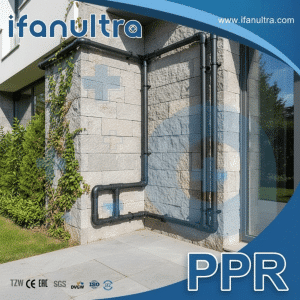
We once replaced a cracked outdoor PPR line that flooded a client’s garden. The culprit wasn’t pressure, but constant sun exposure on a standard pipe. This taught me the critical value of proper UV protection.
Yes, UV-stabilized PPR is specifically formulated to prevent the rapid degradation and cracking that standard PPR suffers outdoors. It contains special additives that absorb and scatter harmful ultraviolet radiation, protecting the polymer’s molecular chains from breaking down. This significantly extends the material’s lifespan in exposed applications, preventing premature failure.
While standard PPR is excellent indoors, sunlight is its enemy outside. Let’s explore how UV stabilization works and why it’s a mandatory specification for any exterior installation.
How Does UV Stabilization Specifically Inhibit Surface Micro-Cracking Initiation?
Surface cracks often start unseen. I’ve inspected failed pipes where the problem began with microscopic fractures, invisible until it was too late.
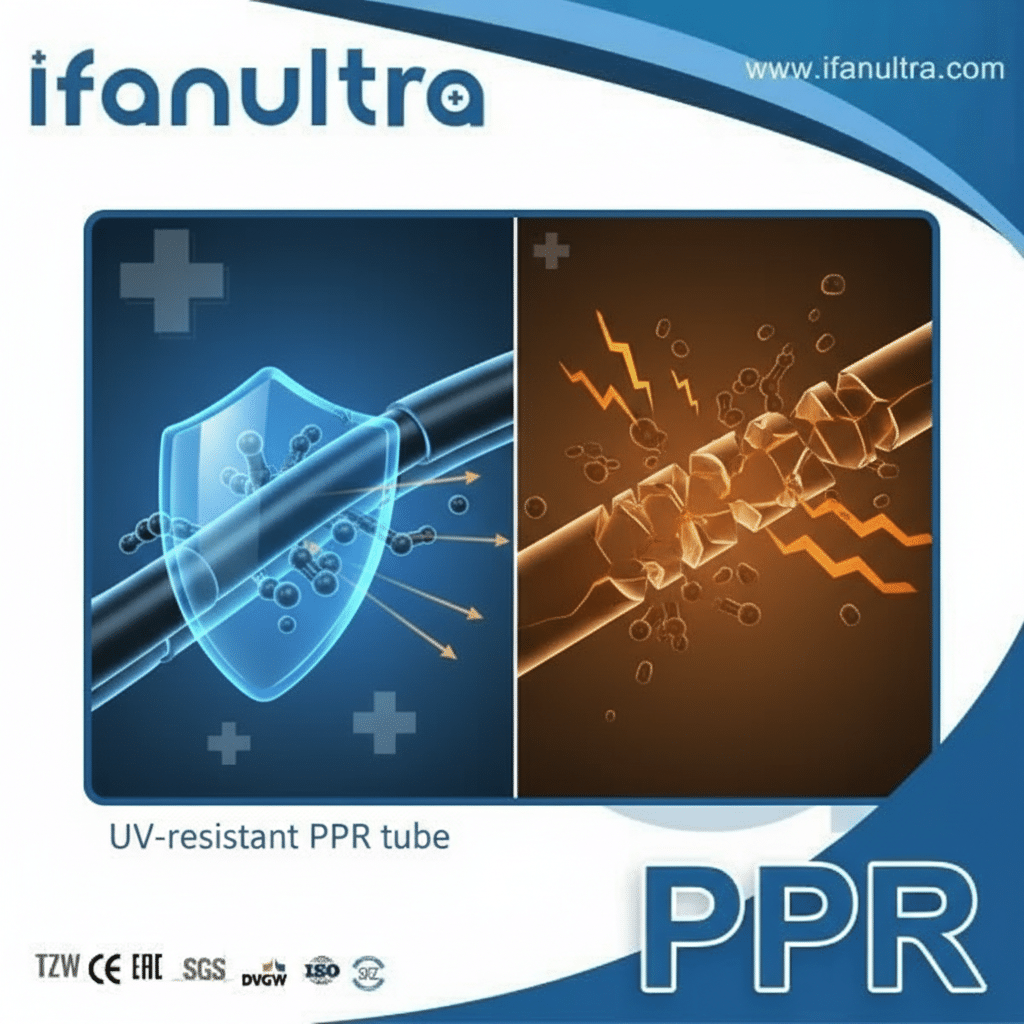
UV stabilization inhibits micro-cracking by absorbing the sun’s high-energy UV photons before they can break the long-chain polypropylene molecules. The stabilizers act as a sacrificial shield, converting destructive UV energy into harmless low-grade heat. This prevents the polymer from becoming weak and brittle at the surface, which is the essential first step in crack formation.
The Science of Sunlight Damage
To understand the solution, we must first understand the problem. Sunlight, specifically the ultraviolet (UV) portion of its spectrum, carries a lot of energy. When standard PPR is exposed, UV photons strike the polymer chains.
This energy is enough to break the chemical bonds (carbon-hydrogen and carbon-carbon bonds) that hold the polypropylene molecules together. This process is called photo-degradation. It happens primarily on the surface, where the radiation is most intense.
As these bonds break, two key things occur:
- The long, strong polymer chains become shorter and weaker.
- New, reactive chemical groups (like carbonyls) form on the damaged chains.
This makes the surface material brittle. It loses its flexibility and impact resistance. Then, normal environmental stresses—like thermal expansion/contraction, wind movement, or even internal water pressure—can easily cause this brittle surface to develop tiny cracks, or micro-cracks.
How the Stabilizers Intervene
UV stabilizers are special chemicals mixed into the PPR compound during manufacturing. They work through different mechanisms to stop this chain of events:
1. UV Absorbers (UVAs): These are the most common. They function like sunscreen for the plastic. Molecules like Carbon Black (which also gives the pipe its black color) or Hindered Amine Light Stabilizers (HALS) absorb the harmful UV radiation. They capture the photon’s energy and release it as a small amount of harmless thermal energy. The polymer chains never receive the damaging energy.
2. Quenchers: These additives work at a molecular level. If a polymer molecule does get excited by UV energy, the quencher “deactivates” it before it can break apart, safely dispersing the energy.
3. Radical Scavengers: When bond breakage starts, it can create free radicals that accelerate further damage. Stabilizers like HALS also neutralize these radicals, stopping a chain reaction of degradation.
The result is that the surface of the pipe maintains its ductility and strength. Without a brittle surface layer, the initiation point for micro-cracks never forms. The pipe remains a cohesive, flexible unit, capable of handling environmental stress without failing.
Why Is Preventing Embrittlement Crucial for Pressure Integrity in Outdoor Lines?
A brittle pipe is a ticking time bomb. I recall a system where outdoor pipes, turned brittle by the sun, shattered during a winter cold snap, not from freezing, but from normal pressure.
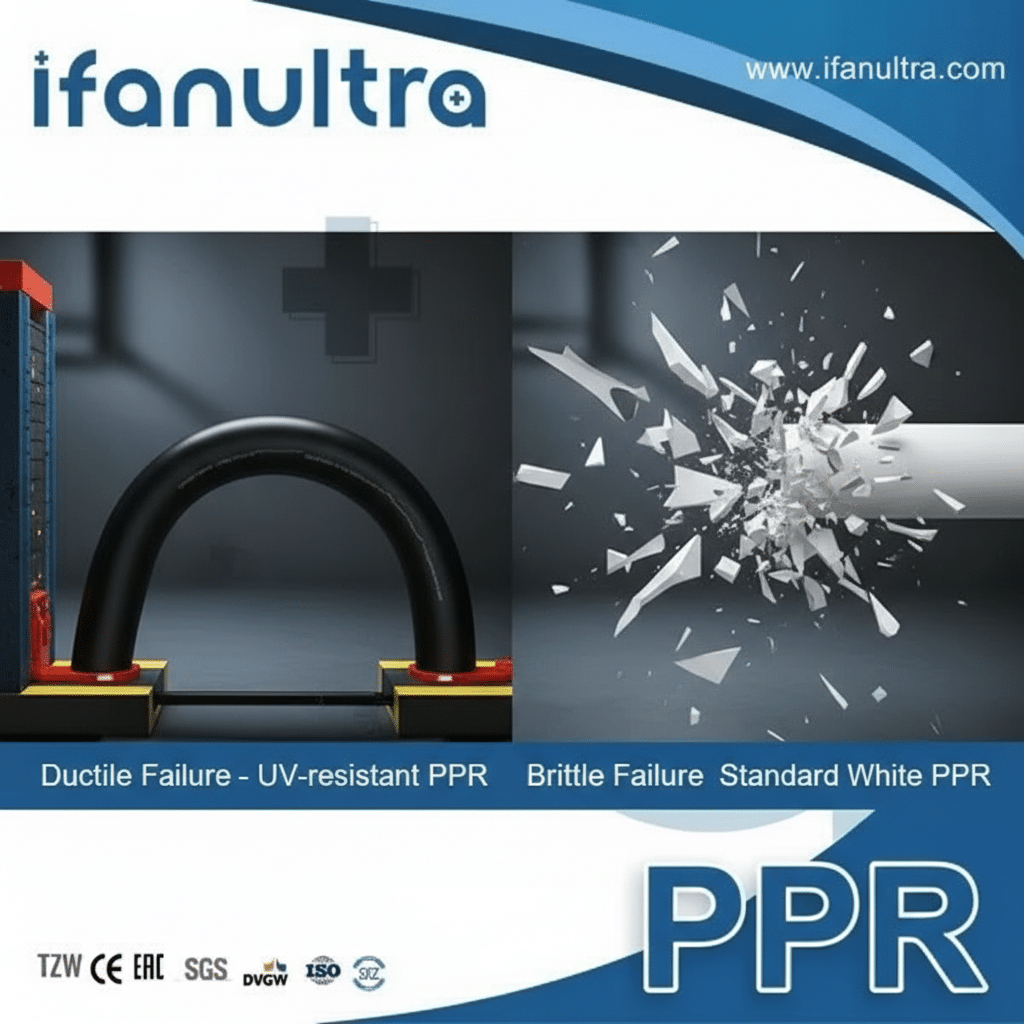
Preventing embrittlement is crucial because a brittle pipe cannot safely contain pressure. Pressure creates internal hoop stress. A ductile, flexible PPR pipe can distribute this stress evenly. A brittle pipe, however, will develop stress concentrations at flaws or fittings, leading to sudden, catastrophic cracks and bursts instead of slow leaks.
The Relationship Between Material Ductility and Pressure
Pressure piping systems are designed with a fundamental assumption: the material has a certain degree of ductility. This means it can stretch, deform slightly, and absorb energy without breaking. Think of it like a flexible rubber hose versus a rigid glass tube.
When water pressure pushes against the inside wall of a pipe (hoop stress), a ductile material like stabilized PPR will slightly expand and deform elastically. It distributes the force throughout its structure. Even if a tiny defect exists, the material around it can yield slightly, preventing the defect from growing into a crack.
An embrittled material loses this ability. It becomes like the glass tube—hard and rigid. Under pressure, it cannot deform to redistribute stress. Instead, stress concentrates at any imperfection: a surface scratch, a molding flaw, or a stress point near a fitting.
How Failure Progresses in Brittle vs. Ductile Pipes
The mode of failure changes completely:
Ductile (Stabilized) PPR Failure:
- Process: Over extremely high pressure, the material will first yield, bulge, and slowly develop a leak.
- Result: Usually a small, predictable leak that allows for shut-off and repair.
- Risk: Lower, as it gives warning.
Brittle (UV-Degraded) PPR Failure:
- Process: Stress concentrates at a flaw. A crack initiates and then propagates rapidly through the brittle material with minimal energy required.
- Result: Sudden, catastrophic burst. The pipe can split open along its length, releasing a massive volume of water instantly.
- Risk: Very high, causing extensive water damage and no prior warning.
The Combined Threat of Environment and Pressure
Outdoor lines face a double assault. UV radiation causes surface embrittlement. Simultaneously, normal system pressure, water hammer (pressure surges), and thermal contraction from cold nights all apply mechanical stress. A ductile pipe handles this combination. A brittle pipe, weakened by the sun, will see these everyday stresses as the final trigger for a burst.
The table below contrasts the behavior:
| Property | UV-Stabilized PPR (Ductile) | UV-Degraded PPR (Brittle) |
|---|---|---|
| Reaction to Pressure | Distributes stress evenly. | Concentrates stress at flaws. |
| Failure Mode | Slow leak, bulging. | Fast, sudden burst. |
| Impact Resistance | High; can withstand minor impacts. | Very low; may crack from a tap. |
| Result of a Scratch | Likely no effect. | Becomes a crack initiation point. |
Therefore, UV stabilization isn’t just about appearance or long-term aging—it’s a core safety feature for maintaining the pressure-containing integrity of the pipe throughout its service life.
Can It Withstand Seasonal Temperature Extremes Combined with UV Exposure?
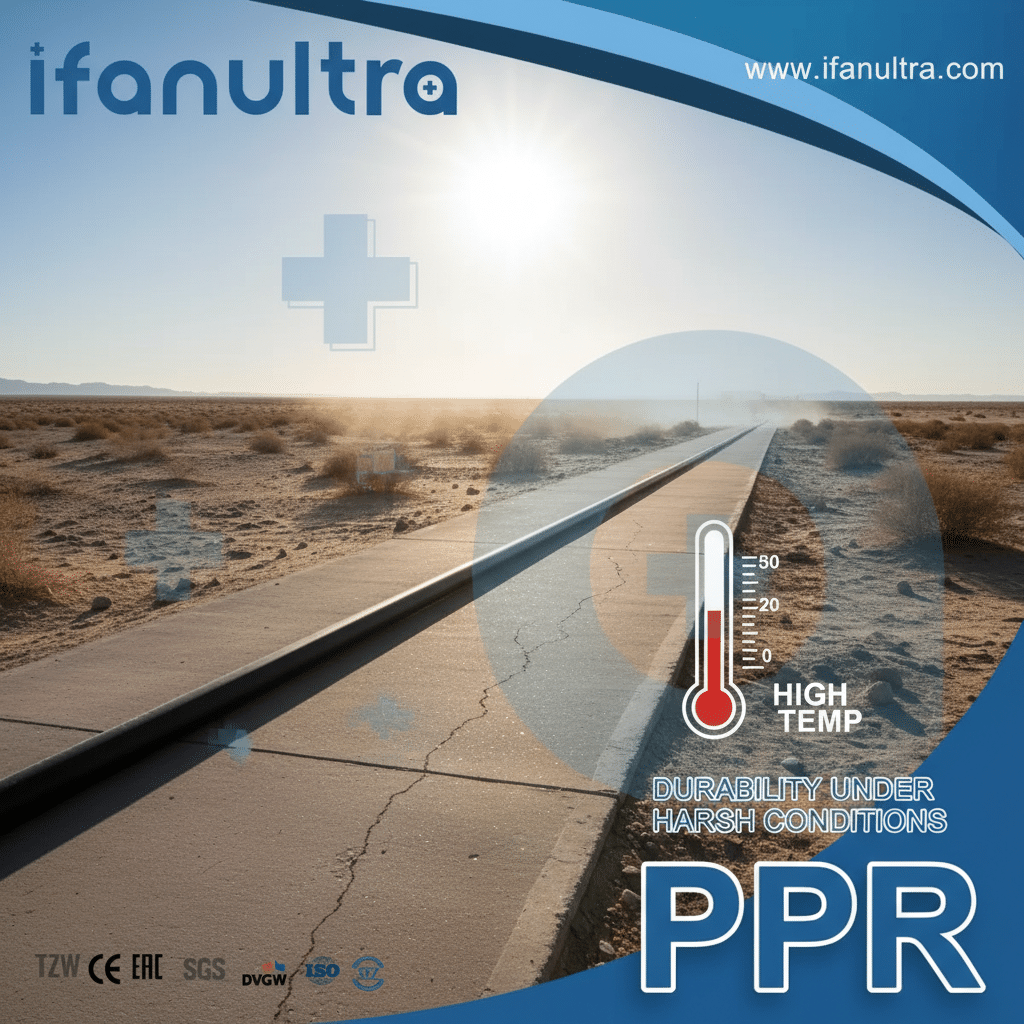
Outdoor pipes don’t face just one enemy; they face a combined attack. An installation in a desert climate faces this challenge daily.
Yes, properly formulated UV-stabilized PPR is designed to withstand this combination. The UV stabilizers protect the polymer structure from solar radiation, while PPR’s inherent thermal resistance allows it to handle a wide temperature range. Together, this prevents the accelerated degradation that occurs when heat amplifies UV damage and thermal cycling stresses a weakened material.
Understanding the Synergistic Effect
Heat and UV light don’t work independently; they make each other’s damaging effects worse. This is called a synergistic degradation effect.
- Heat Accelerates UV Damage: Higher temperature increases the mobility of polymer molecules and the rate of chemical reactions. UV-induced breakdown of chains happens faster when the material is hot. A pipe at 50°C (122°F) in the sun will degrade much faster than one at 20°C (68°F) in the same light.
- UV Weakens Resistance to Thermal Stress: Daily and seasonal cycles cause pipes to expand and contract. This is thermal cycling. A ductile, strong pipe handles this well. A pipe embrittled by UV radiation has low toughness. Repeated thermal expansion/contraction can cause fatigue cracks in this brittle surface layer.
Key Performance Factors for Combined Resistance
A quality UV-stabilized PPR succeeds here because of specific material properties:
1. High-Quality Stabilizer Package: Not all stabilizers are equal. Premium systems use synergists—combinations of absorbers (like carbon black) and HALS. HALS are particularly effective because they regenerate, offering long-term protection even under high heat. The stabilizer must have a high melting point and not migrate out of the plastic under hot conditions.
2. PPR’s Inherent Thermal Strength: PPR has a high heat deflection temperature (typically >95°C / 203°F at 0.45MPa). This means it retains its shape and strength well under the high temperatures an outdoor black pipe can reach in summer sun. It also remains flexible at freezing winter temperatures.
3. Resistance to Thermal Oxidation: Heat and oxygen also cause degradation (thermal oxidation). Good PPR compounds include antioxidants that work alongside UV stabilizers to provide full-weather resistance.
Real-World Temperature Range Performance
The table illustrates how a stabilized pipe manages different seasonal challenges:
| Season | Défi | Effect on Standard PPR | How UV-Stabilized PPR Resists |
|---|---|---|---|
| Summer | High UV + High Ambient Heat | Rapid chain scission, extreme surface embrittlement. | Stabilizers absorb UV; antioxidants prevent thermal oxidation. Material stays ductile. |
| Winter | UV + Freezing Contraction | Brittle surface cracks under contraction stress. | Ductile core allows contraction without cracking; surface remains tough. |
| Daily Cycle | Repeated Expansion/Contraction | Fatigue of degraded surface leads to micro-cracks. | Maintained ductility allows for stress relaxation without damage. |
For the most severe climates, additional measures like protective conduits or paint can be used, but a correctly specified UV-stabilized PPR provides the fundamental material resistance needed for reliable long-term performance.
What Visual Signs Indicate That UV Protection Is Starting to Fail?
Catching failure early prevents disasters. I teach clients to perform simple visual checks, as physical changes always appear before a leak.
The first visual signs of failing UV protection are color change and loss of surface gloss. The pipe will fade or turn chalky white, and its smooth surface will become dull and rough. As degradation advances, you will see visible micro-cracks (crazing), followed by pronounced brittleness where the pipe may crack or snap when bent slightly.
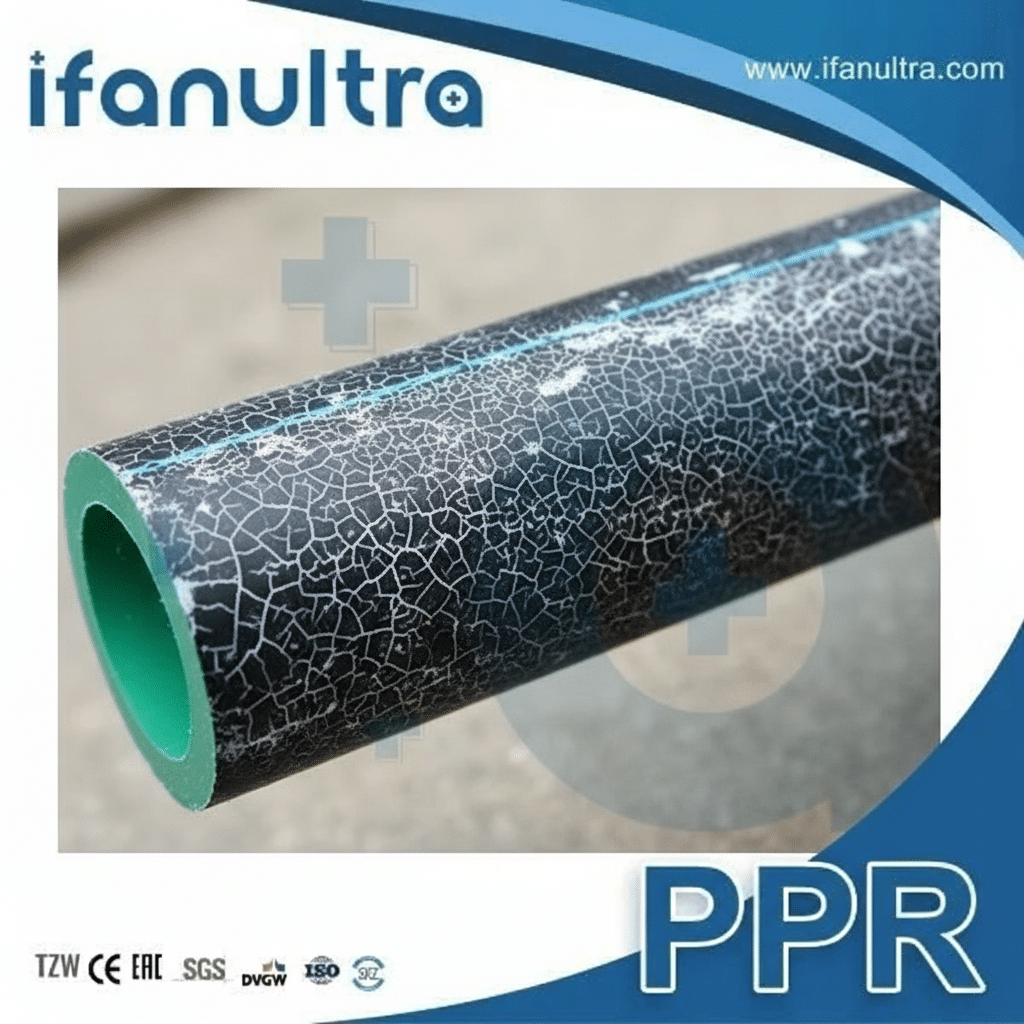
Stage 1: The Early Warning Signs (Surface Degradation)
UV damage starts at the surface. The first signs are cosmetic but critically important.
- Color Fading or Chalking: The rich, consistent black (or green) color of a stabilized pipe will begin to fade to gray. More commonly, a white, chalky powder appears on the surface. This “chalking” is actually the degraded polymer material itself. The UV stabilizers are depleting, and the surface layers are breaking down into a brittle, chalk-like substance. You can often wipe this chalk off with your finger.
- Loss of Gloss: A new PPR pipe has a smooth, slightly glossy surface from the molding process. As the surface degrades, it loses this smoothness and becomes dull and rough to the touch. This roughness is the result of microscopic surface erosion.
Action at this stage: The pipe’s structural integrity in its core may still be okay for a while, but it is actively failing. Plan for inspection and replacement soon.
Stage 2: The Structural Red Flags (Physical Cracking)
If left unaddressed, surface damage progresses into the pipe wall.
- Crazing: This is a network of very fine, hairline cracks on the pipe’s surface. They often look like a spider web or cracked glass. These are the micro-cracks that have initiated and started to link up. At this point, the pipe has lost its waterproof integrity at the surface layer.
- Embrittlement: The most dangerous sign is not always visual, but easily tested. The pipe loses all flexibility. If you can safely access a small section (like an offcut), try to bend it slightly. A healthy PPR pipe will be tough and flexible. A degraded pipe will be stiff and may produce a sharp cracking sound when bent. It might even snap.
Stage-by-Stage Failure Guide
The progression follows a predictable pattern:
| Stage | Visual & Physical Signs | Condition of Pipe Wall | Recommended Action |
|---|---|---|---|
| Early | Fading color, chalky residue, loss of surface gloss. | Surface layer degraded. Core may be intact. | Monitor closely. Schedule replacement. |
| Advanced | Visible crazing (fine web of cracks), dull & rough texture. | Cracks penetrate surface layer. Integrity compromised. | Replace immediately. Failure risk is high. |
| Critical | Deep cracks, obvious brittleness (cracks when bent). | Damage extends deep into wall. Material is very weak. | URGENT replacement. Catastrophic burst is imminent. |
Regular annual inspections are key. Look for these signs, especially on the sun-facing side of the pipe. A simple “scratch test” with a fingernail on a chalky area can also reveal severe softening or powdering of the material. Never ignore chalkiness or discoloration—it is the pipe crying for help.
Conclusion
UV-stabilized PPR is essential for durable, safe outdoor plumbing. For pipes that resist sun, heat, and cold, specify IFAN’s UV-Stabilized PPR Pipe Systems for lasting performance.









 English
 Español
 Français
 Português do Brasil