

I once walked the tight engine room of a cargo ship, where every pipe run was a puzzle. That experience taught me that shipbuilding doesn’t just use standard fittings—it demands specialized solutions for survival.
Yes, shipbuilding and repair require highly specialized pipe fittings. These “marine-grade” fittings are engineered to resist severe corrosion, withstand constant vibration, fit in extremely tight spaces, and meet mandatory international safety certifications. Using standard industrial fittings in marine applications risks system failure, environmental damage, and failed inspections.
The marine environment is one of the toughest on earth. Therefore, let’s explore what makes maritime fittings different and why their specifications are non-negotiable.
What Defines a “Marine-Grade” Fitting in Terms of Material and Construction?
A fitting that lasts 20 years on land might fail in 2 years at sea. We’ve seen clients learn this costly lesson.
A “marine-grade” fitting is defined by its use of corrosion-resistant alloys (like CuNi, Super Duplex Stainless Steel, or galvanically protected materials), reinforced construction to handle vibration and shock, and design features that prevent crevice corrosion. Its construction prioritizes longevity and reliability in saltwater, humidity, and temperature extremes over initial cost savings.

The Enemy: Saltwater Corrosion
The primary factor driving material choice is the relentless attack of saltwater. Specifically, it causes several types of corrosion that standard carbon steel or basic stainless steel (like 304) cannot withstand for long.
- General Corrosion: Saltwater quickly rusts ferrous metals.
- Crevice Corrosion: This occurs in stagnant areas, like under gaskets or in threaded joints. Consequently, marine fittings minimize these traps.
- Galvanic Corrosion: When two dissimilar metals contact each other in seawater, one corrodes faster. For this reason, material selection and insulation are critical.
Common Marine-Grade Materials
Shipbuilders choose materials based on the fluid they carry (seawater, fuel, oil, air) and the system’s criticality. For example:
Copper-Nickel Alloys (e.g., CuNi 90/10, 70/30): This is a gold standard for seawater systems. It forms a stable, protective oxide layer and also resists biofouling well.
Super Duplex Stainless Steel (e.g., UNS S32750): This material offers immense strength, which allows for thinner, lighter walls, and it resists pitting and crevice corrosion in chloride environments.
Nickel-Aluminum Bronze (NAB): Manufacturers often use this for pump components and valves because it resists corrosion, offers high strength, and withstands wear.
Properly Protected Steel: For non-seawater applications, such as internal fire mains, workers use steel fittings but must apply a robust, certified coating system like hot-dip galvanizing.
Construction and Design Features
Beyond material, construction details are vital. Typically, marine fittings include these features:
- Extra Wall Thickness: Many marine standards specify increased wall thickness to account for corrosion over decades.
- Smooth Bores: This design minimizes turbulence and pressure drop in critical systems.
- Welded Connections: Where possible, welded butt joints replace threaded connections to eliminate crevices.
- Quality of Castings: Fittings must be free of sand inclusions or porosity, which become failure points.
| Matériau | Typical Use | Avantage clé | Main Consideration |
|---|---|---|---|
| Copper-Nickel 90/10 | Seawater cooling, fire systems | Excellent corrosion & biofouling resistance | Higher initial material cost |
| Super Duplex Stainless | High-pressure hydraulics, ballast lines | Very high strength-to-weight ratio | Workers must weld it correctly to retain properties |
| Nickel-Aluminum Bronze | Valves, pump casings, propellers | Good all-round corrosion & wear resistance | Can be expensive to machine |
| Hot-Dip Galvanized Steel | Internal freshwater, ventilation | Cost-effective for non-seawater service | Installation can damage the coating |
In short, “marine-grade” means the fitting is purpose-built to fight the sea’s corrosive effects every single day.
How Do Pipe Fittings Accommodate the Unique Space Constraints on Ships?
On a ship, there is no “extra space.” Every cubic inch is planned. As a result, this demands fitting designs you rarely see on land.
Pipe fittings accommodate ship space constraints through compact, space-saving designs like short-radius elbows, full-flow couplings, and custom-manifold blocks. Furthermore, extensive pre-fabrication of pipe spools (pre-assembled sections with fittings) onshore ensures accurate, efficient installation in the complex and congested engine room and hull spaces.
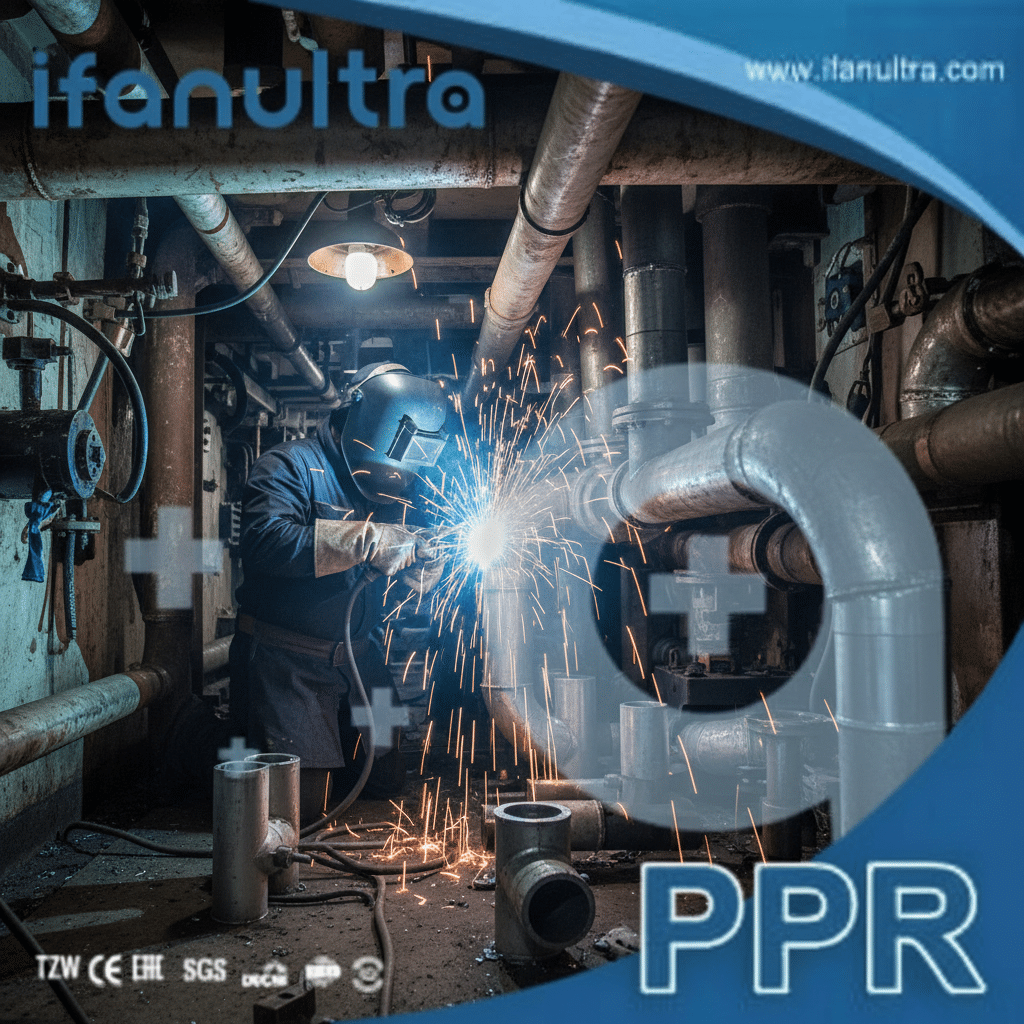
The Challenge of Tight Spaces
Ship design packs machinery, piping, electrical conduits, and structural elements into a very dense area. Therefore, piping must navigate around beams, frames, and other systems. Standard long-radius elbows or bulky fittings simply won’t fit.
Design Solutions for Limited Space
Fitting manufacturers offer specific solutions for this environment:
1. Compact Fitting Designs:
- Short-Radius (SR) Elbows: These have a centerline radius of 1.0 times the pipe diameter, unlike the standard 1.5D. This allows for tighter turns.
- Reduced Branch Outlets: Special tees and laterals where the branch size is smaller than the run, saving space compared to a full-size tee.
- Full-Flow Couplings: These allow for connection and disconnection in tight spots without needing to rotate the pipe.
2. The Power of Pre-Fabrication:
This is the most critical practice for managing space. Instead of bending pipe and welding fittings in the cramped ship, technicians build entire pipe sections—called spools—in a workshop. They use precise CAD models and cutting lists. Each spool, which may include multiple elbows, tees, and reducers, is then brought onboard, positioned, and simply welded at its ends. This method offers key benefits:
- It drastically reduces difficult welding positions.
- It improves quality control.
- It dramatically speeds up onboard installation.
3. Custom Manifolds and Module Blocks:
For complex systems like hydraulics, multiple valve and fitting functions are often integrated into a single, custom-machined block. This approach eliminates dozens of individual fittings and hoses, saving immense space.
Installation Flexibility
Even with the best planning, changes are needed during repair. Therefore, marine fittings often incorporate adjustable solutions like swivel joints or flexible hose segments to allow for final alignment in impossible spaces.
You cannot simply choose a fitting because it looks strong. In maritime, a third-party stamp of approval is the law.
Certifications from naval classification societies (like ABS, DNV, Lloyd’s Register) are mandatory because they provide independent verification that every fitting meets strict, globally recognized rules for material quality, manufacturing processes, pressure rating, and traceability. These certifications are required for vessel insurance, regulatory compliance (like SOLAS), and ensuring the safety of the ship, crew, and environment.
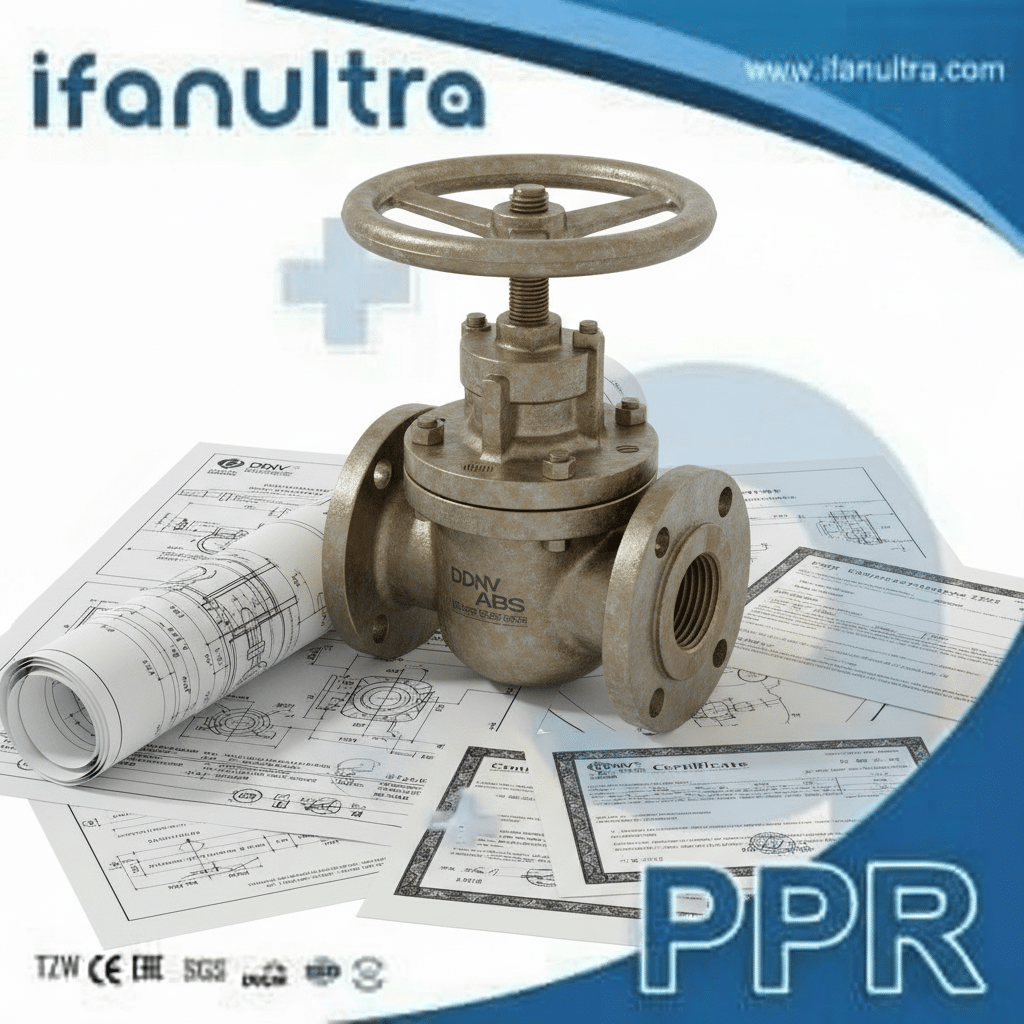
The Role of Classification Societies
Think of these societies (Class Societies) as the ultimate quality inspectors for the maritime world. They are independent organizations that establish and maintain technical standards (called “Rules”) for the construction and operation of ships.
Their approval is not a suggestion; it is a prerequisite. For instance, a ship cannot be insured, and often cannot legally operate, without being “classed” by a recognized society.
What Certification Involves for a Fitting
For a pipe fitting to receive a Class approval, the manufacturer’s entire process undergoes scrutiny:
1. Material Certification: The raw material must come with a mill test certificate (MTC) proving its chemical composition and mechanical properties.
2. Manufacturing Process Approval: A Class surveyor audits the factory’s processes—melting, casting, forging, heat treatment, machining, and testing.
3. Product Testing: Samples of the finished fittings undergo destructive and non-destructive tests. Common tests include:
- Pressure Test: Hydrostatic testing to a multiple of the working pressure.
- Mechanical Tests: Tensile strength, impact toughness, hardness.
- NDT: Dye penetrant or magnetic particle inspection for surface defects.
4. Traceability: Each fitting must be traceable back to its heat number and all associated test reports.
Consequences of Non-Compliance
Using an uncertified fitting during a ship’s build or repair can lead to serious problems:
- Failed Survey: The Class surveyor will reject the installation, causing costly delays.
- Voided Insurance: In the event of a failure, the insurer may deny the claim.
- Regulatory Action: Port state control inspections can detain a vessel for safety violations.
For a buyer, the rule is simple: always specify the required Class approval in your order. Reputable suppliers like IFAN maintain these certifications for their marine product lines.
What Are the Common Types of Specialized Fittings Used in Ballast or Bilge Systems?
Ballast and bilge systems are the circulatory systems of a ship. Their failure is not an option, and their fittings have very specific jobs.
Common specialized fittings for ballast/bilge systems include sea chests, strum boxes (large perforated strainers), bilge suction manifolds, air vent heads, and non-return (check) valves with easy access covers. These fittings are designed for high flow, minimal clogging, reliable operation under list conditions, and easy maintenance in dirty, inaccessible spaces.

The Critical Role of These Systems
First, consider their functions:
- Ballast System: It takes in or discharges seawater to stabilize the ship and adjust draft. This system handles massive volumes of water, often full of debris.
- Bilge System: It removes accidental water from the lowest parts of the hull. This system must work reliably to prevent accumulation.
Key Fittings and Their Functions
1. Sea Chests and Strums:
These are the system’s “intakes.” A sea chest is a welded box protruding through the hull. Inside it, a strum box—a cylindrical strainer with large perforations—is fitted. Its job is to keep out large debris while allowing maximum water flow. Crews design them for easy cleaning by divers during port calls.
2. Bilge Suction Manifolds:
A bilge well has multiple suction points. Instead of running separate pipes to each, a central manifold collects them. It often includes a Mud Box, which is a coarse, cleanable strainer to catch sediment before it reaches the pump.
3. Air Vent Heads:
When filling a ballast tank, air must escape. Workers install vent heads at the highest point of the tank. They design these to allow large volumes of air to flow out while preventing seawater from splashing in during rough seas. They often have a ball check device.
4. Specialized Valves:
- Ballast Valve: Often a robust, full-bore gate or butterfly valve that offers minimal flow restriction.
- Bilge Non-Return Valve (Check Valve): This is crucial to prevent back-flooding. On ships, these are often swing-check valves with a service cover so crew can inspect and clean the disc and seat without removing the entire valve.
5. High-Level Alarm Sensors:
While not a pipe fitting, these critical devices are integrated into tank tops to alert the crew if ballast or bilge water rises too high.
Design Priorities for These Fittings
Engineers prioritize several features for these critical components:
- Clog Resistance: They need large flow passages and smooth interiors.
- Accessibility: They require inspection covers and removable strainer baskets.
- Durability: They must have thicker walls to resist erosion.
- Fiabilité : They need simple, robust mechanisms that will work after long periods of inactivity.
Conclusion
Shipbuilding requires specialized fittings defined by corrosive-resistant materials, compact designs, mandatory class certifications, and system-specific features. For reliable marine-grade solutions, consider IFAN’s range of certified pipe fittings and manifolds designed for demanding maritime applications.









 English
 Español
 Français
 Português do Brasil