

I remember staring at the quote for my home’s repipe, shocked at how much of the total was just for labor. It made me wonder, why does the cost of the work vary so wildly depending on the pipe I choose?
Labor costs are the single biggest variable in plumbing projects, often exceeding material costs. The impact varies dramatically: PEX is typically the fastest and cheapest to install, copper is the most labor-intensive and expensive, and CPVC falls somewhere in between, balancing moderate material cost with specific installation requirements.
This isn’t just about picking a pipe; it’s about understanding the hidden economics of your walls. Let’s break down exactly how the choice between PEX, copper, and CPVC translates directly into hours on the clock and dollars on your final bill.
How do labor costs vary between PEX, copper, and CPVC pipes?
When I asked my plumber for a breakdown, the differences weren’t subtle. The tools, the time, the technique—each material tells a completely different story on the job site.
Labor costs vary significantly: PEX installation is fastest, using flexible tubing and quick-connect fittings that slash labor time. Copper requires skilled soldering, precise measuring, and is physically demanding, making it the most expensive. CPVC needs solvent welding and careful handling to avoid breaks, placing its labor cost in the middle.

The Speed and Simplicity of PEX
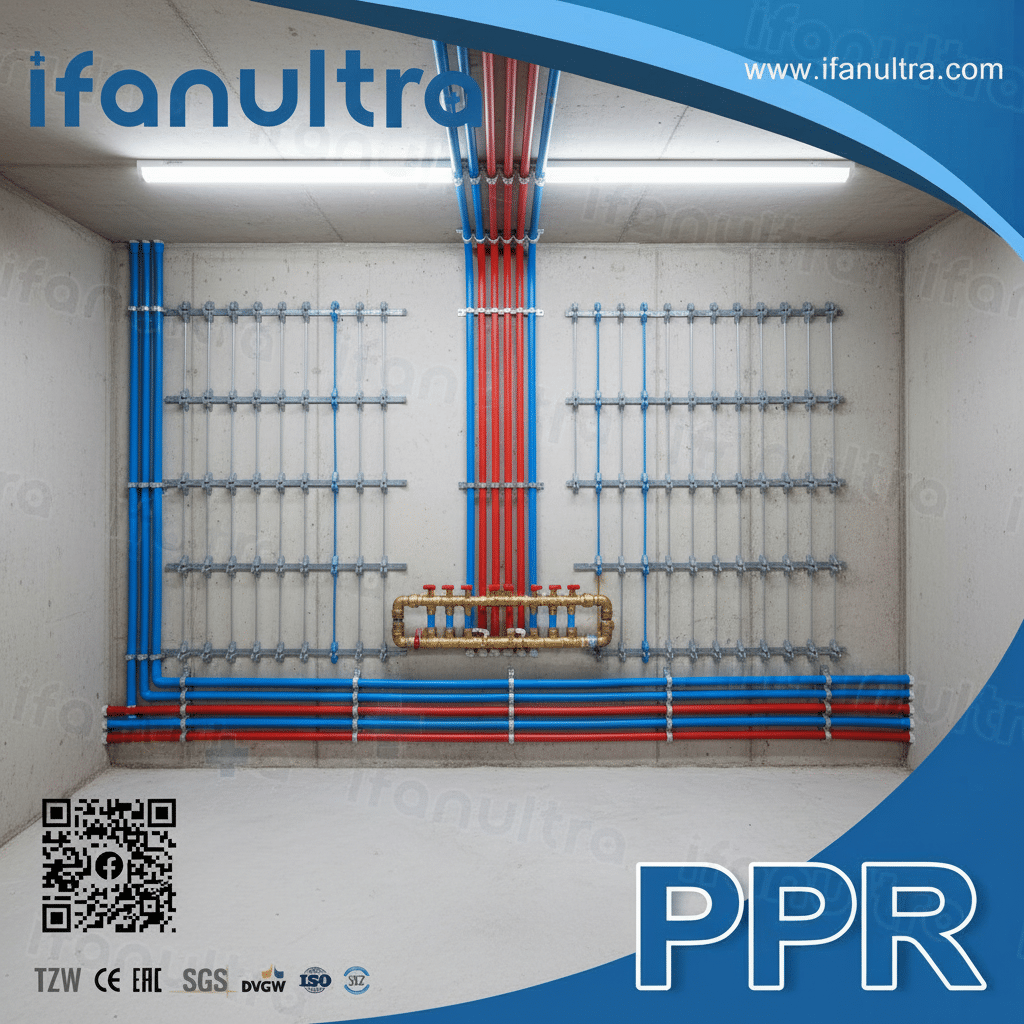
PEX is the game-changer for labor. Its flexibility is its superpower. A plumber can run long, continuous lines from a central manifold with very few fittings. This means fewer connection points, which are where most leaks occur and where most time is spent. The installation process is clean and quiet. They use a simple crimping or clamp tool to secure fittings, a process that takes seconds. There’s no open flame, no waiting for glue to dry, and no need for complex bending tools. For retrofits, its flexibility allows it to be snaked through existing walls and floors with minimal demolition, saving countless hours of repair work to drywall and flooring after the pipes are in.
The Craft and Cost of Copper
Copper is the classic, and its labor reflects that tradition. Every joint must be soldered (or brazed for larger lines). This requires skill, a steady hand, and strict safety protocols for the torch. Each fitting must be meticulously cleaned, fluxed, heated, and soldered. The pipe itself is rigid, requiring precise measurements and cuts. Every bend needs a fitting or must be carefully formed with a tube bender. It’s heavy, so handling long lengths is physically taxing. This combination of skill, time, and physical effort makes copper the undisputed leader in labor hours. The plumber isn’t just installing a pipe; they are crafting a permanent, metallurgical bond at every junction.
The Middle Ground of CPVC
CPVC sits in a unique, sometimes tricky, middle zone. It’s rigid like copper but lighter and cut with a simple ratchet cutter. The labor intensity comes from the solvent welding process. Each joint must be cleaned, primed (a crucial step often missed by DIYers), glued, and held firmly for a set time to cure. This “make and hold” time adds up across dozens of fittings. Furthermore, CPVC becomes brittle in cold weather and can crack if mishandled during installation, potentially leading to rework. It requires more supports than PEX to prevent sagging. So, while faster than copper, it lacks the sheer speed and forgiveness of a PEX system.
| Pipe Material | Primary Joining Method | Relative Installation Speed | Key Labor Skill Required |
|---|---|---|---|
| PEX | Crimping/Clamping | Very Fast | Manifold system design, routing |
| Copper | Soldering/Brazing | Slow | Precision soldering, safety with torch |
| CPVC | Solvent Welding (Glue) | Moderate | Proper priming/gluing technique, handling to avoid cracks |
Why is installation time a major factor in plumbing labor costs?
Time is money, but in plumbing, it’s the entire currency. A plumber’s quote is fundamentally an estimate of hours multiplied by their rate.
Installation time is the core driver of labor costs because plumbers charge primarily for their time. Faster methods like PEX reduce the hours billed directly. Complex, time-consuming processes like soldering copper or waiting for CPVC glue to cure add sequential, non-compressible hours that quickly inflate the total project cost.

The Billable Hour: A Direct Correlation
Most residential plumbing work is billed on a “time and materials” basis or as a project bid based on estimated time. Every extra hour spent measuring, cutting, joining, and testing is an hour added to your invoice. Methods that shave time off each step have a compounding effect. For example, if a PEX fitting takes 30 seconds to secure and a copper solder joint takes 5 minutes, that’s a 10x difference per connection. Across a whole-house repipe with hundreds of connections, the time savings (and thus cost savings) become enormous.
Sequential Tasks and the “Cure Time” Trap
Some processes create unavoidable downtime. Soldering copper requires the plumber to work in a sequence: clean, flux, heat, apply solder, wipe, cool, move on. They can’t do other tasks during the heating and cooling moments. CPVC is even more restrictive with solvent weld. After applying the primer and cement, the joint must be held immobile for 10-30 seconds and then left undisturbed for several minutes (or hours for full pressure strength) before the system can be tested. This “cure time” is dead time where the plumber is either waiting or moving to a different area, but it still counts as active job time. PEX crimps are ready for pressure testing almost instantly, eliminating this waiting period.
Rework and Error Correction
Time also accounts for the risk of error. A bad solder joint (a “cold joint”) can leak and must be cut out and re-soldered, adding significant time. A CPVC joint that wasn’t primed properly can fail later, requiring a costly repair. The flexibility and forgiving nature of PEX, along with its easy-to-verify crimp rings, make errors less common and far easier to fix quickly, protecting the project timeline and budget.
| Time Factor | Impact on PEX | Impact on Copper | Impact on CPVC |
|---|---|---|---|
| Per-Joint Completion | Seconds | Several Minutes | 1-2 Minutes + Cure Time |
| System Testing Readiness | Immediate | After cooling | After extended cure (hours) |
| Error Correction Time | Low (cut and re-crimp) | High (cut, re-prep, re-solder) | Moderate/High (cut out section, re-glue) |
What specific skills affect labor pricing for different pipe materials?
Not all plumbing hours are created equal. The skill needed to work with copper commands a different price than the skill to run an efficient PEX manifold system.
Specialized skills directly affect labor pricing. Copper requires mastery of torch work and soldering, a high-skill trade. CPVC demands expertise in solvent welding techniques. PEX requires knowledge of modern manifold system design and hydraulic balancing. Plumbers with these specialized skills can justify higher rates, and the risk of improper installation varies by material.
The Artisan Skill of Soldering Copper
Working with copper is a certified trade skill. A plumber must know how to properly clean and flux a joint, control torch temperature to avoid burning the flux or overheating the pipe, and apply the right amount of solder so it wicks perfectly into the joint without leaving drips or gaps. This takes years of practice. There’s also significant liability: an open torch in a home poses a fire risk, and improper soldering can lead to leaks inside walls. This combination of high skill and high risk is factored into the labor rate for copper work.
The Technical Knowledge for PEX Systems
While PEX is physically easier to install, doing it *well* requires a different skill set. It’s about system design. A plumber must understand home-run manifold systems: how to size the manifold, how to balance line lengths to ensure consistent water pressure and temperature at all fixtures, and how to plan efficient routes. It’s a shift from craft-based joining to design-based hydronics. A poorly designed PEX system can lead to annoying pressure drops or long wait times for hot water. The skill is in the planning, not just the physical connection.
The Precision and Patience for CPVC
The skill with CPVC is in the details of the solvent weld. It’s not just gluing; it’s a chemical fusion process. A skilled installer knows the importance of using the correct primer (which softens the plastic), applying the cement liberally, and giving the joint a quarter-turn as they connect the pieces to ensure an even seal. They know how to handle the pipe to avoid stress cracks and how to support it properly. Rushing this process or skipping steps is a recipe for future leaks. This required precision and understanding of the material’s behavior is a billable skill.
| Matériau | Core Skill | Risk of Improper Installation | Impact on Labor Rate |
|---|---|---|---|
| Copper | Precision soldering, torch safety | High (leaks, fire hazard) | Highest |
| PEX | Manifold system design, hydraulic balancing | Moderate (system performance issues) | Moderate to High |
| CPVC | Solvent welding technique, proper support | High (joint failure, cracks) | Moderate |
Can higher material costs offset labor savings in piping projects?
This was my biggest “aha” moment. The price tag on the pipe at the store is only part of the story. You have to do the full math.
Yes, higher material costs can be offset by labor savings, but the math must include all factors. PEX often has a higher per-foot material cost than CPVC, but its dramatically lower installation labor usually results in a lower total project cost. Copper has both high material and high labor costs, making it the most expensive overall option in most scenarios.

The Total Cost Equation: More Than Just Pipe
You cannot look at material cost in isolation. You must calculate Total Installed Cost: (Material Cost + Labor Cost). A cheaper pipe that takes twice as long to install can end up costing more. For example, CPVC pipe itself is often less expensive than PEX tubing. However, you must also add the cost of all the fittings, primer, and cement. PEX uses fewer fittings due to its flexibility, which saves on both material *and* the labor to install each one. Copper fittings are very expensive, and you need one for every direction change, adding massively to the material bill on top of the high labor.
PEX: The Labor-Saving Champion
This is where PEX shines in the economic analysis. While the roll of PEX-B might cost more per foot than a stick of CPVC, the total material package is often competitive because you buy fewer fittings. But the real win is on the labor side. The speed of installation is so superior that even with a slightly higher material cost, the total project cost is frequently the lowest of the three. This is especially true for large projects and retrofits where labor is the dominant expense.
Copper: The Premium Choice
Copper is the high-cost option on both fronts. The raw material is subject to commodity market prices and is consistently the most expensive. Its labor is also the most expensive. There is no offset here; the costs compound. You choose copper for its longevity, its proven track record, and its ability to handle high heat—not for cost savings. The offset doesn’t happen; you pay a premium for the material and a premium for the craftsmanship to install it.
CPVC: A Balanced Calculation
CPVC represents a middle path. Its material cost is generally lower than PEX and significantly lower than copper. Its labor cost is higher than PEX but lower than copper. For smaller, straightforward jobs where a plumber can work very efficiently, the low material cost might give CPVC a slight total cost edge. However, for larger, more complex jobs, the labor hours for CPVC can add up, allowing PEX’s labor savings to overcome its material price difference, making PEX the more economical total choice.
Conclusion
Choosing a pipe material is a financial decision as much as a practical one. To control your project’s cost, always look beyond the price tag of the pipe and focus on the total installed cost, where labor is king.









 English
 Español
 Français
 Português do Brasil