
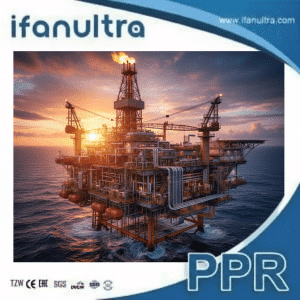
I once witnessed a project delay costing millions because a standard pipe fitting failed on a rig. That moment taught me that marine and offshore piping is not just plumbing; it’s engineering for survival.
The best practices for marine and offshore piping focus on selecting ultra-corrosion-resistant materials, designing for constant vessel motion and dynamic loads, obtaining mandatory class approvals from bodies like DNV or ABS, and relying on rigorous shop prefabrication and testing to ensure absolute reliability in the harshest environments where failure is not an option.
The ocean is the most demanding client. Its rules are strict, and the cost of ignoring them is immense. Therefore, let’s navigate the key principles that keep offshore systems safe and operational.
Which Materials Resist Pitting and Crevice Corrosion in Saltwater Atmospheres?
Saltwater is a relentless enemy. We’ve seen carbon steel pipes degrade rapidly in splash zones, a costly lesson in material selection.
The best materials for resisting pitting and crevice corrosion in saltwater are high-alloy metals like Duplex and Super Duplex stainless steels, Cu-Ni (copper-nickel) alloys such as 90/10 and 70/30, and 6% Molybdenum austenitic stainless steels. These materials form stable, self-repairing passive layers that withstand chloride attacks, which cause localized breakdown in ordinary steels.
Understanding the Corrosion Challenge
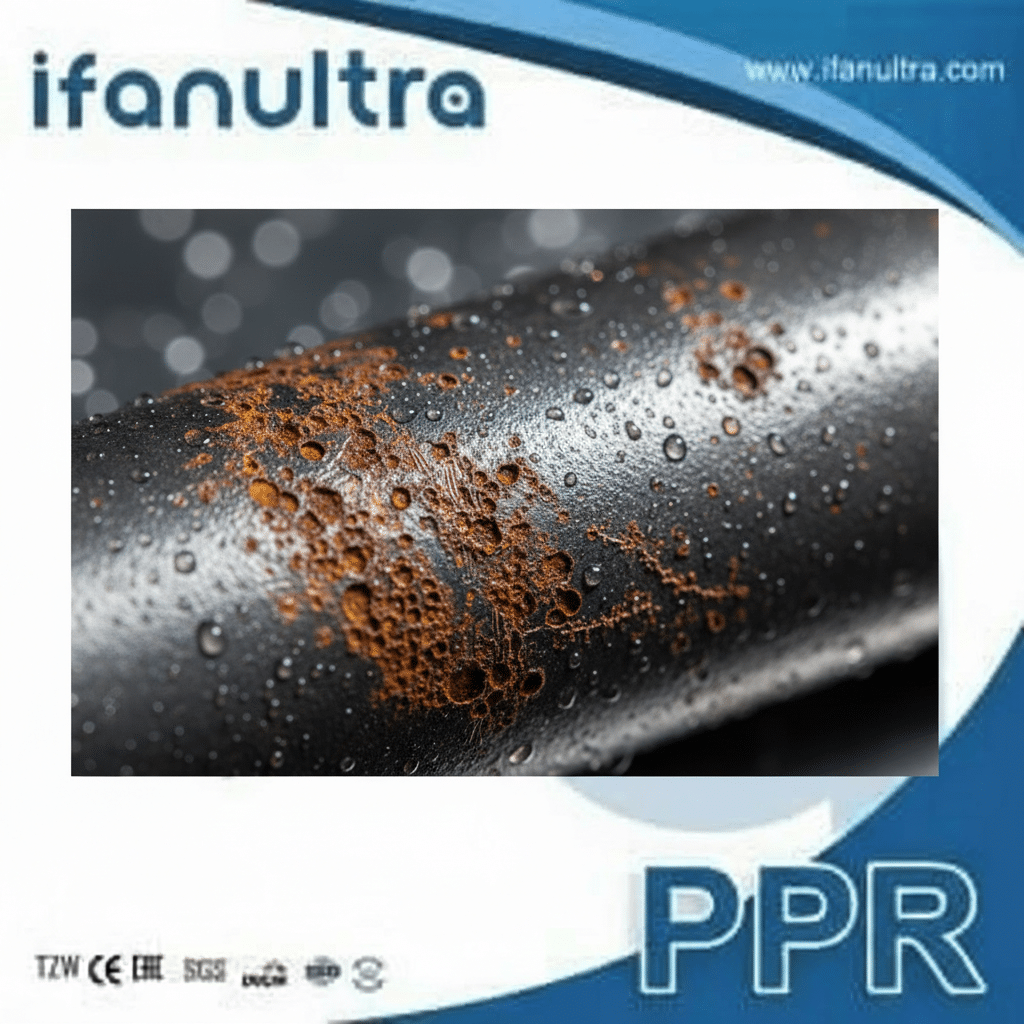
Saltwater, especially when aerated in splash zones or at the waterline, creates a perfect storm for corrosion. Specifically, two major threats exist:
- Pitting Corrosion: Chloride ions attack small spots on a metal surface, breaking down the protective layer and creating deep, penetrating pits. Often, these pits remain hidden and can lead to sudden pipe failure.
- Crevice Corrosion: This occurs in stagnant, shielded areas—under gaskets, inside joints, or at deposit points. Here, oxygen levels drop, creating an acidic environment that accelerates metal dissolution.
Standard 304 or 316 stainless steel can succumb to these attacks in warm, chloride-rich seawater. Consequently, the industry turns to more robust alloys.
Key Material Choices and Their Applications
Choosing the right material requires a balance of cost, performance, and application. Here are the most common champions:
- Duplex (2205) & Super Duplex Stainless Steels: These are the workhorses for critical seawater systems like ballast, firewater, and cooling. They have a mixed microstructure that provides excellent strength—allowing for thinner, lighter pipes—and superior resistance to chloride stress corrosion cracking and pitting. Furthermore, Super Duplex offers even higher resistance for the most demanding conditions.
- Copper-Nickel Alloys (CuNi 90/10 & 70/30): These alloys are legendary for seawater service. They possess natural antifouling properties, which reduce barnacle growth, and offer superb resistance to both corrosion and biofouling. As a result, people often use them for condensers, heat exchangers, and seawater piping.
- 6% Molybdenum Austenitic Stainless Steels (e.g., 254 SMO): When you need the non-magnetic properties of austenitic steel with Duplex-level corrosion resistance, these “super austenitics” are the choice. They excel in highly oxidizing and acidic chloride environments.
- High-Performance Polymers & Linings: For specific services, solid or lined plastic pipes (like CPVC or PVDF) or rubber-lined steel are used where metal ions are unacceptable or for highly corrosive chemicals.
Material Selection Guide Table
The following table helps guide the initial selection based on the seawater environment:
| Material | Key Strength | Typical Use Case | Watch Point |
|---|---|---|---|
| Duplex SS (2205) | High strength, good pitting resistance | Seawater cooling lines, fire mains, ballast piping | Avoid in stagnant, low-oxygen conditions. |
| Super Duplex SS | Exceptional pitting & crevice corrosion resistance | High-pressure seawater systems, topside splash zones | Higher cost; requires controlled welding. |
| CuNi 90/10 | Excellent fouling resistance, good corrosion rate | Seawater intake, condenser tubes, low-velocity piping | Sensitive to high flow velocities (erosion). |
| 6-Moly Austenitic | Excellent acid chloride resistance, non-magnetic | Process systems with chlorides, offshore topsides | High cost; similar performance to Super Duplex. |
| Solid/Lined PP/PVDF | Complete immunity to chloride corrosion | Chemical drains, vent lines, secondary containment | Temperature and pressure limits apply. |
Practical Advice: Always conduct a detailed Corrosion Assessment for your specific service, considering water temperature, flow rate, chlorination, and pollution. Ultimately, the right material choice is your first and most critical line of defense.
How Does Piping Design Account for Vessel Motion and Dynamic Loads?
A static design will fail on a moving vessel. We learned this early by analyzing stress fractures in rigid pipe runs on a supply ship.
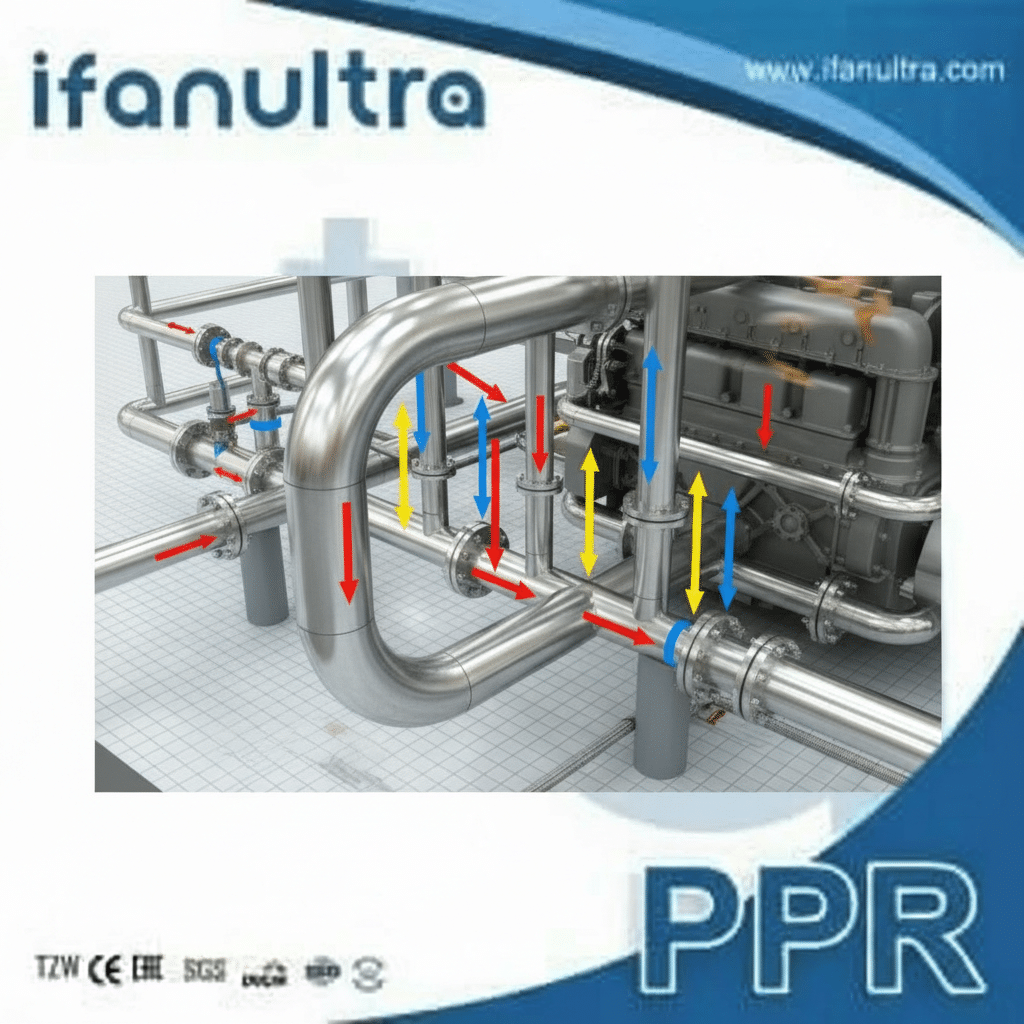
Piping design accounts for vessel motion and dynamic loads by incorporating flexibility through calculated pipe loops, strategic use of expansion joints, proper support with guides and restraints (not just hangers), and detailed dynamic stress analysis using software to simulate loads from waves, roll, pitch, and operational forces like pump start-up.
The Sources of Dynamic Stress
On a ship or platform, pipes do more than carry fluid; they are part of a moving, flexing structure. Specifically, the main forces acting on them include:
- Global Hull Bending: The entire vessel hull flexes like a beam on waves, which stretches and compresses deck structures.
- Roll, Pitch, and Heave: These continuous motions create inertial forces that push, pull, and twist the piping system.
- Slamming and Wave Impact: Sudden, sharp loads from waves hitting the hull.
- Thermal Expansion: From hot processes like engine exhaust or fuel lines, or from cold seawater.
- Internal Pressure and Fluid Hammer: Standard forces that the dynamic environment amplifies.
A rigid pipe cannot absorb these movements. Consequently, the energy will transfer to the weakest point—usually a fitting or connection—and cause failure.
Key Design Strategies for Flexibility and Support
To manage these forces, marine piping designers use specific tactics:
1. Intentional Flexibility: Instead of running straight lines, designers add deliberate bends or loops (expansion loops) in the piping layout. These loops act like springs, allowing the pipe to flex and absorb movement without building high stress. Importantly, the size and shape of these loops depend on careful calculations based on expected displacement.
2. Specialized Components: Where space is limited, engineers use metal bellows expansion joints. However, they apply these cautiously offshore due to concerns about fatigue life. Additionally, flexible hoses with braided wire reinforcement serve for final connections to vibrating equipment like pumps or engines.
3. Smart Support and Restraint: Supports do more than hold weight. The system uses:
- Anchors and Guides: These fix the pipe in one direction while allowing movement in another, thereby directing thermal and dynamic expansion toward the expansion loops.
- Restraints: They prevent pipes from jumping off their supports under shock loads.
- Snubbers or Dampers: In critical areas, these devices absorb sudden shock energy.
4. Dynamic Analysis: Modern design mandates computer-aided dynamic stress analysis using software like Caesar II. This model simulates the piping system under combined loads from motion, pressure, and temperature to identify over-stressed sections before fabrication begins.
Comparison of Motion Accommodation Methods
| Method | How It Works | Best For | Limitation |
|---|---|---|---|
| Expansion Loops | Pipe bends absorb movement via flexibility. | Most onboard systems with space available. | Requires significant routing space. |
| Bellows Expansion Joints | Compensate for movement via axial/ lateral compression. | Connections between two moving structures. | Finite fatigue life; requires inspection. |
| Flexible Hoses | Allow multi-directional movement at connections. | Final connections to engines, pumps, deck fittings. | Pressure/temperature limits; wear over time. |
The Goal: Create a system that is neither too rigid nor too flexible. Instead, it must be resilient, like a tree bending in the wind, to survive the vessel’s lifetime at sea.
What Classifications from DNV, ABS, or Lloyd’s are Mandatory for Marine Use?
You cannot simply install industrial pipe on a ship. Certification is your legal and technical license to operate. For example, missing a stamp once caused a full system rejection on one of our early projects.
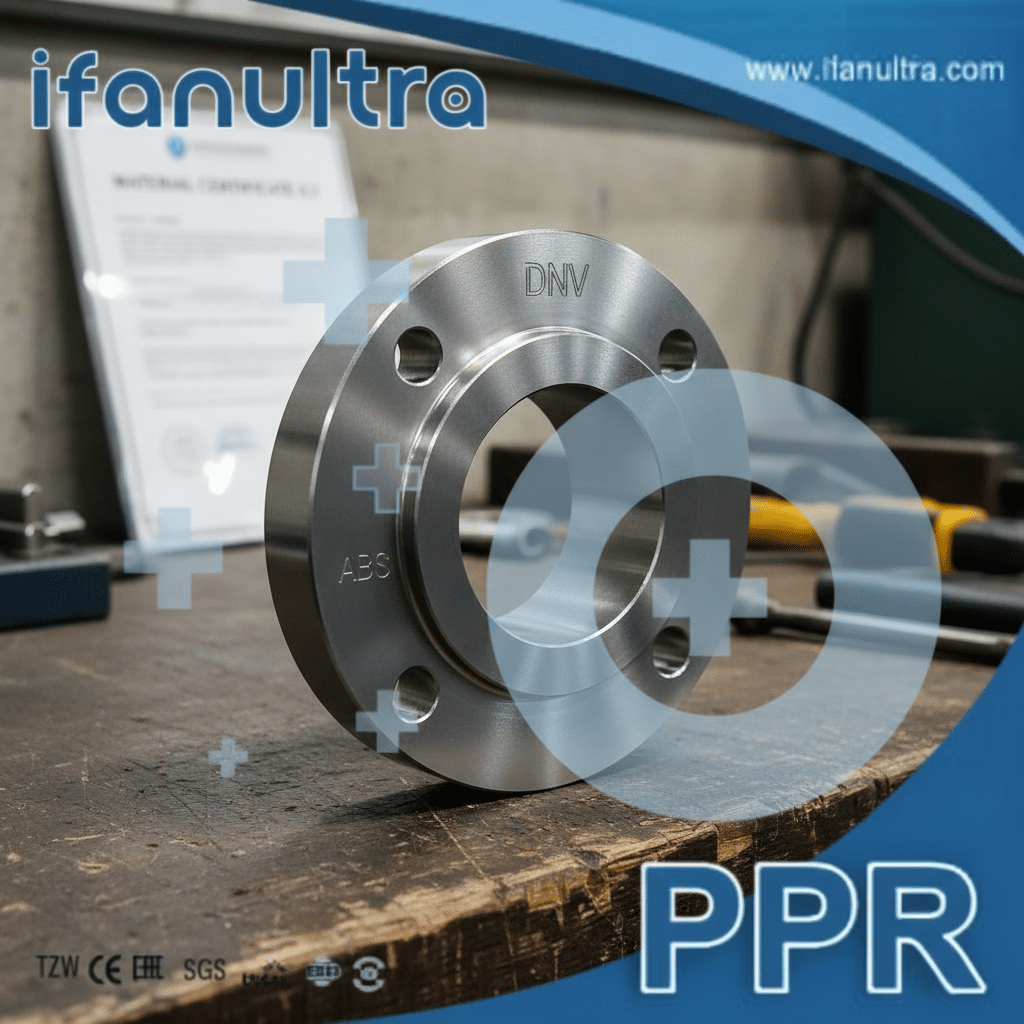
For marine use, piping materials, components, and fabrication must carry specific approval certificates from a recognized Classification Society such as DNV, ABS, Lloyd’s Register, or equivalent. Mandatory approvals typically include material certificates (3.1/3.2), product type approval for valves/fittings, and survey of the fabrication process (welding procedures, welder qualifications, NDT reports) to ensure compliance with strict class rules.
The Role of Classification Societies
Think of DNV, ABS, or Lloyd’s as independent technical regulators. They set the rules (Class Rules) for building and operating ships and offshore structures to ensure safety at sea. In fact, their stamp of approval is not optional; international maritime law (SOLAS) and insurance providers require it.
Their oversight covers the entire lifecycle of piping, from raw material to installed system.
Key Mandatory Certifications and Approvals
Here is what you absolutely need for marine piping projects:
1. Material Certification: This is the birth certificate of your pipe or fitting.
- EN 10204 Type 3.1 Certificate: A declaration of compliance from the steel mill, which the mill’s own quality department verifies. This is common for standard materials.
- EN 10204 Type 3.2 Certificate: A more stringent certificate where an independent inspector (often from the Class society itself) verifies and confirms the material’s properties and compliance. Critical components require this.
2. Product Type Approval: This means the specific design of a valve, pump, or specialty fitting has undergone review and testing by the Class society. They check design calculations, materials, and pressure ratings. Importantly, you cannot use an unapproved valve in a classed system.
3. Fabrication Survey and Welding Approval: This is where the Class surveyor gets involved during your workshop production.
- Welding Procedure Qualification (WPQR): You must test and approve your welding method.
- Welder Qualification Records (WQR): Each welder must pass tests to prove their skill.
- Non-Destructive Testing (NDT): A defined percentage of welds (e.g., 100% for critical, 10% for others) must undergo inspection by radiography (X-ray) or ultrasound. Then, the surveyor reviews the reports.
- Final Survey: The surveyor visits the workshop to witness pressure tests (hydrostatic testing) and inspect the final prefabricated modules before shipment.
Overview of Class Society Requirements
| Approval Stage | What It Covers | Who Provides/Approves | Why It’s Mandatory |
|---|---|---|---|
| Material Certification | Chemical & mechanical properties of raw pipe/plate. | Steel mill, certified by Class Surveyor (3.2). | Ensures the base material can handle design stresses and corrosion. |
| Product Type Approval | Design integrity of valves, fittings, pumps. | Manufacturer, granted by Class Society. | Guarantees the component is fit for its intended marine service. |
| Fabrication Procedure | Welding processes, NDT plans, heat treatment. | Fabrication workshop, approved by Class Surveyor. | Ensures the assembled system is as strong and reliable as the materials. |
| Survey During Construction | Witnessing of welds, NDT, pressure testing. | Class Society Surveyor on-site. | Provides independent verification that all rules were followed. |
Practical Advice: Engage with the chosen Classification Society early in the project. Their rules will dictate your material selection, design details, and fabrication methods. Otherwise, trying to get approval after fabrication becomes expensive and often impossible.
Why are Modular Prefabrication and Rigorous Testing Essential Offshore?
On an offshore platform, time is safety, and space is a prison. For instance, field welding in bad weather is a risk we design out through prefabrication.
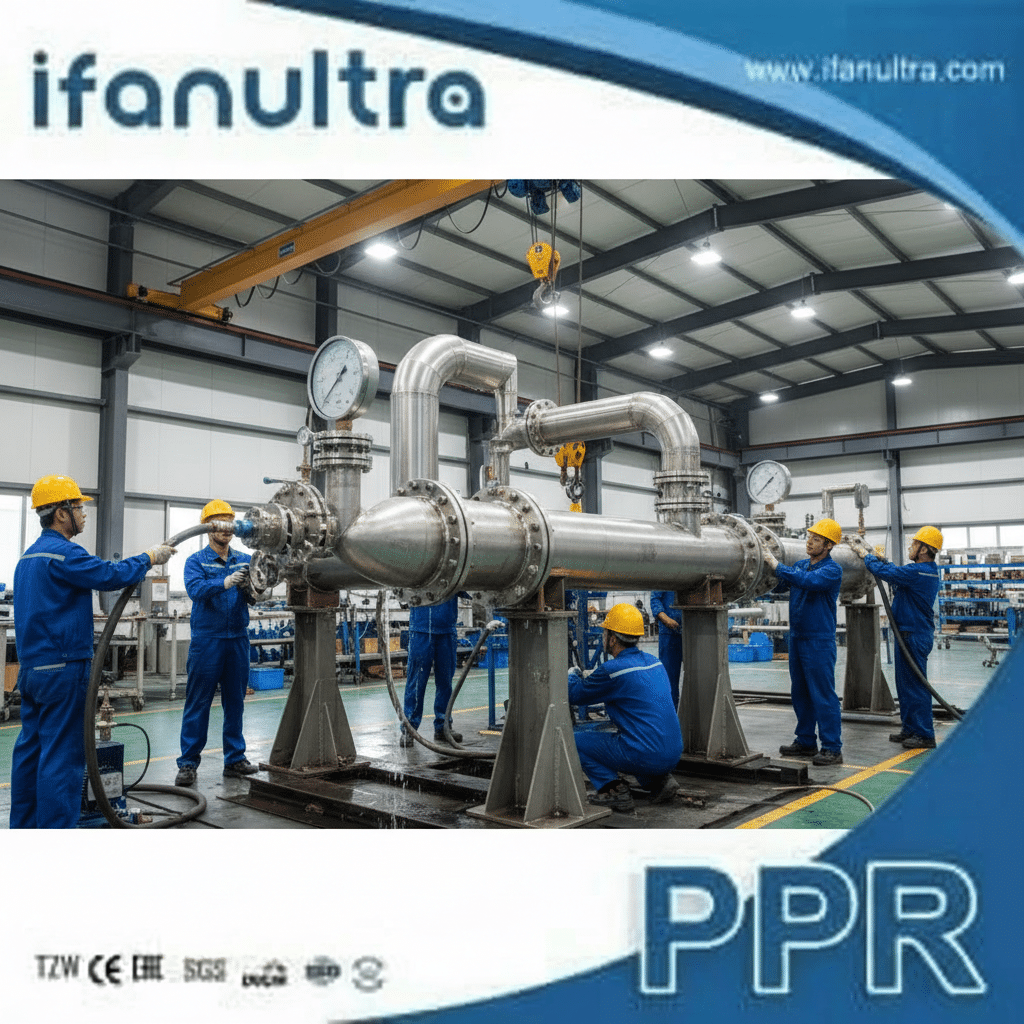
Modular prefabrication and rigorous testing are essential offshore because they maximize quality control in a safe workshop, drastically reduce hazardous and expensive hot work (welding) at the installation site, minimize weather delays, and allow for comprehensive system testing before deployment, ensuring reliability in an environment where repairs are prohibitively difficult and dangerous.
The Offshore Installation Challenge
Imagine installing a complex pipe system on a platform 100 miles from shore. The space is cramped, and the weather is unpredictable. Moreover, skilled labor is scarce and extremely expensive. Every hour of delay costs a fortune. In fact, a single leak discovered after commissioning could shut down production.
This hostile environment makes traditional stick-build (piece-by-piece) installation a terrible idea. Therefore, prefabrication and testing shift the risk from the offshore site to the controlled workshop.
The Power of the “Prefab” or “Module”
Instead of shipping piles of pipes and fittings offshore, fabricators build complete, pre-tested assemblies—called spools or modules—in the shop.
Benefits of Shop Prefabrication:
- Superior Quality: Welding is done in ideal conditions—at a workbench, not hanging over the side of a vessel. As a result, this leads to better, more consistent welds that are easier to inspect.
- Enhanced Safety: It reduces the volume of dangerous hot work (welding, grinding) required offshore, where fire risk is extreme.
- Parallel Construction: While the platform’s structure is being built, the piping modules are fabricated simultaneously in the shop, which slashes the overall project schedule.
- Predictable Cost: Workshop labor is more efficient and less costly than offshore labor. Additionally, problems are found and fixed cheaply on land.
The Non-Negotiable Rig of Testing
Prefabrication’s value multiplies with exhaustive testing. Specifically, every module undergoes a battery of tests before it leaves the shop:
- Visual & Dimensional Inspection: This involves checking fit-up and weld appearance.
- Non-Destructive Testing (NDT): 100% radiographic (X-ray) or ultrasonic inspection of all welds finds hidden defects.
- Hydrostatic Pressure Test: This is the most critical test. The module is sealed, filled with water, and pressurized to 1.5 times its design pressure for a sustained period. Consequently, this proves the strength and leak-tightness of every weld, flange, and fitting.
- Functional Testing (if applicable): For modules with valves or instruments, technicians actuate them to ensure proper operation.
Prefab vs. Stick-Build: An Offshore Comparison
| Aspect | Modular Prefabrication | Traditional Stick-Build Offshore |
|---|---|---|
| Weld Quality | High, consistent, done in ideal workshop conditions. | Variable, subject to weather, wind, and difficult positions. |
| Project Schedule | Shorter. Fabrication and installation activities overlap. | Longer. All work happens in sequence on the critical path. |
| Site Labor Cost | Minimized. Only installation and bolting required offshore. | Maximized. All cutting, fitting, and welding done offshore. |
| Quality Assurance | Comprehensive NDT and pressure testing done easily in-shop. | Testing is more difficult, rushed, and hazardous offshore. |
| Safety Risk | Significantly lower. Moves high-risk activities onshore. | Continuously high due to constant hot work in a confined space. |
The Bottom Line: Prefabrication and testing transform uncertainty into certainty. They allow you to ship a proven, sealed subsystem that simply needs bolting into place. For operators, this means faster start-up, lower risk, and guaranteed performance. At IFAN, we structure our supply chain services to support and validate this crucial prefabrication process for our clients.
Conclusion
Marine and offshore piping demands robust materials, dynamic design, strict certification, and precision prefabrication. For your next project, source certified components from a trusted partner like IFAN, which understands the critical link between quality on land and safety at sea.









 English
 Español
 Français
 Português do Brasil