
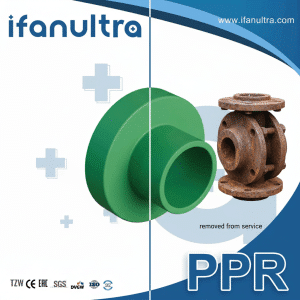
I recently visited a water treatment plant where corroded metal flanges were causing constant leaks and shutdowns. The maintenance manager was desperate for a solution. This is where the right adapter makes all the difference.
Yes, a PPR flange adapter significantly reduces corrosion compared to all-metal flanges. By replacing the wetted interior surfaces with inert polypropylene, it completely eliminates rust and scaling. This immunity to electrochemical and chemical attack translates into decades of reliable service with virtually no maintenance, offering substantial long-term savings.
The choice of flange material directly impacts system lifespan and cost. Let’s examine why PPR adapters are a superior choice for corrosive environments.
How Does Eliminating Metal from the Wetted Interior Prevent Rust and Scaling?
Metal pipes fail from the inside out. We’ve replaced countless corroded flanges where the damage started where water met metal.
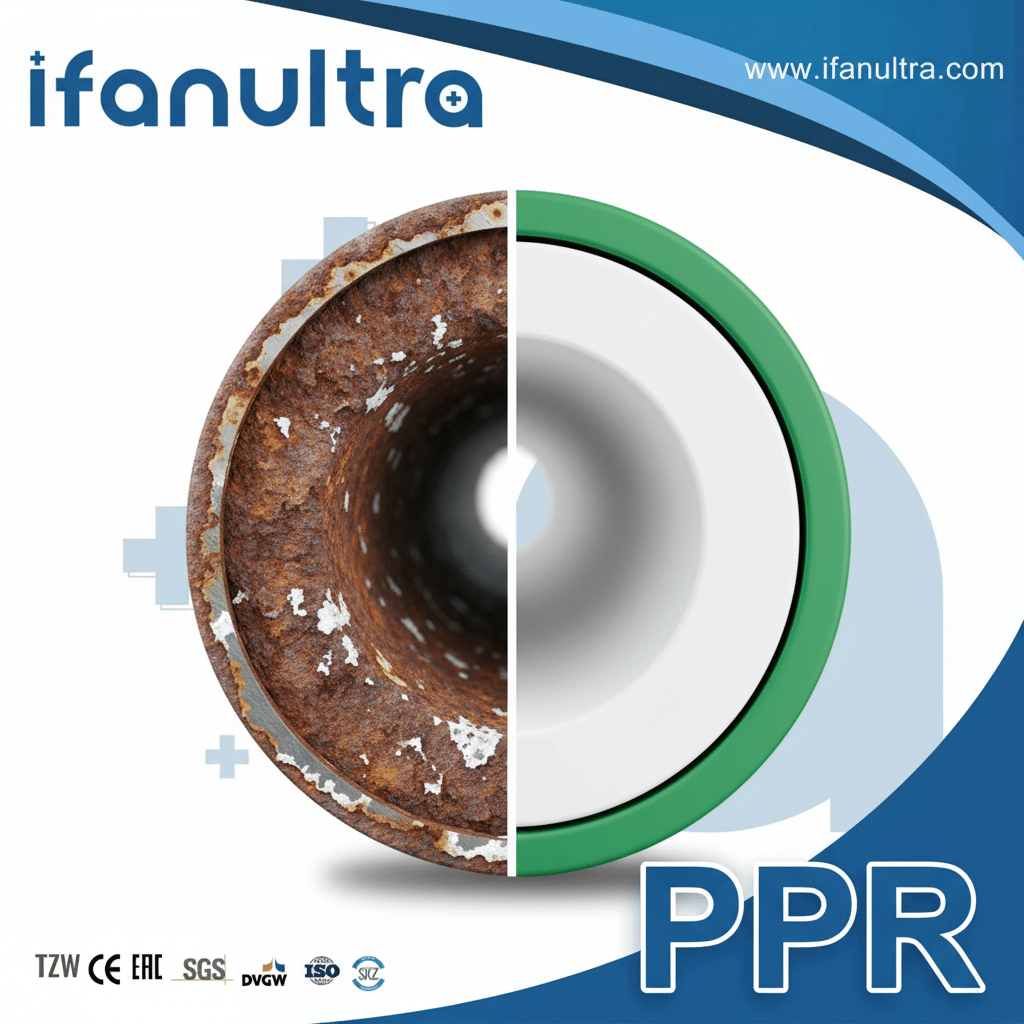
Eliminating metal from the wetted interior prevents rust and scaling because Polypropylene (PPR) is an inert thermoplastic. It does not react with water or dissolved oxygen, the two primary agents that cause iron oxides (rust) on steel. Furthermore, its ultra-smooth surface prevents mineral deposits (scale) from adhering, ensuring consistent flow and pressure over time.
The Science of Rust Prevention
Rust is essentially iron oxide. It forms when iron in steel reacts with oxygen in the presence of water. This process is inevitable in standard carbon steel flanges. Even stainless steel can succumb to certain types of corrosion, like pitting in chloride-rich water.
A PPR flange adapter removes this problem at its source. The part of the adapter that touches the fluid—the bore and the sealing face—is made entirely of plastic. Since there is no iron present, the chemical reaction required to create rust simply cannot occur. The system contains water and oxygen, but lacks the third critical component: a corroding metal.
Solving the Scale Buildup Problem
Scaling is a different but equally damaging issue. Hard water contains dissolved minerals like calcium and magnesium. When water flows through a pipe, these minerals can precipitate out and stick to the interior walls, especially on rough surfaces or where corrosion has begun.
- Metal Flanges: The interior surface of cast or machined metal is microscopically rough. Corrosion pits create even more texture. This rough surface acts as an anchor point for scale crystals to grab onto and grow.
- PPR Adapters: The interior of a PPR adapter is exceptionally smooth from the molding process. This smoothness gives scale crystals nothing to grip. Consequently, minerals tend to stay suspended in the water and flush through the system.
Direct Impact on System Performance
The combined prevention of rust and scaling has immediate benefits:
- Maintained Flow Rate: Scale buildup narrows the pipe’s effective diameter, increasing pump pressure and reducing flow. PPR maintains its original bore size.
- Preserved Water Quality: Rust particles contaminate the fluid, which is unacceptable in process water or potable water applications. PPR keeps the fluid clean.
- No Sudden Failures: Metal flanges can corrode through, leading to catastrophic leaks. PPR degrades very slowly and predictably, if at all.
Why is PPR Immune to Electrochemical Corrosion in Damp Environments?
Damp environments like pump rooms or coastal areas are brutal on metal. Electrochemical corrosion is a hidden destroyer that PPR inherently avoids.
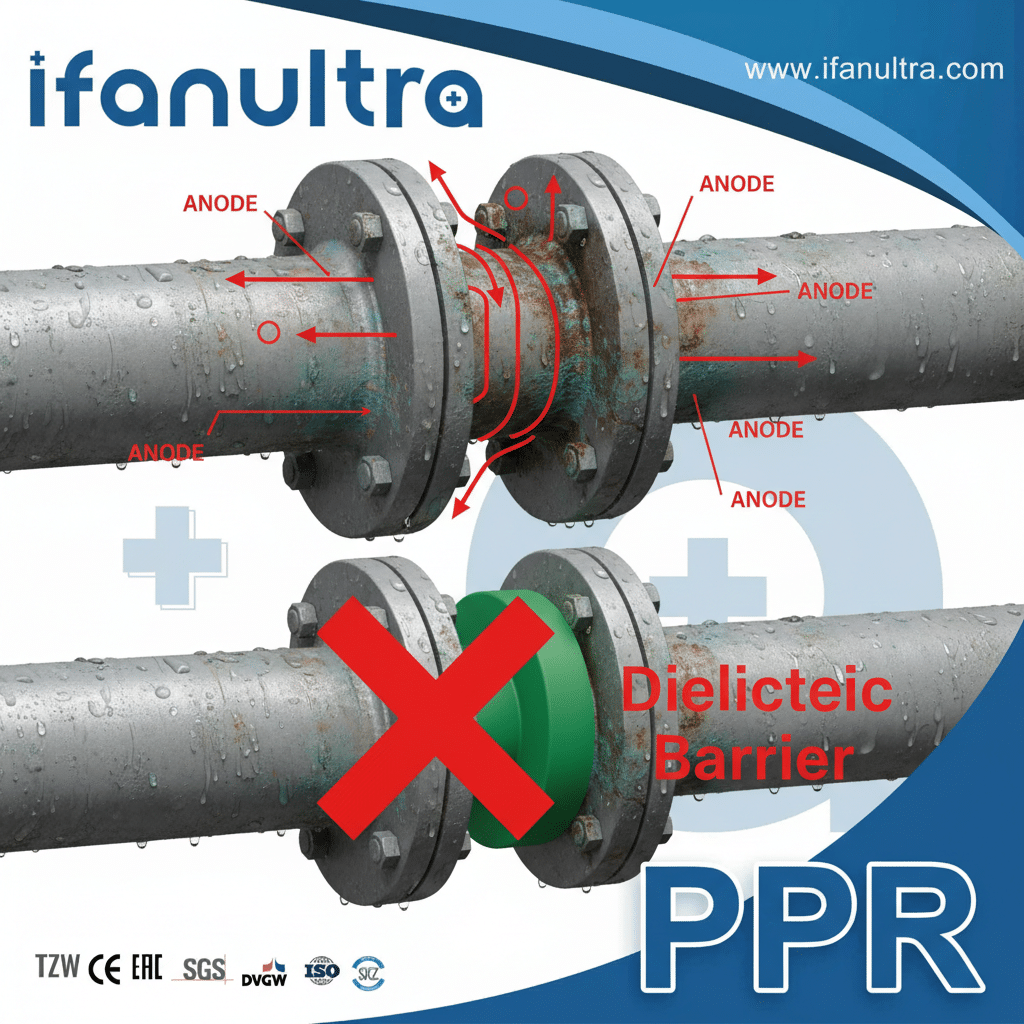
PPR is immune to electrochemical corrosion because it is a non-conductive dielectric material. It cannot form an anode or cathode, and it does not allow the flow of electrical current necessary for the electrochemical cell that drives galvanic or stray current corrosion. In a damp environment, it remains completely passive.
Understanding Electrochemical Corrosion
This type of corrosion requires four elements: an anode (where metal dissolves), a cathode, an electrolyte (a conductive fluid like damp soil or water), and a metallic path connecting them. In industrial settings, this happens in two common ways:
- Galvanic Corrosion: Occurs when two dissimilar metals (like a steel flange and a brass valve) are connected and immersed in an electrolyte. One metal becomes the anode and corrodes faster.
- Stray Current Corrosion: Caused by external electrical currents from power lines or welding equipment using the metal piping as an unintended path to ground.
How PPR Stops the Process
PPR disrupts this destructive process at multiple points:
- It is Not a Metal: PPR cannot act as an anode or cathode. Therefore, the fundamental mechanism for metal dissolution is absent.
- It Breaks Electrical Continuity: When a PPR adapter is installed between two metal pipes or flanges, it electrically isolates them. This breaks the metallic path required for both galvanic and stray current corrosion. Even if the surrounding environment is damp and conductive, the circuit remains incomplete.
- It Does Not React: The polymer chains in PPR are stable and do not participate in electrochemical reactions, regardless of moisture or mineral content in the environment.
Practical Application in Problem Areas
This makes PPR flange adapters an ideal solution for specific high-risk installations:
| Problem Environment | Metal Flange Risk | PPR Adapter Solution |
|---|---|---|
| Marine/Coastal | Salt spray and humidity accelerate corrosion. | No reaction to salt air or moisture. |
| Buried Installations | Soils act as a variable electrolyte, causing corrosion. | Immune to soil chemistry and moisture. |
| Water Treatment Plants | Chemicals and constant moisture create highly corrosive conditions. | Stable performance in wet, chemical-laden air. |
By eliminating electrochemical corrosion, PPR adapters provide predictable longevity where metal systems often fail unpredictably and expensively.
Can It Handle Corrosive Media That Would Degrade Metal Flanges?
Many industrial processes use aggressive chemicals. Selecting the wrong flange material can lead to rapid failure and dangerous leaks.
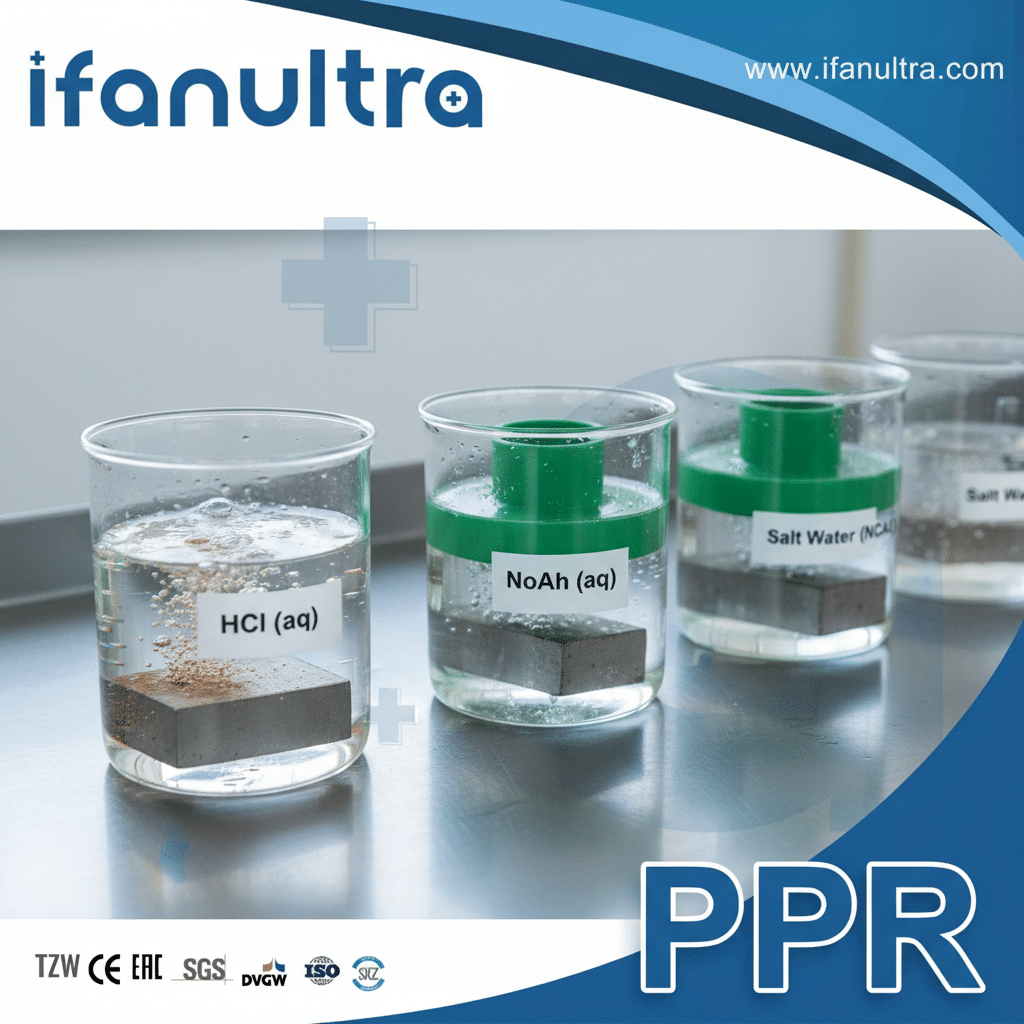
PPR flange adapters can handle a wide range of corrosive media that rapidly degrade standard metal flanges, including many acids, alkalis, and salt solutions. Their chemical resistance comes from the stable carbon-hydrogen polymer chains in polypropylene, which do not react with many aggressive substances that readily attack metal oxides.
The Basis of Chemical Resistance
Metals corrode because their surface oxides are dissolved or disrupted by chemical agents. For example, hydrochloric acid dissolves the protective oxide layer on stainless steel. PPR, however, has a different defense. Its molecular structure is inherently non-polar and offers no reactive sites for many polar corrosive substances to attack.
It is crucial, however, to consult chemical resistance charts. While PPR has excellent broad-spectrum resistance, certain strong oxidizers and organic solvents can affect it.
Comparison of Resistance Profiles
The following table illustrates the stark difference in performance between common flange materials and PPR when exposed to various media.
| Corrosive Media | Carbon Steel Flange | 304 Stainless Steel Flange | PPR Flange Adapter |
|---|---|---|---|
| Dilute Hydrochloric Acid | Severe, rapid corrosion. | Severe pitting and corrosion. | Excellent resistance. |
| Sodium Hydroxide (Caustic) | Moderate corrosion. | Good resistance. | Excellent resistance. |
| Salt Water (Brine) | Severe rust and pitting. | Prone to pitting corrosion. | Excellent resistance. |
| Chlorinated Water | Accelerated rust. | Risk of stress corrosion cracking. | Good to excellent resistance. |
Key Advantages in Industrial Settings
- Simplified Material Selection: For many mildly to moderately corrosive services, PPR can be a one-material solution, whereas metal systems may require expensive high-grade alloys (like Hastelloy or Titanium) for the same duty.
- Prevents Contamination: Corroding metals leach ions (like iron, chromium, nickel) into the process fluid. PPR does not, ensuring product purity in chemical or food processing.
- Safety and Reliability: A sudden flange failure due to chemical attack can be hazardous. The predictable chemical resistance of PPR allows for safer, long-term planning.
For applications involving highly aggressive chemicals, it is always essential to verify compatibility with the specific PPR compound and operating conditions.
What Long-Term Maintenance Savings Does This Corrosion Resistance Offer?
The initial price of a component is just the first cost. The real expense lies in maintaining and replacing it over 20 years.
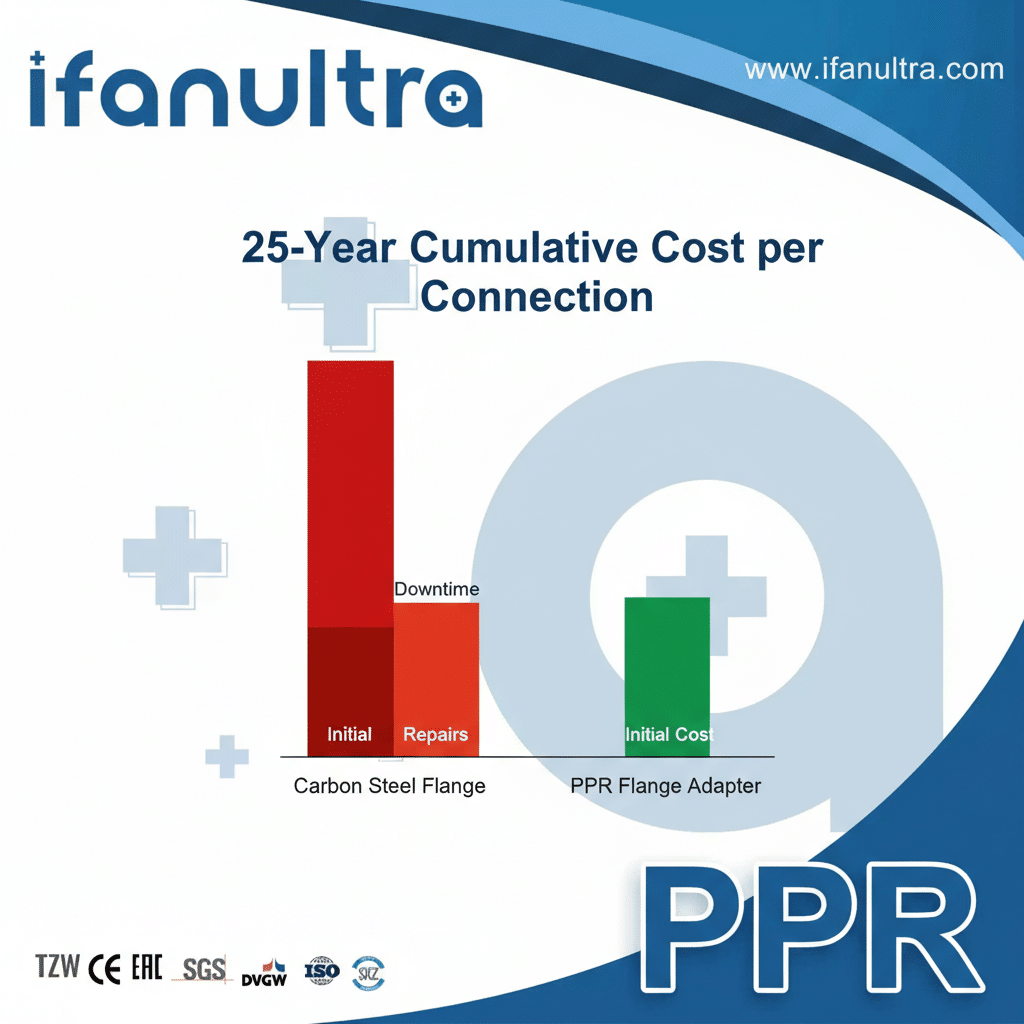
The corrosion resistance of PPR flange adapters offers massive long-term maintenance savings by virtually eliminating three major costs: 1) The repetitive labor and parts for replacing corroded flanges, 2) The production downtime during repairs, and 3) The collateral damage from leaks, such as water damage or product loss.
Breaking Down the Cost of Corrosion
To understand the savings, you must first understand the true cost of using corrosion-prone metal flanges in a demanding environment.
1. Direct Replacement Costs:
A corroded metal flange must be cut out. This requires skilled labor (welders, fitters), new parts (flange, gaskets, bolts), and equipment. A single repair can cost hundreds or thousands of dollars in labor and materials. Over a 25-year period, a single connection might need this treatment multiple times.
2. Downtime and Production Loss:
This is often the largest cost. Shutting down a process line, a cooling system, or a building’s water supply to repair a flange stops production. Lost revenue from downtime can dwarf the repair cost itself. PPR’s reliability prevents these unplanned stoppages.
3. Collateral Damage and Cleanup:
A leaking flange can damage electrical equipment, ruin inventory, cause mold growth, or lead to safety incidents. Cleanup and remediation add significant unexpected expenses.
The PPR Lifecycle Cost Advantage
A PPR flange adapter, correctly installed, will typically last the design life of the piping system (50+ years for water) without corrosion-related failure. This transforms the cost model from cyclical repair to a one-time installation.
Let’s compare the estimated 25-year costs for a single flange connection in a corrosive environment:
| Cost Category | Carbon Steel Flange | PPR Flange Adapter |
|---|---|---|
| Initial Purchase & Install | $100 | $150 |
| Planned Maintenance | $0 | $0 |
| Unplanned Repairs (Est. 3x) | $2,100 (3 x $700) | $0 |
| Estimated Downtime Cost | $4,500 (3 x 5 hrs x $300/hr) | $0 |
| Total 25-Year Cost | $6,700 | $150 |
Note: Costs are illustrative estimates. The “downtime cost” assumes a modest impact of $300 per hour of lost production.
The Value of Predictability
Beyond direct savings, PPR offers financial predictability. Facility managers can budget accurately without setting aside large contingency funds for corrosion repairs. This reliability also enhances the overall value and safety rating of the facility.
Conclusion
PPR flange adapters provide a fundamentally superior solution to corrosion, offering unmatched longevity and dramatic cost savings. For your most demanding connections, specify IFAN’s PPR flange adapters for guaranteed performance and lifetime value.









 English
 Español
 Français
 Português do Brasil