

ISO 15874-2:2013 lists a PP-R test lasting 1,000 hours at 95°C and 3.5 MPa hoop stress. That is a test condition, not a service-pressure promise. PPR pipe means polypropylene random copolymer pipe; importers should verify the material, intended service and offered specification together.
- PP-R names the material family; specify service conditions and construction separately.
- Table 10 reports hoop stress, not building-system operating pressure.
- Choose wall series against application class and design pressure; Scalc,max has no MPa unit.
- Check marking, report scope and destination drinking-water approval for the offered product.
- Confirm MOQ by SKU and dated production and transport milestones in writing.
From the beginning, the IFANULTRA video introduces multilayer pipe construction; it is brand communication, not offered-batch acceptance evidence.
What PP-R Means on a Purchase Order
PPR pipe is made from polypropylene random copolymer, commonly written PP-R. ISO 15874-2:2013 addresses polypropylene pipes for hot and cold water installations. The shorthand on a quotation identifies a material family; the application, dimensions and evidence still need to be specified.
For an importer, the useful first question is whether the offered pipe is the product your customer can accept. Copy the material designation from the proposed marking into the purchase specification. A quotation that says only “green PPR pipe” leaves room for substitutions in wall thickness, construction and intended service.
Keep PP-R, PP-RCT and composite constructions as distinct quotation lines. Ask the supplier to identify which layer carries the pressure load and which dimensions its report describes. A photograph of a finished pipe cannot establish the resin formulation. A resin brochure cannot establish the condition of the finished production batch.
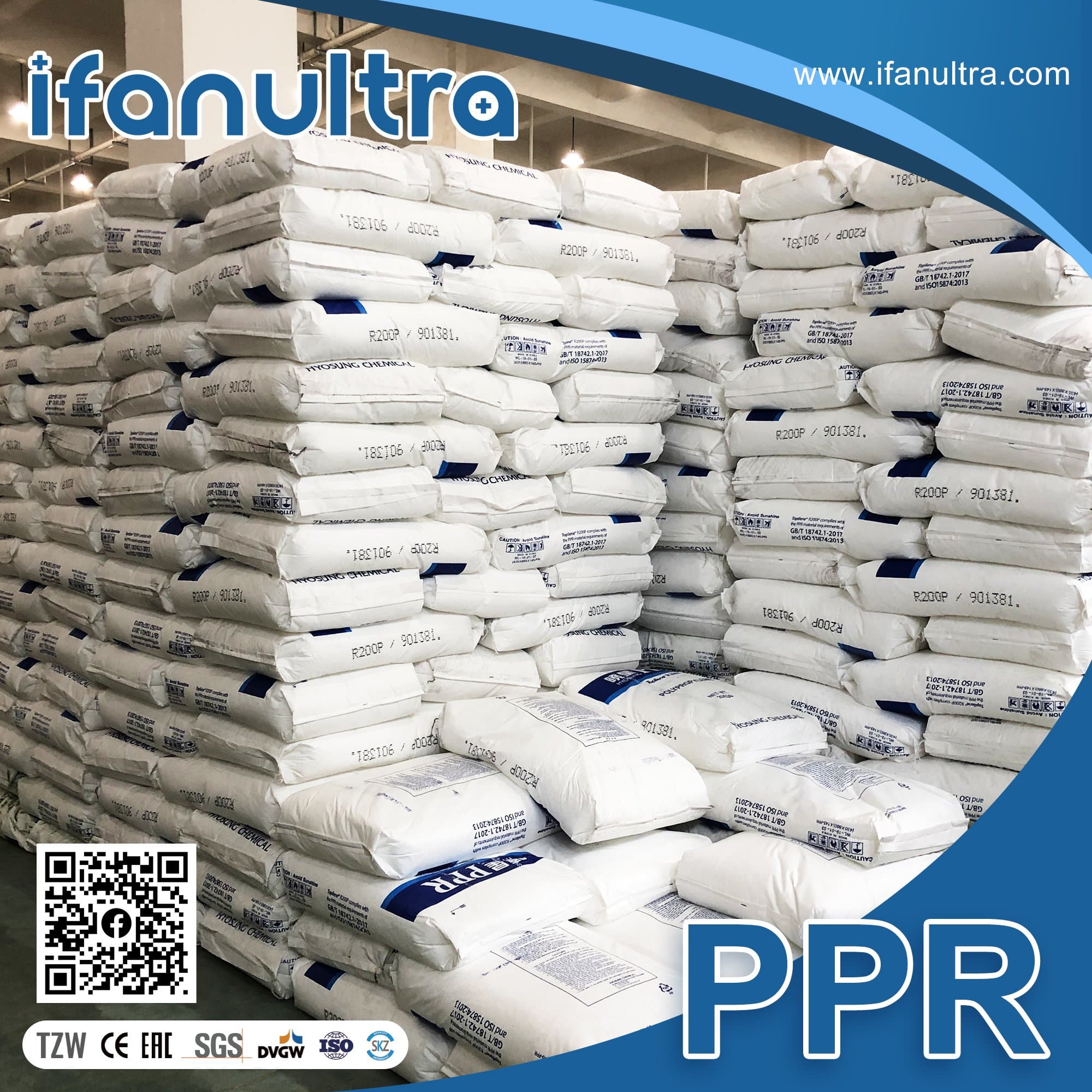
Which Pressure Test Report Should You Request?
One verified example explains why report labels matter. The PP-R entry in the 2013 standard has the following internal-pressure test conditions. These are hoop stresses in the pipe wall, not the pressure you should set on a building system.
| Hoop stress (MPa) | Temperature (°C) | Duration (hours) | Required result |
|---|---|---|---|
| 16.0 | 20 | 1 | No failure |
| 4.3 | 95 | 22 | No failure |
| 3.8 | 95 | 165 | No failure |
| 3.5 | 95 | 1000 | No failure |
Request the report identifier and test-piece designation, material, test method and result. Check that the size and construction correspond to the offered product. Record whether it is a material qualification report, a finished-product type test, or the batch evidence agreed for this shipment. Those documents answer different questions.
A completed long-duration report cannot also be evidence that a new shipment has just undergone that entire test. Ask when the samples were produced and when testing started. For an order deadline, agree what evidence must exist before release and what can be supported by an established qualification programme. Do not shorten an acceptance requirement by replacing it with an unrelated quick test.

Suppose the order calls for one diameter and fitting range, but the report identifies another pipe diameter. Authenticity alone does not close that scope gap. Ask whether the covered family includes the offered size and construction, and request the supporting scope. Keep the order description fixed while the evidence is resolved; changing the description merely to match the report defeats the check.
What an OIT Number Can and Cannot Tell You
Oxidation induction time is a test-dependent material property. It is not an acceptance characteristic listed in Table 11 of ISO 15874-2:2013. Do not import a polyethylene-pipe OIT target into a PP-R purchase specification simply because a supplier quotes it. See the 2013 Table 11 (printed page 13).
If OIT is part of your contract, request the test method, test temperature, specimen origin and acceptance criterion together. Make the distinction between a resin specimen and finished pipe explicit. Different methods or conditions prevent a valid supplier ranking.
For a missing value, leave the field open and request the report. Do not write a minimum from memory. Ask the project specifier which requirement controls acceptance. That keeps an optional quality indicator from displacing the mechanical, dimensional and drinking-water evidence the order actually needs.
Read the Marking Before Accepting the Specification
The 2013 marking table identifies the standard, manufacturer, outside diameter and wall, dimension class, material, application class with pressure, opacity when declared, and traceability information. Compare a legible marking photograph with the quotation before accepting the specification.
Use the production-period and site identifiers to connect the physical pipe to its paperwork. A report for a different factory or a different product designation is a gap to resolve. Save the photograph alongside the quote revision; this prevents the specification from drifting between quotation and shipment.
Read the application class and pressure together. PN alone should not be used to infer hot-water suitability. Likewise, Scalc,max in the standard is a calculated pipe-series value, not a design-stress figure with MPa units. If your purchasing team is uncertain, ask the supplier for the selected class, design pressure and supporting dimensional calculation.
The wall-tolerance table uses a positive allowance with no negative allowance. A low field reading should trigger a properly documented check under the specified dimensional method. Record the measurement location, instrument and uncertainty before declaring non-conformity. The datasheet reading guide explains how to keep these fields aligned.
Once the required class and construction are known, compare the PPR Global Series product list with your item schedule. The range page names product categories and resin producers; ask separately for the evidence covering the exact offered SKU.
Match wall series to the application, not the colour
ISO 15874-2:2013 clause 6.2.2 selects minimum wall thickness so the corresponding pipe-series value does not exceed the maximum for the chosen application class and design pressure. Annex A.4 repeats that selection rule. A permitted series value constrains the dimensional choice; it is not a lower or higher test-pressure reading. Ask the supplier to show which class-and-pressure combination controls the quoted wall.
For example, Table 3 gives PP-R Scalc,max of 3.0 for Class 1 at 10 bar, while Class 2 at that design pressure has 2.1. These are separate dimensional limits for separate service conditions, not interchangeable “10-bar pipes.” A quotation matching only the pressure label can therefore miss the required wall selection. Use the project’s specified class rather than choosing whichever table entry makes the offered product appear acceptable.
Clause 6.1 generally excludes added outside layers from the polypropylene dimensions used in the selection. Its defined barrier-layer exception has conditions; do not treat every multilayer or fibre-reinforced construction as the same case. Ask which dimension the datasheet measures and which construction the supporting calculation covers. An overall calliper reading cannot answer that by itself.
Distinguish the measured outside diameter, minimum wall and declared dimensional series. Record the instrument and measurement method agreed under the specification. If only the outside diameter matches, the schedule is still incomplete: the wall and intended service determine whether the offered item fits the project. A correct marking photograph is the starting identifier, not a substitute for those dimensions.
Check the Installation and Drinking-Water Conditions
Start with the actual service: cold distribution, hot-water distribution or heating. Record the design temperature profile and pressure before choosing the pipe schedule. A design-life statement needs those conditions; it should not be translated into an unconditional warranty for every installation.
Drinking-water suitability is a separate acceptance question. Ask which approval regime applies at the destination and whether the certificate covers the offered product, material and manufacturing site. A company management-system certificate does not establish approval for a water-contact product. The certificate verification guide helps separate those documents.
For outdoor routing, storage exposure or unusually hot service, ask for the manufacturer’s written limits. Do not assume a material name covers every environment. Installation also brings joints, support spacing and expansion into the decision. Specify a compatible system and obtain its installation instructions; leave the fusion procedure to the dedicated installation guidance rather than turning a definition page into an improvised site method.
Confirm MOQ and Lead Time Against the Item Schedule
There is no current accepted IFANULTRA quotation behind this update. Accordingly, MOQ, payment split, resin cost and production days are confirmation fields. Earlier self-published figures should not be treated as an offer. Request a dated quotation for the precise sizes, wall series, fittings and packaging you plan to import.
Ask whether the minimum order quantity applies to the whole order, each size, each colour or each custom print. A total-volume minimum does not tell you which slow-moving fitting you must also buy. Put mixed-SKU quantities and carton counts in the enquiry so the supplier can confirm the feasible assortment.
Separate lead time into specification approval, material availability, production, agreed inspection, booking, transit and local delivery. Ask which milestone starts the clock and what document authorises release. For a delivery deadline, request an ex-factory date and transport basis rather than accepting an undated “fast shipment” promise.
Specify whether pricing is per metre, length, piece or carton and how packing, inspection and freight are charged. State the quote validity and currency. Changes to the item mix or private-label print should trigger a revised written schedule, not an assumption that the original date and price still hold.

Use This Order-Release Sequence
First, freeze the application class, pressure, construction and dimensional schedule. Second, reconcile the marking photograph with the quotation and report identifiers. Third, confirm destination-specific approval evidence and any unresolved qualification gap. Keep each unresolved field assigned to a named person before approving payment.
Then agree the shipment acceptance record: which test pieces are measured, which documents accompany the goods, who handles discrepancies and what pauses release. Use the incoming-inspection workflow for batch controls rather than expecting this definition to replace a purchase contract.
Finally, obtain written MOQ, price basis and milestone dates for the agreed item schedule. The release decision should be reproducible from those records. A supplier’s willingness to answer them is useful; a confident slogan is not evidence.
Frequently Asked Questions
Is PPR the same as PP-R?
PPR is commonly used as shorthand for PP-R, polypropylene random copolymer. Use the precise material designation in the accepted quotation.
Does an ISO test report prove drinking-water approval?
No. Confirm the destination approval regime and that its evidence covers the exact product, material and site.
What MOQ and production time should I expect?
Request both in a dated written quote for the complete SKU mix. This update does not publish an unverified minimum or delivery promise.









 English
 Español
 Français
 Português do Brasil