
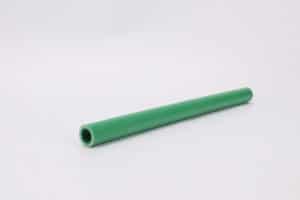
The PPR pipe full form is Polypropylene Random Copolymer — the same material is also written PP-R. That is the whole answer to what PPR stands for: a specific engineering plastic made from polypropylene, with a “random” copolymer structure that lets the pipe carry hot and cold water for decades without softening or failing at the joints.
Below we break down what each part of that name actually means, why you sometimes see “PP-R” with a hyphen and older labels like “type 3” or “PP-R 80,” and how PPR compares to the other pipe abbreviations you meet in a plumbing catalog. If you want the deeper technical picture after this, our complete guide to PPR pipe properties, installation and selection covers the specs in full.
Key Takeaways
- PPR = Polypropylene Random Copolymer, also written PP-R. The two spellings mean the same material.
- “Random” describes how a small amount of ethylene is spread randomly through the polypropylene chain, which is what makes the pipe tougher and better at higher temperatures.
- Older labels “type 3” and “PP-R 80” refer to the same random copolymer resin; “80” points to its 8.0 MPa minimum required strength (MRS) rating.
- PPR runs at about 70°C continuously with a 50-year design life at its rated pressure and temperature.
- PPR joins by heat fusion at ~260°C — no glue, thread or gasket — unlike solvent-cemented PVC or crimped PEX.
What does PPR stand for?
PPR stands for Polypropylene Random Copolymer. Read the three parts of the name and you already understand the material — each word describes something real about the plastic and why it behaves the way it does in a plumbing system.
“Polypropylene” — the base plastic
Polypropylene (PP) is the parent plastic. It is a lightweight thermoplastic built from propylene units, with a density around 0.905 g/cm³ — lighter than water, so an offcut floats. On its own, plain polypropylene is fairly stiff and does not handle sustained heat as gracefully as we need for a hot-water pipe. That is where the next word comes in.
“Random” — how the chain is built
During manufacture, a small share of ethylene is copolymerized into the polypropylene, and those ethylene units sit randomly along the polymer chain rather than in fixed blocks. That random distribution is the quiet hero of the whole material. It lowers the crystallinity a touch, which makes the pipe less brittle, more impact-resistant, and far more forgiving of higher operating temperatures than a plain PP homopolymer. When someone tells you PPR is “tough at hot-water temperatures,” the randomness in the chain is the reason.
“Copolymer” — two monomers, one material
A copolymer is a plastic made from two different building blocks (monomers) instead of one. Here the two are propylene and a small amount of ethylene. Blend them the random way described above and you get a resin that keeps polypropylene’s chemical resistance and light weight while gaining the temperature and impact performance a pressurised hot-water pipe demands. Put the three words back together and PPR is simply a polypropylene plastic, copolymerized with a bit of randomly placed ethylene.
Why is it written “PP-R” — and what about “type 3” and “PP-R 80”?
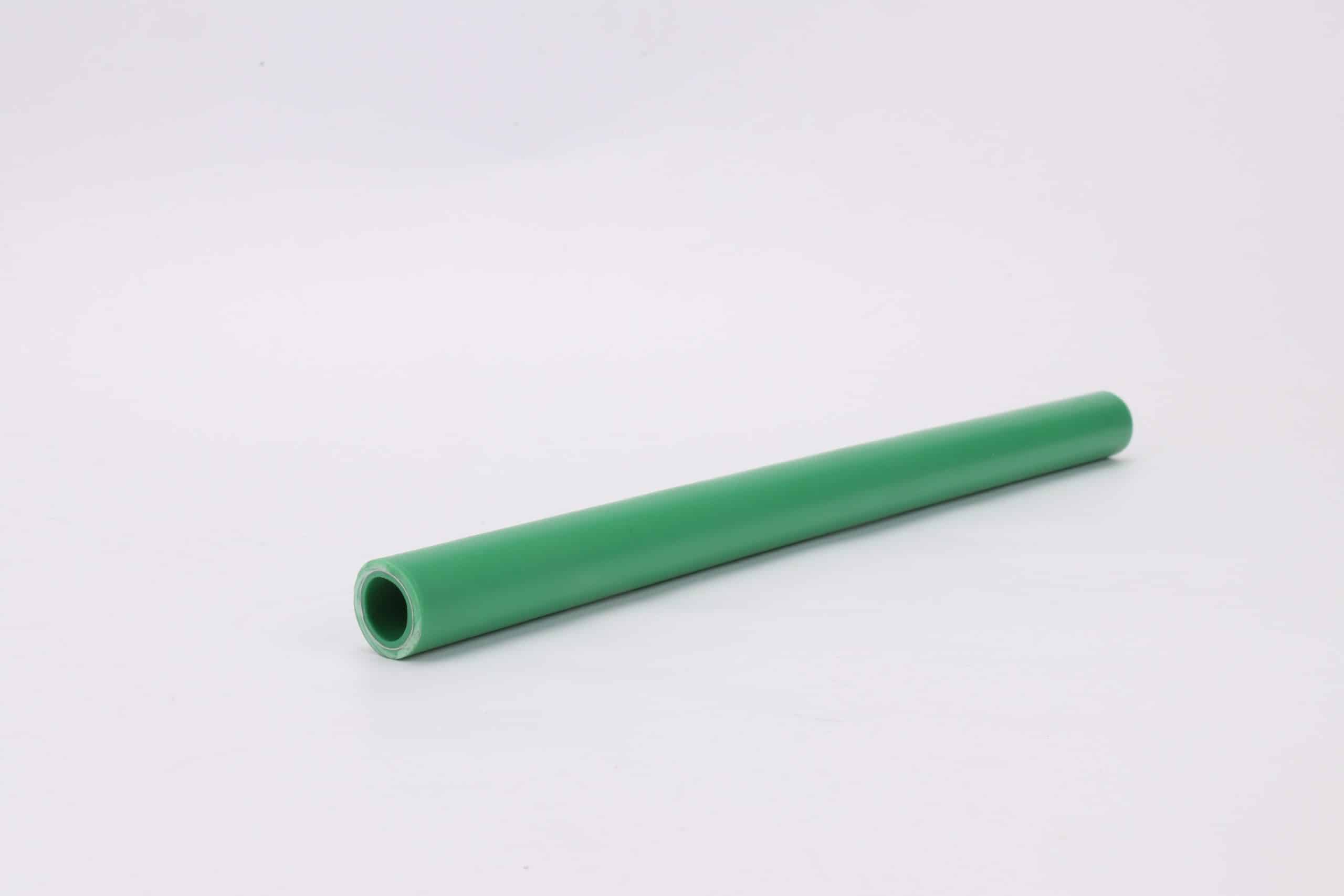
“PPR” and “PP-R” are the same material. The hyphenated form, PP-R, is the spelling used in the material and product standards, where “PP” is the polymer family (polypropylene) and “-R” is the sub-type (random copolymer). Sister types use the same logic: PP-H is the homopolymer and PP-B is the block copolymer. Catalogs and installers usually drop the hyphen and just write PPR, so you can treat “PPR” and “PP-R” as interchangeable.
You will also meet two older labels. “Type 3” comes from an early classification that split polypropylene into type 1 (homopolymer), type 2 (block copolymer) and type 3 (random copolymer) — so PPR is the type 3 material. “PP-R 80” adds a strength code: the “80” points to a minimum required strength (MRS) of 8.0 MPa, the long-term stress the resin is rated to withstand and the number the 50-year pressure ratings are calculated from. Different words, same random copolymer.
Other pipe abbreviations decoded
PPR is one of several plastic-pipe abbreviations you will see side by side on a spec sheet, and they are easy to confuse. Here is a clean reference for the ones that matter, with the full form spelled out and where each material typically earns its place.
| Abbreviation | Full form | Typical use |
|---|---|---|
| PPR (PP-R) | Polypropylene Random Copolymer | Hot and cold potable water, heating loops, some industrial fluids; joined by heat fusion. |
| PVC | Polyvinyl Chloride | Cold-water supply, drainage and waste; solvent-cemented. Not for hot water. |
| uPVC | Unplasticized Polyvinyl Chloride | Rigid cold-water and drainage pipe; the common “PVC” you see, with no added plasticizer. |
| CPVC | Chlorinated Polyvinyl Chloride | Hot water to about 93°C; solvent-cemented. Handles more heat than plain PVC. |
| PEX | Cross-linked Polyethylene | Flexible hot and cold water, underfloor heating, retrofit runs; crimp or push-fit. |
| HDPE | High-Density Polyethylene | Cold-water mains, gas and outdoor buried lines; butt- or electro-fused. |
The pattern worth remembering: PPR and PEX are the two built for sustained hot water, PVC and HDPE are cold-water and drainage materials, and CPVC is PVC’s heat-tolerant cousin. PPR is the one that joins by melting pipe and fitting into a single piece.
What PPR is used for and its key properties
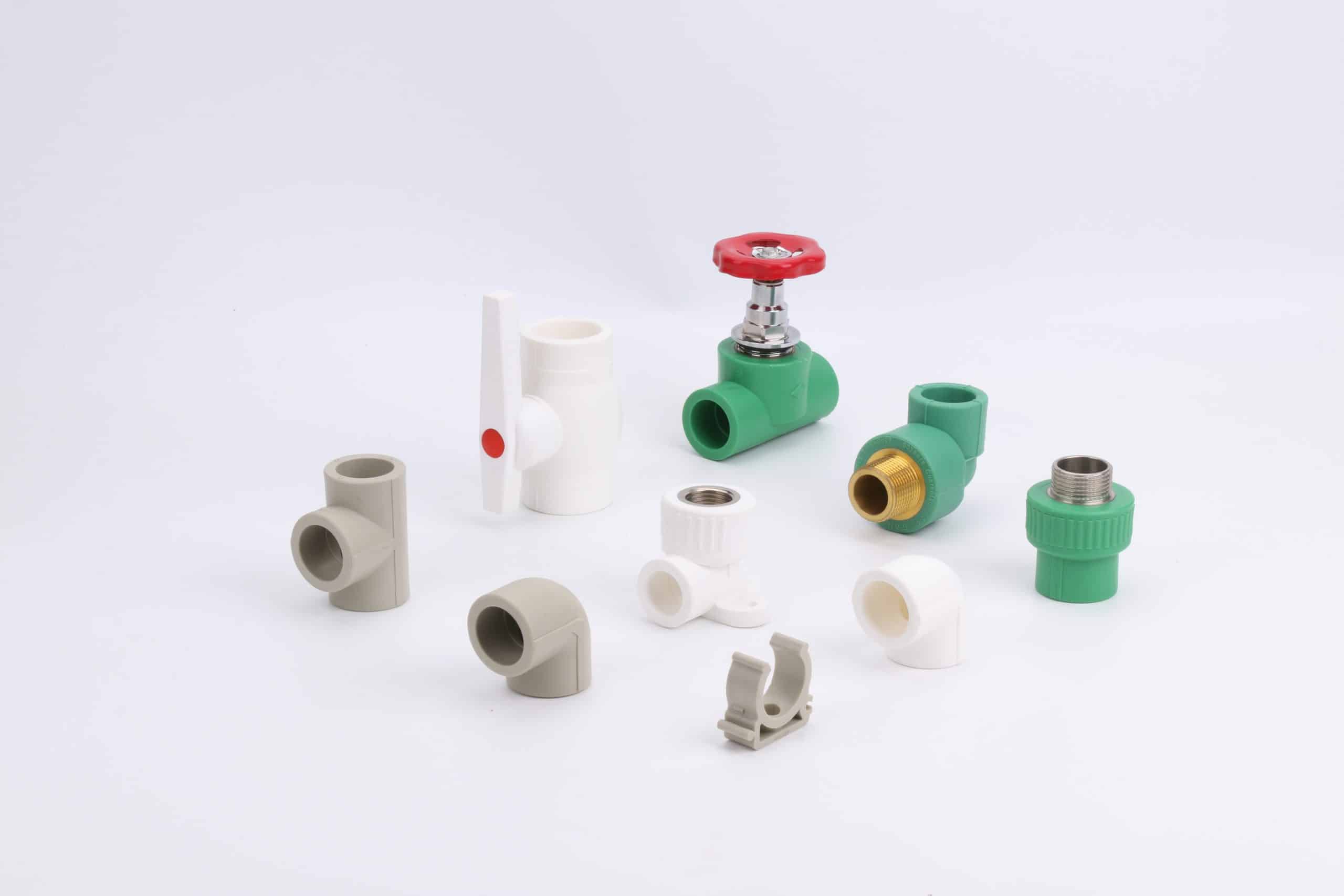
Now that the name makes sense, here is what the material actually does. PPR is the standard choice for pressurised hot and cold potable water inside buildings, and it also runs closed heating loops and some industrial fluid lines where its chemical resistance pays off. It is a supply-side material — you plumb fresh water through it, not sewage.
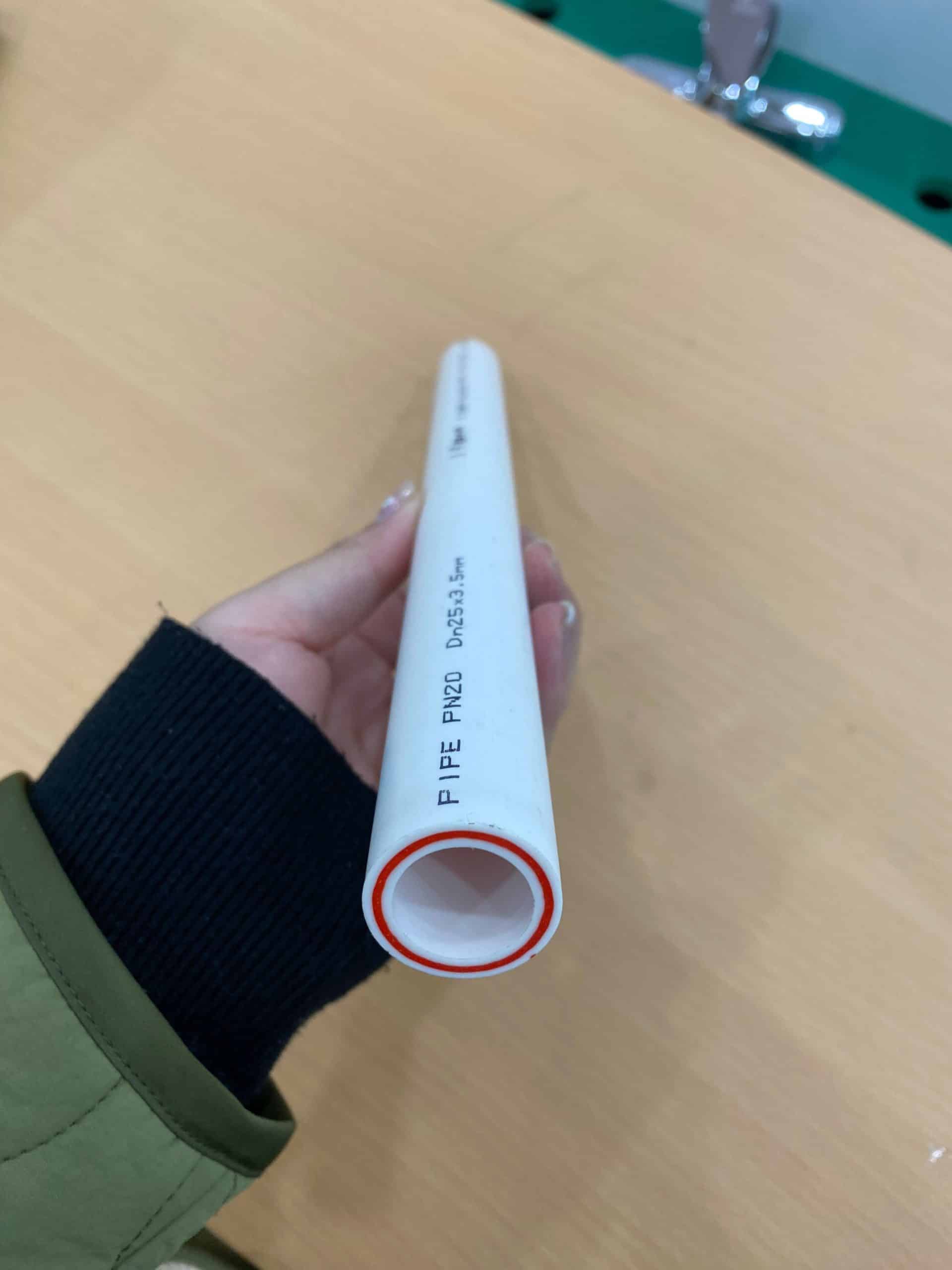
The random copolymer structure delivers the numbers that matter. PPR runs at about 70°C continuously with short-term peaks near 95°C, and it carries a 50-year design life at its rated pressure class and temperature. Its thermal conductivity is low at roughly 0.24 W/(m·K), so pipes lose less heat and sweat less than metal. Plain PPR expands about 0.15 mm per metre per °C; fiber-composite versions cut that by around 75% to roughly 0.03–0.05 mm/(m·°C), which is why long hot-water runs often use a fiber layer.
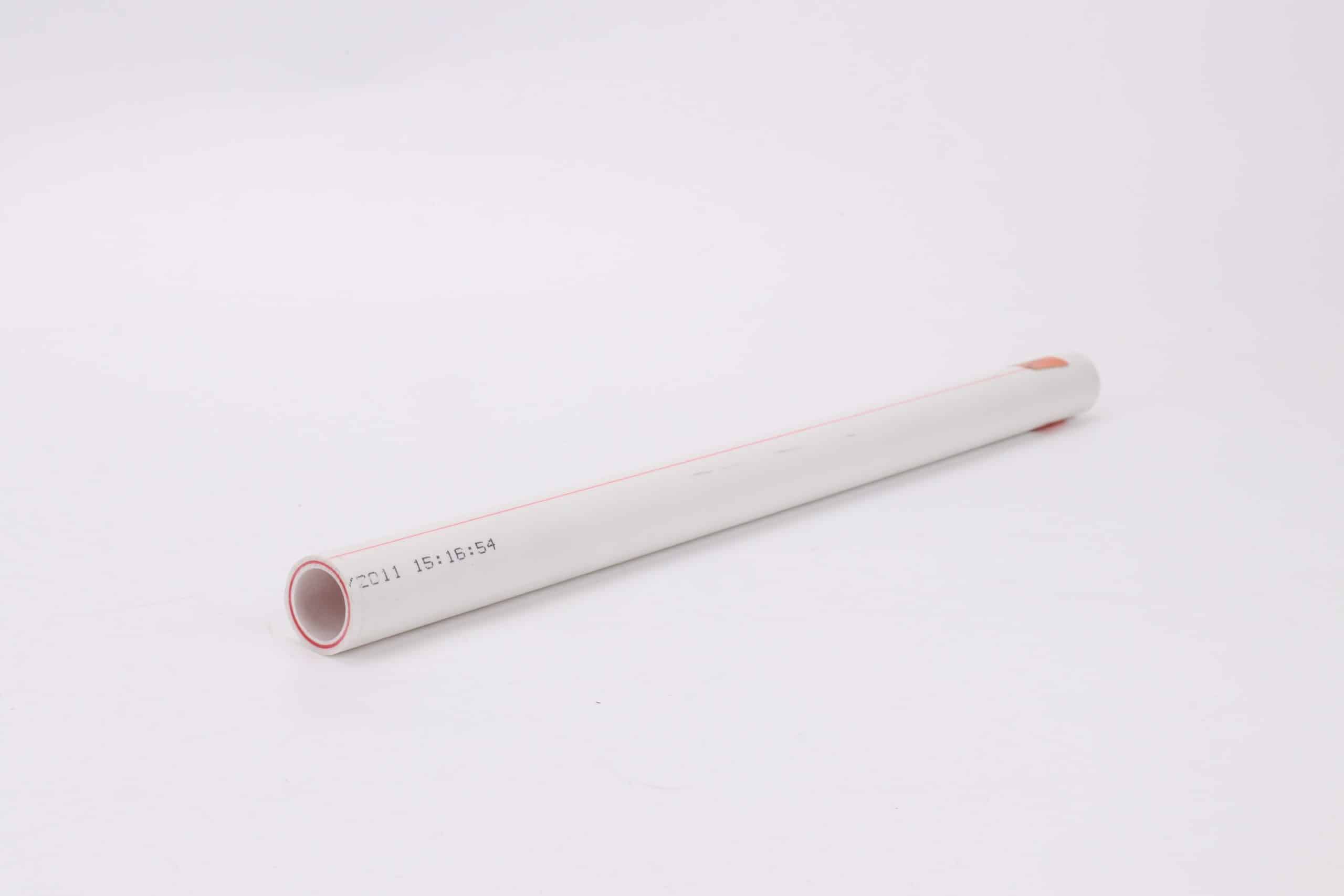
The defining feature is the joint. PPR pipe and fittings are welded by socket heat fusion at about 260°C — the mating surfaces melt and fuse into one continuous piece with no glue, thread or rubber gasket to age or leak. The material comes in pressure classes (PN10, PN16, PN20, PN25) where the wall thickness rises with the rating; PN20 is the usual pick for hot water. Sizing runs by DN, the outside diameter in millimetres, and our PPR pipe sizes reference lists the wall-by-diameter figures. IFANULTRA builds these from virgin Nordic polypropylene rather than filled or recycled resin — you can see the full range in the PPR Global Series, including plain, fiber-composite and UV-resistant variants.
How PPR differs from PVC and PEX
Knowing the full form is one thing; knowing when to reach for PPR over the alternatives is what stops a wrong spec. Three quick contrasts settle most decisions.
- PPR vs PVC: PVC is a cold-water and drainage material glued with solvent cement and generally kept under about 60°C. PPR handles ~70°C continuously and welds by heat fusion. If hot water is in the system, PVC is the wrong tool and PPR is the right one.
- PPR vs PEX: PEX is flexible cross-linked polyethylene that bends around corners and shines in retrofits and underfloor heating, joined with crimp rings or push-fit. PPR is rigid and joined by fusion, giving a joint with no mechanical fitting to loosen — better for exposed risers and permanent building services.
- PPR vs copper: Copper takes very high heat but corrodes over time, costs more, and needs soldering. PPR does not corrode, is lighter to ship and install, and joins faster.
PPR is built to recognised standards including ISO 15874 and the DIN 8077/8078 series, and potable-water lines are often specified to NSF for the North American market; the base material standard sits with ISO. Requirements vary by market and the importer’s role, so confirm current requirements with a customs broker or the relevant authority before you commit a shipment.
Conclusion
PPR pipe full form is Polypropylene Random Copolymer, written PP-R in the standards. Break the name apart and you have the whole story: a polypropylene plastic, made a copolymer with a little ethylene placed randomly along the chain, which is exactly what lets it carry hot water for 50 years and weld into leak-free joints.
If you are specifying or sourcing PPR and want the numbers behind the name — wall thickness by size, certificates that clear customs, and the difference between virgin and filled resin — the IFANULTRA team is happy to walk through specs and send a catalog.
Frequently Asked Questions
What is the full form of PPR pipe?
The full form of PPR is Polypropylene Random Copolymer, also written PP-R. It is a thermoplastic pipe material used for hot and cold water supply, joined by heat fusion instead of glue or threads.
Is PPR the same as PP-R?
Yes. PPR and PP-R are two spellings of the same material, Polypropylene Random Copolymer. The hyphenated PP-R appears in technical standards; catalogs and installers usually write it as PPR.
What does the “random” in Polypropylene Random Copolymer mean?
“Random” means a small amount of ethylene is spread randomly along the polypropylene chain rather than in fixed blocks. This makes the pipe tougher, less brittle, and better at higher operating temperatures.
What is PP-R type 3 or PP-R 80?
Both are older names for the same random copolymer resin. “Type 3” comes from a classification where PPR is the third polypropylene type; “80” refers to its 8.0 MPa minimum required strength rating.
What is PPR pipe used for in plumbing?
PPR is used for pressurised hot and cold potable water, heating loops, and some industrial fluid lines. It runs at about 70°C continuously with a 50-year design life at its rated pressure and temperature.
Written by the IFANULTRA team — a PPR pipe and fittings brand of IFAN Group, drawing on 30+ years of manufacturing experience, German automated production lines, and ISO 9001, SKZ and NSF certified PPR product lines.









 English
 Español
 Français
 Português do Brasil