
An OEM PPR pipe program lets you put your own brand on a factory’s proven, already-certified polypropylene pipe and fittings — your logo printed on the pipe wall, your color, your carton, sold under your name instead of the maker’s. For a distributor, it is the fastest route to a house brand: you skip the years of extrusion R&D and ride a product that has already passed pressure and material testing. This guide walks through what “OEM” and “private label” really mean for PPR, what you can and cannot change, the minimum order quantities a branded run carries, how certification behaves under your name, and how to lock the deal so a competitor cannot buy the same design next month.
Most buyers who ask to “put my brand on PPR pipe” actually want ODM, not OEM — they want the factory’s existing design with their branding on top, which is cheaper and faster than a full custom spec. The distinction matters for cost, tooling, and who owns the mold, so it is worth getting straight before you send an RFQ. If you are still deciding whether PPR is the right material for your market at all, start with our PPR pipe guide covering properties, installation and selection, then come back here to build the brand around it.
Key Takeaways
- ODM means your brand on the factory’s proven design; OEM means the factory builds to your own spec. Most private-label PPR programs are ODM.
- Print-only branding (your logo on the pipe wall) is the cheapest, fastest customization; new fitting molds carry the highest MOQ and longest lead time.
- Branded runs carry a higher minimum than stock because of print-plate setup and dedicated resin batches — typically a few thousand meters or a full mixed container.
- Certificates like ISO 9001 and SKZ certify the factory and product, not your logo; potable marks such as NSF may need re-listing under your brand — confirm with the certifier for your target market.
- Standard PPR sizing is fixed: DN is outside diameter (DN20–DN160), and only wall thickness changes with pressure class (PN10 to PN25). You customize brand and packaging, not the geometry.
- A pre-production sample and written approval before the full run protects you; get exclusivity and mold-ownership terms in writing if the design is truly yours.
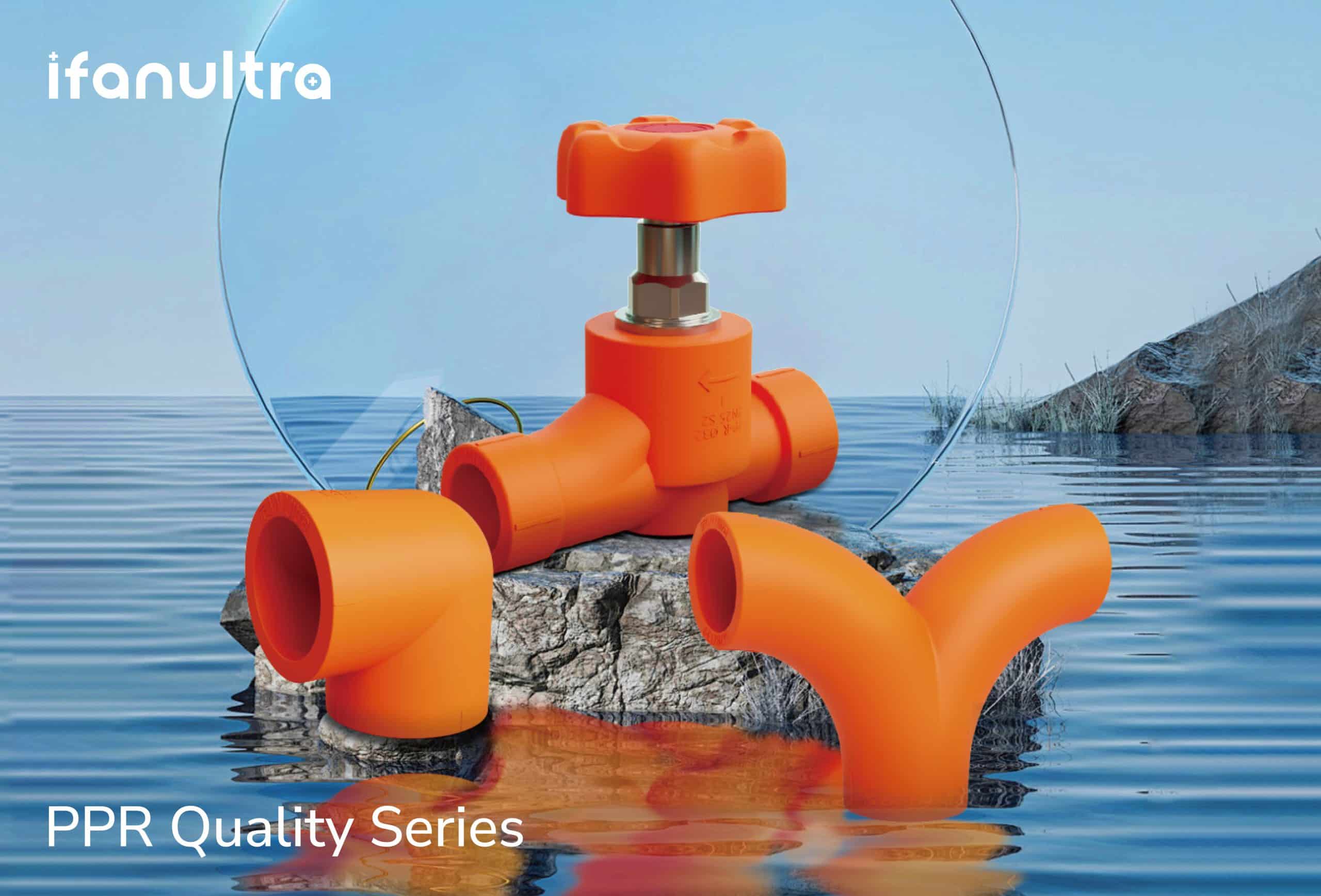
What OEM and Private-Label PPR Actually Mean
The words OEM, ODM and private label get thrown around as if they mean the same thing. For an OEM PPR pipe deal they do not, and the difference decides your price, your tooling bill and who else can buy your product.
ODM: your brand on a proven product
ODM (Original Design Manufacturer) means the factory already owns the design, the extrusion recipe and the molds. You pick from its catalog — say a PN20 hot-water line in DN20 to DN63 — and apply your branding on top: your logo on the pipe, your color, your carton. The product is proven and already certified, so you inherit years of testing without paying for R&D. This is what most buyers mean when they say “private label PPR pipe.” It is the cheaper, faster path, and the trade-off is that the factory can sell the same underlying product to other buyers unless you negotiate exclusivity.
OEM: the factory builds to your spec
OEM (Original Equipment Manufacturer) in its strict sense means you bring the specification — dimensions, wall targets, a custom fitting geometry, a particular resin grade — and the factory produces to your drawings. You own the design intent, and often the tooling. That control costs more and takes longer because it can require new molds and validation runs. True custom-spec OEM is rare for commodity PPR, since the sizing is standardized by ISO 15874 and DIN 8077 anyway; most “OEM” PPR work is really ODM with heavier branding. Where genuine OEM shows up is a proprietary fitting shape, an unusual color, or a resin variant the factory does not stock.
One point that trips up first-time buyers: PPR geometry is not a free canvas. DN denotes the outside diameter and is fixed across compliant factories — DN25 is 25 mm outside whether it is your brand or anyone else’s — and only the wall thickness changes with pressure class. So “custom PPR pipe” almost never means custom dimensions. It means custom identity: print, color, packaging, and which standard specs you choose to stock under your name.
What You Can Actually Customize
Customization for a private-label PPR line runs across four levels, from a cosmetic logo change to a genuine spec change. Knowing which level you are asking for tells you the price and the minimum order before you even talk to a factory.
Pipe print and logo
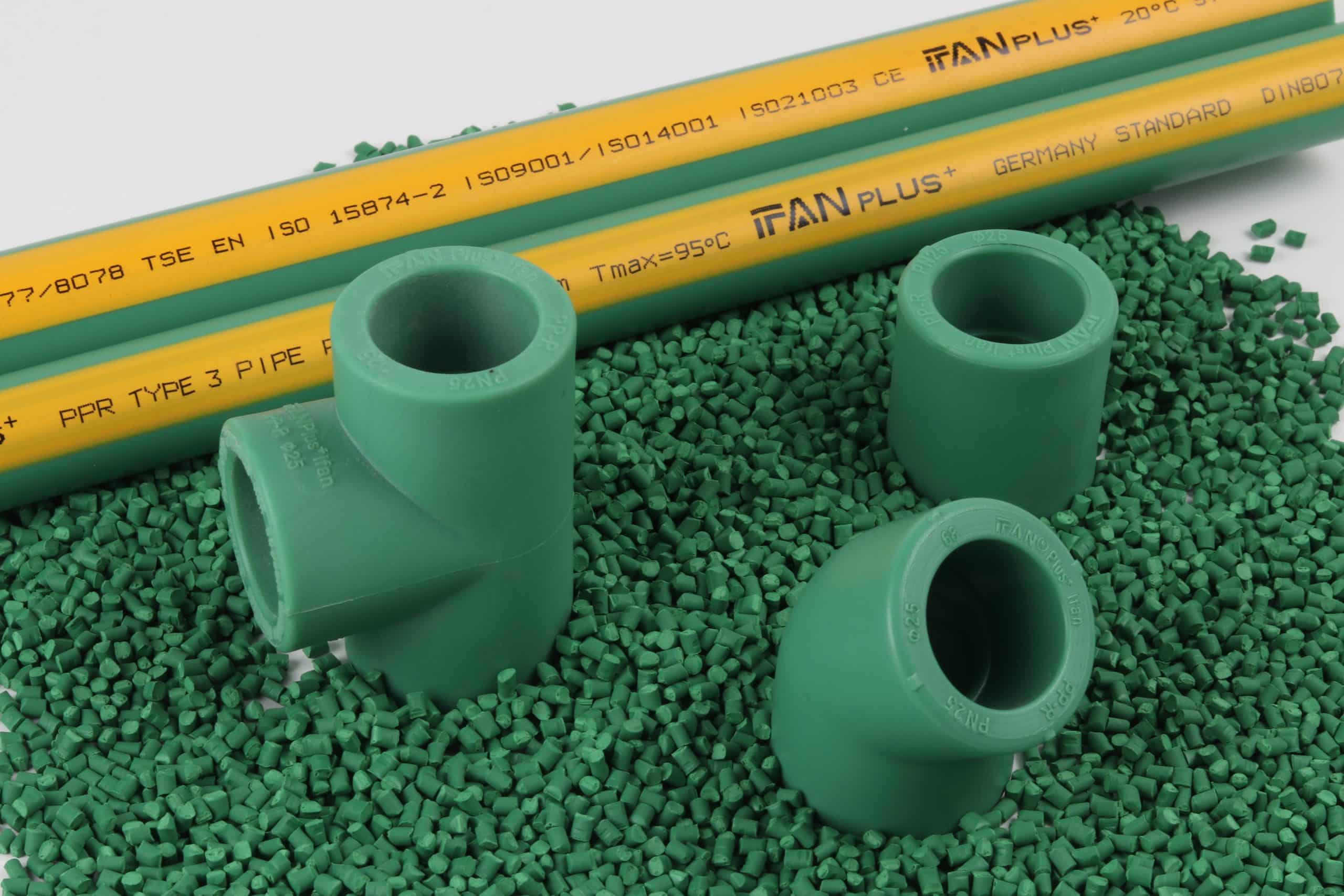
The pipe wall carries a printed legend — usually your brand name, the standard (for example EN ISO 15874), the size, the pressure class such as PN20, a production date and sometimes a batch code. Replacing the factory’s brand text with yours is the single most common private-label change. It is done with an inline printer during extrusion, so the cost is a one-time print-plate or setup charge, not a per-meter surcharge. Confirm the print stays legible and durable, because a smudged or easily-wiped legend reads as a fake-factory red flag to your own customers.
Color
PPR is commonly white, grey or green, and a distinctive house color helps a distributor stand out on the shelf. Color is set by masterbatch added at extrusion, so a non-standard shade means a dedicated resin batch and usually a higher minimum than a stock color. Ask whether the color affects any certification, since some marks are tested on a specific formulation.
Packaging and carton design
Your artwork on the carton, printed shrink film on pipe bundles, barcodes and country-of-origin labeling all fall here. Packaging is often the highest-visibility part of a house brand and the cheapest to change, because it does not touch the extrusion line at all. Get the carton print proof approved in writing before the run.
Bundle, length and spec level
You choose cut length (4 m is typical), pieces per bundle, and which specs your brand carries — the pressure classes and sizes below, plus fiber-composite or UV-resistant variants where the factory offers them.
- Pressure class: PN10 (cold), PN16 (higher-pressure cold/warm), PN20 (standard hot water, most common), PN25 (high-pressure/composite). Wall thickness rises with the class — a DN25 pipe is about 2.3 mm wall at PN10 and about 4.2 mm at PN20.
- Sizes: common DN20 through DN160. Outside diameter is fixed; only wall and bore change with class.
- Fiber-composite variant: a glass-fiber middle layer cuts linear thermal expansion by roughly 75%, from about 0.15 mm/(m·°C) for plain PPR down to about 0.03–0.05, which matters for long hot-water runs.
- UV-resistant variant: for limited outdoor exposure where standard PPR would degrade in sunlight.
MOQ for OEM Runs: Why Branded Costs More to Start
A branded run almost always carries a higher minimum than buying stock product off the shelf, and the reason is setup. Stock pipe is extruded continuously and pulled from inventory, so a factory can sell you a partial pallet. The moment you add your print, your color or a new mold, the factory has to stop the line, change the print plate, mix a dedicated resin batch or cut new tooling — and it will not do that for a trivial quantity. The ppr oem moq you are quoted is really the factory amortizing that setup across enough units to make it worth running.
The table below shows how each customization level typically pushes MOQ and lead time. Treat the figures as directional ranges to frame your negotiation, not fixed quotes — every factory sets its own thresholds, and they move with size mix and season.
| Customization level | Typical MOQ impact | Lead-time impact |
|---|---|---|
| Custom carton / packaging only (no line change) | Lowest — often close to stock; a mixed container works | Minimal; add print-proof approval time (days) |
| Pipe-wall logo / brand print (stock color) | Moderate — a one-time print-plate charge plus a minimum per printed size | Adds plate setup; usually within the standard 2–6 week window |
| Custom color (non-standard masterbatch) | Higher — needs a dedicated resin batch; minimum rises per size | Longer; batch scheduling and a color-match sample step |
| New fitting mold / custom geometry (true OEM) | Highest — tooling cost amortized over a large first run | Longest; mold cutting plus trial and validation before production |
A practical way to keep your first MOQ down: print-brand the pipe, use a stock color, and put your identity into the carton and film. You get a fully branded product that looks bespoke on the shelf, without paying for a dedicated resin batch or new molds on run one. Scale into custom color and tooling once volume justifies it.
Certification Support Under Your Brand
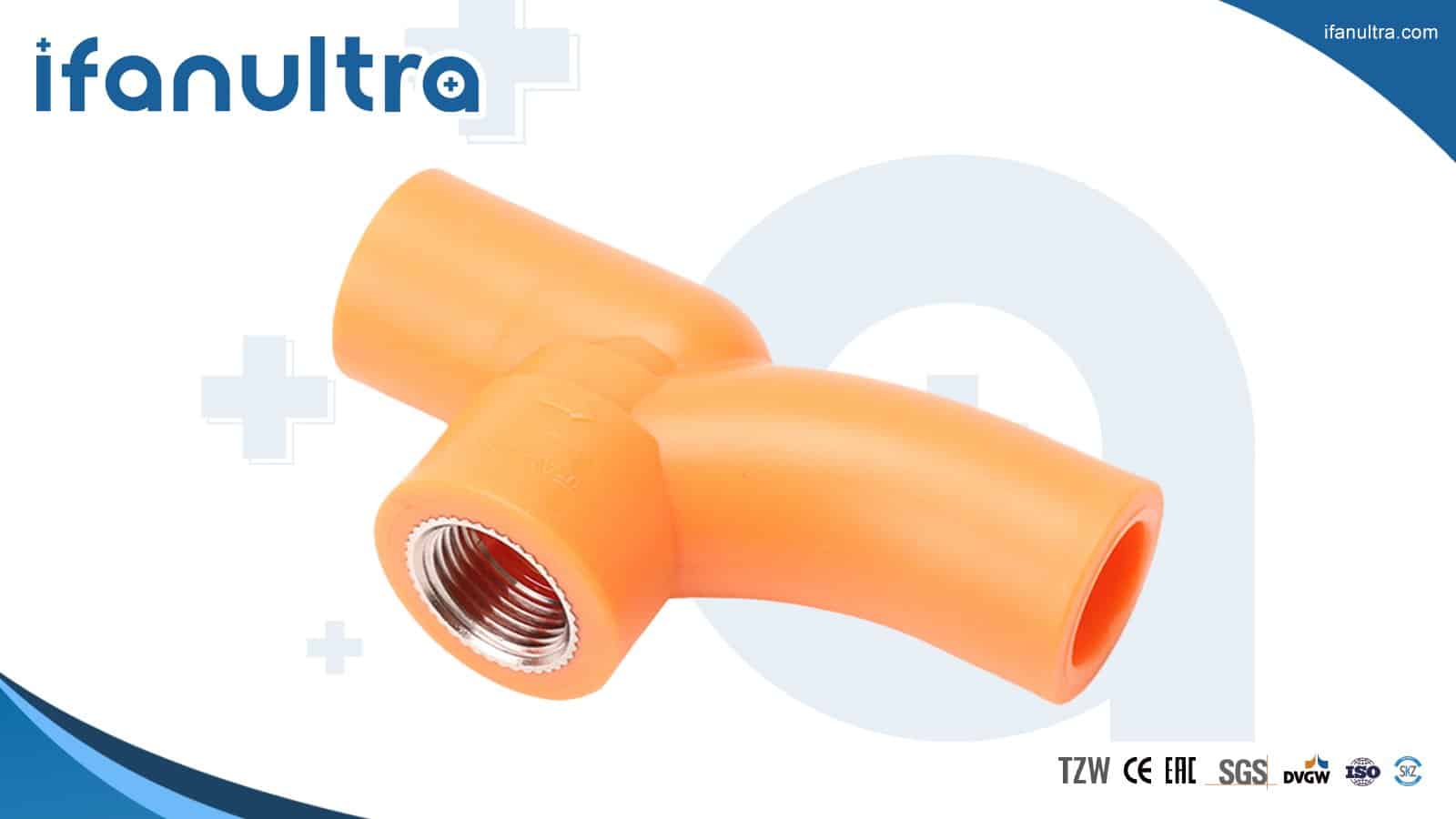
This is where private-label buyers get burned, so read it carefully. A certificate on PPR certifies the factory’s quality system and the tested product — it does not automatically attach to your logo. Whether a mark “transfers” to your brand depends on the mark and your target market, and you should confirm the current rules with the certifier or a customs broker before you promise anything to your customers.
- System certifications like ISO 9001 belong to the factory and its production line. They typically stay in the factory’s name; you reference the manufacturer’s ISO status, you do not re-issue it under your brand.
- Product and material certifications such as SKZ (Germany) or DIN 8078 testing are tied to the tested product and formulation. They often follow the product, but the listing and the certificate holder may need updating if your brand appears on the goods.
- Potable-water marks like NSF for the US market are usually brand-specific listings. Selling under your name may require a re-listing or an added label holder — this varies by mark and market, so confirm current requirements with the relevant authority or a customs broker.
A good OEM partner tells you plainly which marks it can extend to your brand and which stay in its own name, and it gives you the underlying test reports so you are not selling on faith. If a factory promises that every certificate simply becomes yours, treat that as a warning sign. See the ISO 15874 standard at iso.org and NSF potable-water certification at nsf.org to understand what each mark actually covers before you commit.
Tooling, Samples and Lead Time
A disciplined OEM run follows the same sequence regardless of factory. Skipping the sample step to save two weeks is the fastest way to receive a container of pipe with your logo printed crooked or in the wrong color.
- Spec and artwork lock: agree the sizes, pressure classes, color, print legend text and carton artwork in writing.
- Tooling and plate prep: for print-only branding this is a plate setup; for a new fitting it is mold cutting, which is the slow, expensive part.
- Pre-production sample: the factory produces a short branded sample of the actual pipe and carton, not a stock unit with a sticker.
- Written approval: you check the print position, legibility, color match and carton, then sign off. Nothing runs before this.
- Full production run and pre-shipment check: batch runs, with material and pressure test reports issued for the batch.
Standard lead time for a branded PPR order often falls in the 2 to 6 week range after the deposit clears, and it stretches when a new color batch or new tooling is involved. Build the sample-approval window into your launch calendar rather than treating it as optional.
Protecting Your Brand
The uncomfortable truth of private label: unless you write it down, the factory can sell a near-identical product to your competitor across the street. Protection is a negotiation, and it costs something — usually a higher price or a volume commitment in exchange for exclusivity. Decide which of these you actually need.
- Brand and print exclusivity: the factory will not print your logo or brand legend for anyone else. This is standard and easy to secure.
- Market or territory exclusivity: the factory will not supply the same private-label product to another buyer in your country or region. Expect a minimum-volume condition in return.
- Mold ownership: if you paid for a custom fitting mold, get in writing that the tool is yours, stored for your use only, and not run for other clients. Without this clause you funded a tool the factory can reuse.
- Non-compete on your design: if you contributed a genuinely custom geometry or color, bar the factory from selling that specific design to others for a defined period.
For an ODM deal built on the factory’s own catalog product, full design exclusivity is usually off the table — the factory owns that design and sells it widely. That is fine. Your protection there lives in your brand, your print, your packaging and your customer relationships, not in owning a commodity dimension every compliant factory already makes.
Choosing an OEM Partner
The wrong OEM partner is worse than no house brand at all, because your name is now on their defects. Screen for real manufacturing capability, not a trading company reselling someone else’s pipe with your sticker on it. The vetting discipline is the same one we cover in our PPR manufacturer vetting checklist — apply it before you hand over your brand.
- Own extrusion line: confirm the factory actually extrudes, ideally on automated lines, rather than buying pipe and rebranding it. Ask to see the line, or a live video of it running your order.
- In-house print capability: inline pipe printing during extrusion signals a real producer. A factory that outsources the print is a middleman.
- Certification track record: existing ISO 9001, SKZ, NSF or equivalent listings show the factory has passed audits before and can support your certification questions honestly.
- Raw material transparency: virgin polypropylene, not recycled or filler-loaded resin sold as premium. Thin-wall pipe passed off as full spec is the classic private-label trap — ask for the resin source and wall-thickness measurements.
- Batch traceability: material and pressure test reports issued per batch, so a customs hold or a field failure can be traced to a production run.
Worked Example: Launching a House PPR Brand for One Market
Picture a plumbing-supply distributor in a single hot-climate market who currently resells three competing PPR brands and wants a house line to capture the margin. Here is a sensible first move that keeps risk and MOQ low.
- Scope: ODM, not full custom. Take the factory’s proven PN20 hot-water line in DN20 to DN63 — the sizes that move fastest in residential plumbing — plus matching sockets, elbows and tees.
- Branding: pipe-wall print with the house name, standard and PN class; stock white or green color to avoid a dedicated resin batch; fully custom carton and bundle film. This holds the first-run MOQ near a stock order.
- Certification: reference the factory’s ISO 9001 and SKZ status, and check whether a potable-water mark needs re-listing under the house brand for this market before printing any claim on the carton — confirm with a customs broker.
- Process: lock the print legend and carton artwork, approve a pre-production sample of the actual branded pipe, then run one mixed container. Add fiber-composite for long hot-water runs only after the base line sells.
- Protection: secure print exclusivity immediately; negotiate territory exclusivity once repeat volume justifies the minimum the factory will ask in return.
That distributor now owns a branded, certified PPR line built on a proven product, launched with one container and no tooling bill — and a clear upgrade path into custom color, fiber-composite and territory exclusivity as volume grows.
Conclusion
A house PPR brand is more accessible than most distributors assume. Because the sizing is standardized and the base product is already certified, you are mostly buying identity — your print, your color, your carton — on a pipe that has already passed the hard tests. Start with print-and-packaging branding on a stock spec, get the exclusivity and certification terms in writing, and scale into custom tooling only when volume earns it.
The partner matters more than the paperwork. A real extruder with its own lines, honest certification answers and virgin resin gives you a brand you can stand behind; a middleman with a sticker gives you a liability. If you are ready to price a branded run, reach out for specs and a catalog and pressure-test the factory against everything above.
Frequently Asked Questions
What is the difference between OEM and ODM PPR pipe?
ODM means putting your brand on the factory’s existing, proven design — cheaper and faster. OEM means the factory builds to your own specification or custom tooling, giving you more control at higher cost. Most private-label PPR programs are ODM.
Can I put my own logo on PPR pipe?
Yes. Your brand legend is printed on the pipe wall inline during extrusion, alongside the standard, size and PN class. It carries a one-time print-plate setup charge plus a minimum quantity per printed size, not a per-meter surcharge.
Why is the MOQ higher for a custom PPR run?
Branded runs require the factory to change the print plate, mix a dedicated resin batch or cut new tooling. That setup is spread across a minimum quantity to be worthwhile, so custom color and new molds carry higher minimums than stock pipe.
Do factory certifications transfer to my brand?
Partly. System marks like ISO 9001 stay in the factory’s name; product marks like SKZ often follow the product. Potable marks such as NSF may need re-listing under your brand. Confirm current rules with the certifier or a customs broker.
Can I customize PPR pipe dimensions?
Not really. DN is the outside diameter and is fixed by standards like ISO 15874, and only wall thickness changes with pressure class. Custom PPR means custom branding, color and packaging — plus your choice of standard specs — not custom geometry.
Written by the IFANULTRA team — a PPR pipe and fittings brand of IFAN Group, drawing on 30+ years of manufacturing experience, German automated production lines, and ISO 9001, SKZ and NSF certified PPR product lines.









 English
 Español
 Français
 Português do Brasil