
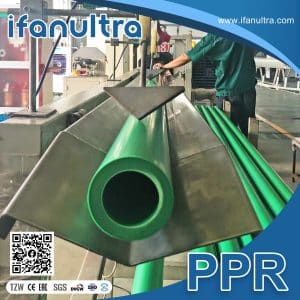
The PPR pipe pressure class printed on a pipe — PN10, PN16, PN20 or PN25 — is the nominal pressure the pipe holds for 50 years while carrying cold water at 20°C. That is the single number that decides whether a line survives a decade of hot service or splits early, and it is the specification importers and installers most often get wrong. PN is not the pressure the pipe holds when it is running hot; heat lowers the safe pressure sharply, which is exactly why the class you pick matters.
This guide breaks down what each class means, how the S-series and SDR ratios set the wall thickness behind them, and which class belongs on a hot line versus a cold one. For the full material and installation picture, start with our PPR pipe guide; here we go deep on pressure alone. The short version: PN20 is the standard choice for hot potable water, and the only reliable way to confirm you actually got PN20 is to measure the wall.
Key Takeaways
- PN = nominal pressure in bar for 50 years at 20°C cold water: PN10 = 10 bar, PN16 = 16 bar, PN20 = 20 bar, PN25 = 25 bar.
- PN20 (series S2.5, SDR6) is the standard hot-water class; its DN25 wall is 4.2 mm.
- A lower S or SDR number means a thicker wall and a higher pressure class at the same outside diameter.
- Heat derates pressure: a PN20 pipe rated 20 bar cold typically holds roughly 10.8 bar at 70°C, so hot lines need a higher class.
- Outside diameter is fixed by DN, so wall thickness is the only tell — caliper the wall to confirm a PN16 was not sold to you as PN20.
- PN25 and fiber-composite PPR suit high-pressure risers and long continuous hot runs.
What PN Actually Means in a PPR Pipe
PN stands for nominal pressure, expressed in bar. A PN20 PPR pipe is engineered to carry 20 bar of internal pressure for a 50-year design life — but only under one specific condition: cold water at 20°C. That reference condition is written into ISO 15874, the international standard for PP-R piping. Change the temperature and the safe working pressure changes with it.
This is the trap. Buyers read “PN20” as “holds 20 bar in service” and spec it onto a hot recirculation loop running at 70°C, assuming a comfortable margin. In reality that same pipe holds far less than 20 bar once it is hot. PN is a rating benchmark, not a live promise at every temperature. The class you buy sets the wall thickness; the operating temperature then decides how much of that rated pressure you actually get to use.
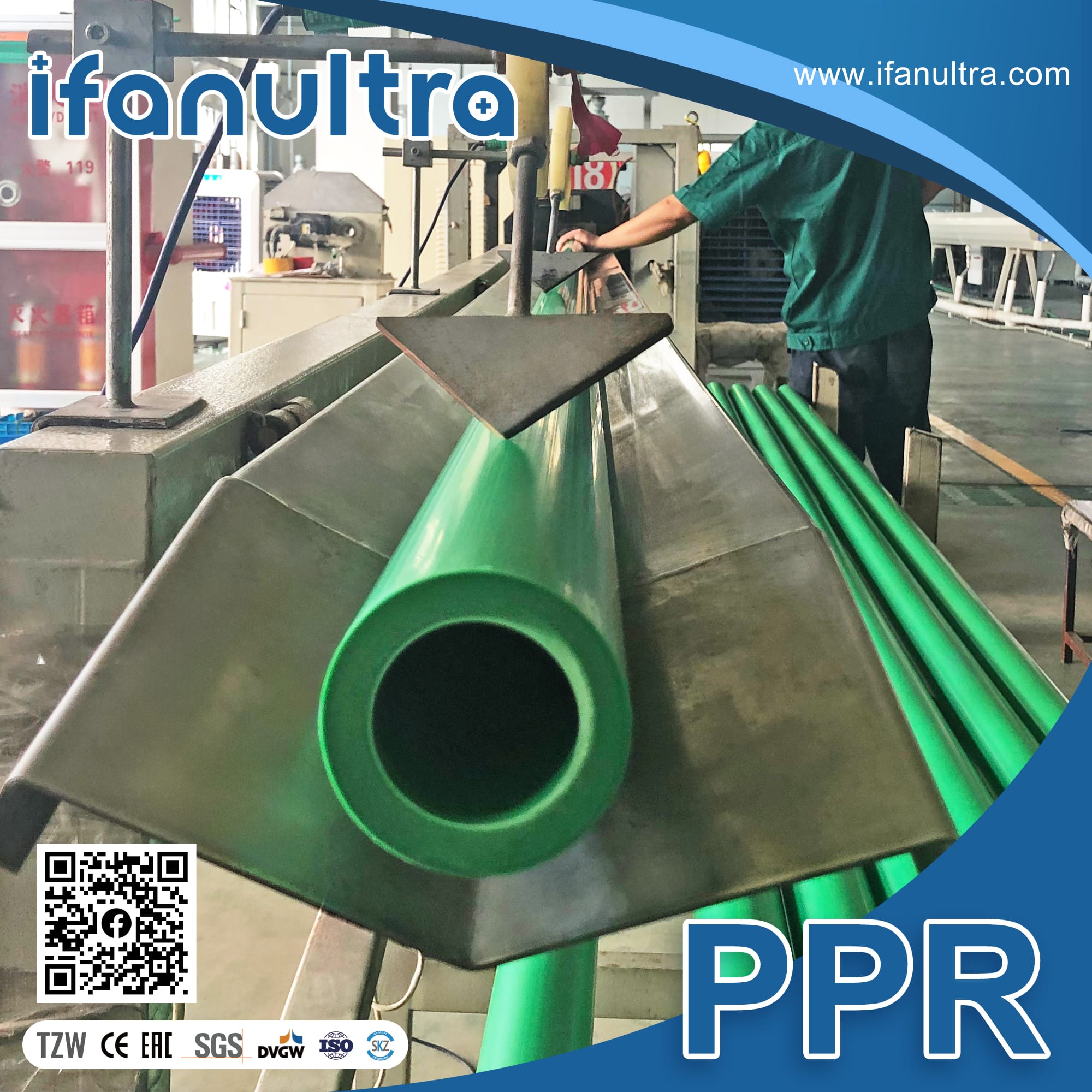
Two numbers travel together on every compliant PPR pipe: the DN (the outside diameter in millimetres, fixed across factories that follow the standard) and the PN (the pressure class, which sets the wall thickness). DN20 is always 20 mm on the outside whether it is PN10 or PN25 — what changes is how thick the wall is and how narrow the bore becomes. Hold that idea, because it is the whole reason wall thickness is the only honest way to verify a class later.
PN10 vs PN16 vs PN20 vs PN25 Compared
Every PPR pressure class maps to a wall-series designation (the S number) and a dimension ratio (SDR). The table below pins each class to its series, SDR, the wall thickness at DN25 as a reference size, and where it belongs. Use DN25 as your yardstick because it is a common domestic size and the wall gaps between classes are easy to see with a caliper.
| Class | Series S | SDR | Wall at DN25 | Typical Use |
|---|---|---|---|---|
| PN10 | S5 | SDR11 | ~2.3 mm | Cold water, low-pressure supply |
| PN16 | S3.2 | SDR7.4 | ~3.4 mm | Higher-pressure cold and warm water |
| PN20 | S2.5 | SDR6 | ~4.2 mm | Standard hot water (most common) |
| PN25 | S2 | SDR5 | ~5.0 mm | High-pressure and fiber-composite lines |
Read the table across one row and the logic is clear: as the class rises from PN10 to PN25 at the same DN25 diameter, the wall grows from about 2.3 mm to about 5.0 mm — more than double. That extra polypropylene is the pressure margin. It is also why a higher class costs more per metre: you are literally paying for more resin in the wall.
How the S-Series and SDR Ratio Work
SDR means Standard Dimension Ratio: the outside diameter divided by the wall thickness. A DN25 pipe with a 4.2 mm wall runs at roughly SDR6 (25 divided by 4.2). The rule is counter-intuitive at first glance but simple once it clicks — a lower SDR means a thicker wall relative to the pipe, and a thicker wall holds more pressure. SDR11 is thin-walled and low-pressure; SDR5 is thick-walled and high-pressure.
The S-series is a close cousin. S is the pipe series number, and it relates to SDR by a fixed formula: S = (SDR − 1) / 2. So SDR11 gives S5, SDR6 gives S2.5, and SDR5 gives S2. Same physics, two labels. You will see both stamped on pipe and printed in catalogs, so it pays to read them fluently.
- Lower SDR or lower S number = thicker wall = higher pressure class. PN25 (S2, SDR5) is the thickest of the four.
- Higher SDR or higher S number = thinner wall = lower pressure class. PN10 (S5, SDR11) is the thinnest.
- Because SDR is a ratio, the wall thickness for a given class scales with diameter — a PN20 DN63 pipe has a 10.5 mm wall, while PN20 DN20 has a 3.4 mm wall.
The SDR ratio is what lets you predict wall thickness for any size once you know the class. That is also the basis of the field check we cover below: if you know the DN and the claimed PN, the wall thickness is not a mystery — it is arithmetic, and the pipe either matches or it does not.
Why Hot Water Needs a Higher Class
PP-R softens as it warms. Its mechanical strength falls with temperature, so the maximum safe working pressure drops the hotter the water runs. This is temperature derating, and it is the reason a cold-water PN rating cannot be read straight onto a hot line. A PN20 pipe rated 20 bar at 20°C typically holds only around 10.8 bar at 70°C and roughly 8 bar at 80°C — barely more than half its cold rating once it is carrying genuine hot water.
That derating is why PN20 is the standard hot-water class rather than PN16. On a domestic hot line at 60–70°C, PN20’s thick 4.2 mm wall at DN25 leaves a working margin after derating; a thinner PN16 wall does not, and it ages faster under the same heat. PPR is rated for around 70°C continuous service with short-term peaks near 95°C, so the hot side lives near the edge of the material’s comfort zone and needs the wall to back it up.
A practical rule many installers follow: for hot water at 60–80°C, step up one pressure class from what the cold-water pressure alone would call for, and if a line runs above 80°C continuously, consider stepping up two classes to protect the 50-year life. Confirm the exact derating figures against the manufacturer’s own temperature-pressure table for the specific product, since values vary slightly by resin and standard.
How to Verify the Class You Were Actually Sold
Here is the insider warning that costs importers real money. The outside diameter of a DN25 pipe is 25 mm no matter what the class — PN16 and PN20 have the identical OD. So a PN16 pipe can be printed and shipped as “PN20” and it will slot into the same fittings and pass a casual glance. The only difference is the wall thickness, and the wall is the only place the truth hides. A PN16 pipe run on a hot line will fail early, because it is carrying hot-water pressure on a wall built for a lower class.
Do not trust the print. Trust the caliper. Cut a short sample, measure the wall thickness with a caliper, and compare it against the chart above for the stated DN and PN. At DN25, a genuine PN20 wall measures about 4.2 mm; a PN16 pretending to be PN20 measures about 3.4 mm. That 0.8 mm gap is invisible to the eye and obvious to a caliper.
- Measure the outside diameter first to confirm the DN, then measure the wall at several points around the cut to catch off-center extrusion.
- Compare the measured wall against the PN20 wall table: DN20 3.4, DN25 4.2, DN32 5.4, DN40 6.7, DN50 8.4, DN63 10.5 mm.
- A wall that lands short of the chart is a lower class than the print claims — treat that batch as suspect and ask for the test report.
- Cross-check the print for the standard (ISO 15874, DIN 8077/8078) and a batch or lot code you can trace back to a certificate.
This is what we check before a batch ships: every production run is measured against the DIN 8077 dimension table, and the pipe is extruded from virgin Nordic polypropylene rather than recycled or filled resin, which is what lets the wall hit its rated thickness instead of coming up thin. For potable systems, confirm the product carries the certifications your market needs — ISO 15874 for the material and NSF for US potable water — and verify current requirements with a customs broker or the relevant authority for your destination.
PN25 and Fiber-Composite for High-Pressure Hot Runs
PN25 (series S2, SDR5) is the heaviest of the four classes, with roughly a 5.0 mm wall at DN25. It earns its place on high-pressure risers, pumped systems, and long continuous hot lines where the extra wall preserves margin after derating. If a line combines high pressure and sustained heat, PN25 buys back the working pressure that temperature takes away.
Fiber-composite PPR is the other tool for demanding hot runs. A middle layer of glass fiber is co-extruded into the wall, and it does two things: it stiffens the pipe against pressure and it cuts thermal expansion dramatically. Plain PPR expands about 0.15 mm per metre per °C; fiber-composite drops that by roughly 75% to around 0.03–0.05 mm per metre per °C. On a long hot line, that difference is the difference between a wall that bows between supports and one that stays put.
- Best for PN25 or composite: hot recirculation loops, pressurized risers in tall buildings, mechanical rooms, and long straight hot runs where expansion matters.
- Not needed: short cold branches and low-pressure cold supply, where PN10 or PN16 already carries the load at lower cost.
Conclusion
Pick the class by the job, not the print. PN10 and PN16 handle cold and warm supply; PN20 is the workhorse for hot potable water; PN25 and fiber-composite cover high pressure and long hot runs where derating eats into the margin. The number that matters is the wall thickness behind the class, and heat is what turns a comfortable cold rating into a tight one.
If you are speccing or importing PPR by the container and need wall thickness verified against the chart, virgin-resin material, and certificates that hold up at customs, the IFANULTRA team can share full specs and a catalog so you resell with confidence.
Frequently Asked Questions
What does PN mean in a PPR pipe?
PN is nominal pressure in bar that the pipe holds for a 50-year design life at 20°C with cold water. PN20 means 20 bar under that reference condition, not at hot temperatures.
Which PPR pressure class should I use for hot water?
PN20 (series S2.5, SDR6) is the standard hot-water class. Heat derates pressure, so a PN20 pipe holds around 10.8 bar at 70°C. For runs above 80°C, consider PN25.
What is the difference between PN10, PN16, PN20 and PN25?
They differ by wall thickness at the same diameter. At DN25 the walls run about 2.3, 3.4, 4.2 and 5.0 mm. Higher class means thicker wall and higher rated pressure.
What is SDR and the S-series in PPR?
SDR is outside diameter divided by wall thickness; S is the pipe series, where S = (SDR − 1) / 2. A lower SDR or S means a thicker wall and a higher pressure class.
How do I check a PPR pipe’s real pressure rating?
Caliper the wall thickness and compare it to the chart for that DN and PN. Outside diameter is identical across classes, so a thin wall reveals a PN16 sold as PN20.
Written by the IFANULTRA team — a PPR pipe and fittings brand of IFAN Group, drawing on 30+ years of manufacturing experience, German automated production lines, and ISO 9001, SKZ and NSF certified PPR product lines.









 English
 Español
 Français
 Português do Brasil