
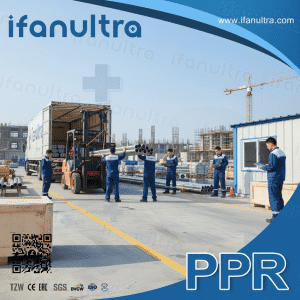
I remember the chaos of my first major piping project. Piles of pipes blocked access, and we were constantly searching for fittings. That’s when I discovered the power of JIT delivery.
Managing JIT delivery for a large piping project requires a hyper-detailed, digital-first schedule, real-time communication with all suppliers and contractors, and a dedicated on-site logistics team to receive and stage materials precisely when needed for installation.
It sounds simple, but the shift from a ‘just-in-case’ to a ‘just-in-time’ mindset is a massive operational challenge. Get it right, and you slash costs and boost productivity. Get it wrong, and the entire project grinds to a halt. Let’s break down exactly how to make JIT work for your next big piping job.
What is the core principle of JIT delivery in construction?
We often hear “JIT” and think of car factories. Applying it to a messy construction site feels impossible. I learned its true principle the hard way.
The core principle of JIT delivery in construction is to have the exact materials, in the exact quantity, delivered to the exact location, at the exact time they are needed for installation, thereby eliminating on-site storage, handling waste, and idle time.

This principle is a complete inversion of traditional construction logistics. Instead of ordering everything upfront to ‘be safe,’ you orchestrate a continuous, synchronized flow of materials that matches the pace of your installation crews. The goal is to make your site look more like an assembly line and less like a warehouse. This requires a fundamental change in planning and communication.
From Inventory to Information Flow
Traditional projects use inventory as a buffer against uncertainty—late deliveries, design changes, or crew delays. JIT replaces this physical buffer with an information buffer. Your safety net is no longer a stack of extra pipes; it’s a real-time, shared schedule that everyone—from the project manager to the pipe fitter to the truck driver—can see and update. The reliability of your information flow determines the success of your material flow.
The ‘Pull’ System vs. The ‘Push’ System
This is the heart of the principle. In a ‘push’ system, you schedule deliveries based on a forecast made weeks or months ago. Materials are pushed to the site whether the crew is ready or not. In a JIT ‘pull’ system, the installation crew’s actual progress triggers the delivery. When they finish a section and are ready for the next batch of materials, a signal (digital or verbal) ‘pulls’ those materials from the supplier to the site. The work pace dictates the delivery pace.
| Aspect | Traditional ‘Push’ System | JIT ‘Pull’ System |
|---|---|---|
| Trigger for Delivery | Master schedule forecast | Actual crew progress/need |
| On-site Inventory | High (weeks of stock) | Very Low (hours/days of stock) |
| Primary Risk | Capital tied up in inventory; damage/loss; double-handling | Production stoppage if delivery fails |
| Flexibility | Low (changes are costly due to existing inventory) | High (can adjust flow based on real-time needs) |
Eliminating the Seven Wastes (Muda)
JIT is deeply connected to Lean construction principles, which focus on eliminating waste. For piping, the seven wastes are clear:
- Transportation: Moving pipes multiple times around the site.
- Inventory: Piles of pipes sitting idle, taking up space.
- Motion: Workers walking long distances to find materials.
- Waiting: Crews idle because materials aren’t there.
- Over-processing: Unnecessary handling or preparation.
- Overproduction: Installing more than needed for the next work package.
- Defects: Damaged materials from poor storage or handling.
JIT delivery directly attacks wastes 1, 2, 3, 4, and 6. By delivering materials straight to their point of use, you minimize transport, motion, and inventory. By syncing delivery with installation, you eliminate waiting and overproduction. The core principle isn’t just about timing; it’s about creating a smoother, more efficient, and less wasteful workflow.
How do you create an accurate material schedule for piping?
Creating a JIT schedule with a standard Gantt chart is like using a paper map for GPS navigation. It’s static and quickly becomes useless. I wasted two days once because a schedule didn’t account for valve lead times.
You create an accurate JIT material schedule by first developing a ultra-detailed 4D BIM model, then breaking the installation into small, sequenced work packages, and finally linking each package’s material list to a dynamic, cloud-based schedule that tracks both fabrication and delivery milestones.
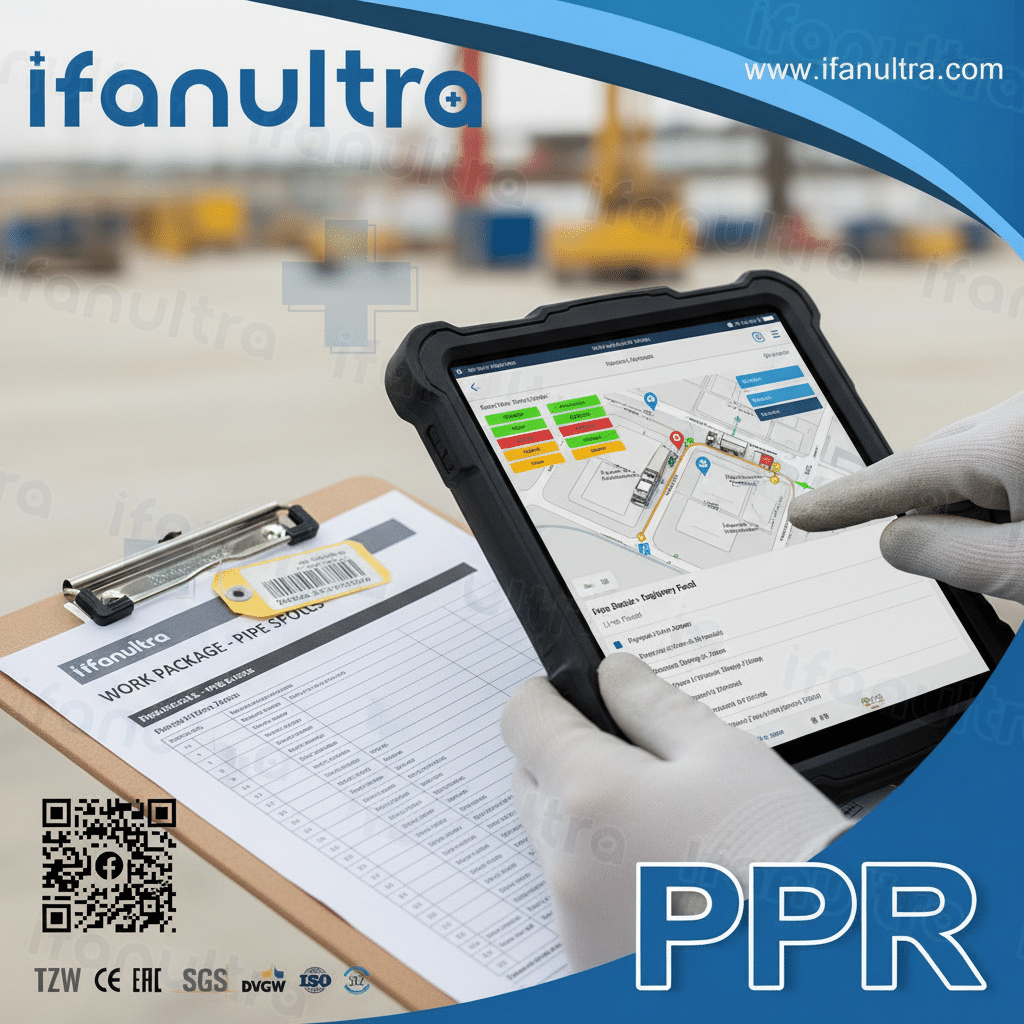
The schedule is the beating heart of JIT. Its accuracy dictates everything. It must be living, breathing, and accessible to all. It starts not with dates, but with a complete digital understanding of the project.
Step 1: Foundation in 4D BIM
You cannot schedule what you haven’t quantified. A detailed 3D model of the piping system is non-negotiable. But for JIT, you need the fourth dimension: Time. 4D BIM software allows you to simulate the entire installation sequence. You can visually walk through Week 3 and see exactly which spools are being installed in which area. This model generates your initial, highly accurate Bill of Materials (BOM), but more importantly, it sequences it.
Step 2: Work Packaging and Pull Planning
You don’t schedule delivery for the entire project. You break it down. A ‘work package’ might be “Piping for Pump Skid P-101A” or “Overhead Lines in Bay 3, Levels 1-2.” Each package should represent 1-3 days of work for a crew. Then, use pull planning with your foremen and superintendents. In a meeting, work backwards from the desired completion date: “To install this package on Thursday, when do we need the materials on site? When must they ship from the fabricator? When must fabrication be complete?” This collaborative process builds buy-in and reality-checks the schedule.
| Work Package: Overhead Lines, Bay 3 (Feb 10-12) | Responsible Party | Deadline | Status / Notes |
|---|---|---|---|
| Spool Fabrication Complete | Fab Shop A | Feb 5 | Confirmed, ready |
| Gaskets & Bolts Delivered to Fab Shop | Supplier B | Feb 3 | Delivered Feb 2 |
| Coating/Inspection Complete | QC Team | Feb 7 | Scheduled |
| Load & Ship from Fab Shop | Logistics Co. | Feb 8 AM | Driver assigned |
| Receive & Stage on Site (Zone C) | Site Logistics | Feb 9 EOD | Bay C cleared |
| Installation Start | Piping Crew 4 | Feb 10 7:00 AM | – |
Step 3: Dynamic Scheduling & Critical Linkages
This detailed plan lives in a cloud-based scheduling tool (like a Lean construction platform or advanced MS Project/Primevera setup). The magic is in the linkages. The ‘Installation Start’ task is not just a date; it is a successor to the ‘Receive on Site’ task, which is a successor to the ‘Ship’ task, and so on. If fabrication is delayed by one day, the schedule automatically pushes all downstream tasks—shipping, receiving, installation—and alerts everyone. You must also identify and track long-lead items (specialty valves, exotic alloys) separately, as they often have lead times of 12+ weeks and will dictate your entire project timeline.
Step 4: The Daily Huddle & Schedule Adjustment
The schedule is updated daily, not weekly. In the morning huddle, each foreman reports progress: “We finished Work Package 5B, 90% complete on 5C.” This progress updates the schedule. The project manager or planner then confirms: “Since 5C finishes today, the materials for Package 6A are confirmed for delivery tomorrow at 8 AM. Fab shop, please confirm the truck is loaded.” This daily reconciliation between plan and reality is what keeps JIT from derailing.
What are the biggest risks of JIT delivery and how to mitigate them?
JIT feels like walking a tightrope without a net. One missed delivery can stop hundreds of workers. I’ve seen it happen, and the cost was staggering.
The biggest risks of JIT delivery are supply chain disruptions, inaccurate schedules, poor on-site coordination, and quality defects discovered at the last minute. Mitigation requires dual-sourcing key materials, maintaining a small buffer stock of critical items, using real-time GPS tracking for shipments, and enforcing rigorous pre-shipment inspections.

Risk management in JIT isn’t about avoiding all risk; it’s about identifying the most likely and most damaging failures and putting specific, actionable controls in place. You must plan for things to go wrong.
Risk 1: Supply Chain Failure
This is the nightmare scenario. A sole-source fabricator has a fire. A key supplier goes bankrupt. A major port shuts down. Your perfectly timed flow is instantly broken. Mitigation: For critical spools or specialty items, qualify a second supplier, even if they are slightly more expensive. The premium is your insurance. Maintain a documented ‘risk register’ for all major materials, noting single points of failure.
Risk 2: Schedule Inaccuracy
If your installation sequence is wrong, your deliveries will be wrong. If you think Bay 3 is ready but it’s not, the arriving truck has nowhere to go. Mitigation: This goes back to the previous section. The 4D model and pull planning are your first defense. Secondly, implement a formal ‘readiness check’ 24 hours before delivery. The area foreman must physically verify the installation area is clear, accessible, and ready to receive.
| Risk Category | Specific Risk | Likelihood | Impact | Mitigation Strategy |
|---|---|---|---|---|
| Logistics | Delivery truck breakdown en route | Medium | High | Use carriers with real-time GPS & backup vehicle protocol. Have local trucking company on standby. |
| Quality | Wrong material or size delivered | Low | Critical | Mandatory check against packing list AND visual inspection by foreman upon receipt. Reject immediately if wrong. |
| Labor | Crew productivity slower than planned | High | Medium | Buffer: Schedule deliveries for start of second day of a 2-day work package. Daily productivity tracking. |
| Information | Schedule not communicated to night shift | Medium | High | All schedule info on cloud-based dashboard. Mandatory shift turnover report that includes next-day deliveries. |
Risk 3: On-Site Logistics Breakdown
The truck arrives on time, but your site is congested. The crane is busy elsewhere. The designated staging area is full of debris. The delivery turns into a costly delay. Mitigation: Appoint a dedicated Site Logistics Coordinator (SLC). This person’s only job is to manage the flow of materials onto and around the site. They control crane time, manage staging zones, and are the single point of contact for all delivery drivers. They have the authority to clear spaces and direct equipment.
Risk 4: Last-Minute Quality Rejection
The spool arrives, and the welds are bad. The coating is damaged. Now you have no material to install, and the fabrication rework cycle takes weeks. Mitigation: Move quality control upstream. Do not inspect at receipt; inspect at the source. Station a quality inspector at the fabrication shop to witness and sign off on critical processes (welding, NDT) before the item is even painted. This ‘source inspection’ prevents defects from ever leaving the shop.
The Strategic Buffer Stock
Pure JIT dogma says ‘zero inventory.’ Smart construction JIT says ‘strategic buffers.’ Identify 5-10 critical, generic items that would stop the entire job if missing—common flange ratings, standard pipe sizes, common gasket types, popular bolts. Keep a 2-3 day supply of these in a locked, managed ‘buffer cage’ on site. This is your safety net for small, unexpected needs or minor delivery delays, without reverting to massive inventory.
How to coordinate JIT deliveries with multiple contractors on site?
One contractor’s JIT delivery is another contractor’s blocked access. I’ve seen electrical crews furious because a piping delivery truck parked in their laydown area. Coordination is everything.
Coordinate JIT deliveries with multiple contractors by establishing a centralized, cloud-based logistics dashboard, holding daily integrated coordination meetings, implementing a strict site-wide delivery time-slot system, and creating clear material staging zones that are color-coded or labeled by contractor and work area.

On a multi-contractor site, you are no longer managing one flow, but several intersecting flows. Your goal is to turn a potential traffic jam into a symphony. This requires transparent rules and constant communication.
Tool 1: The Common Logistics Dashboard
Every contractor must use the same system. A shared cloud platform (like Procore, Autodesk Build, or a custom dashboard) becomes the single source of truth. On it, everyone can see:
- The master site schedule.
- A live calendar of all scheduled deliveries (with time, supplier, and materials).
- A map of the site with designated staging zones, access roads, and no-park areas.
- Live crane and heavy equipment schedules.
- Contact list for all contractor logistics leads.
This transparency prevents claims of









 English
 Español
 Français
 Português do Brasil