
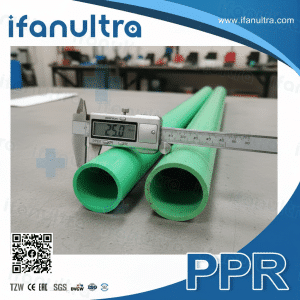
I once had a client who saved money buying recycled pipes, only to replace them within two years. That costly lesson taught me that material choice directly determines long-term performance.
Virgin material pipes significantly outperform recycled material pipes in critical areas like pressure resistance, longevity, and chemical safety. Virgin polymers have consistent molecular structures and no contaminants, while recycled materials contain mixed polymers and impurities that create weak points. This fundamental difference affects everything from installation reliability to system lifespan.
Understanding these differences helps you make informed purchasing decisions. Let’s examine the science behind material performance.
How Does the Molecular Structure Differ Between Virgin and Recycled Polymers?
Many buyers assume plastic is just plastic. I’ve learned that molecular consistency determines pipe quality more than any other factor.
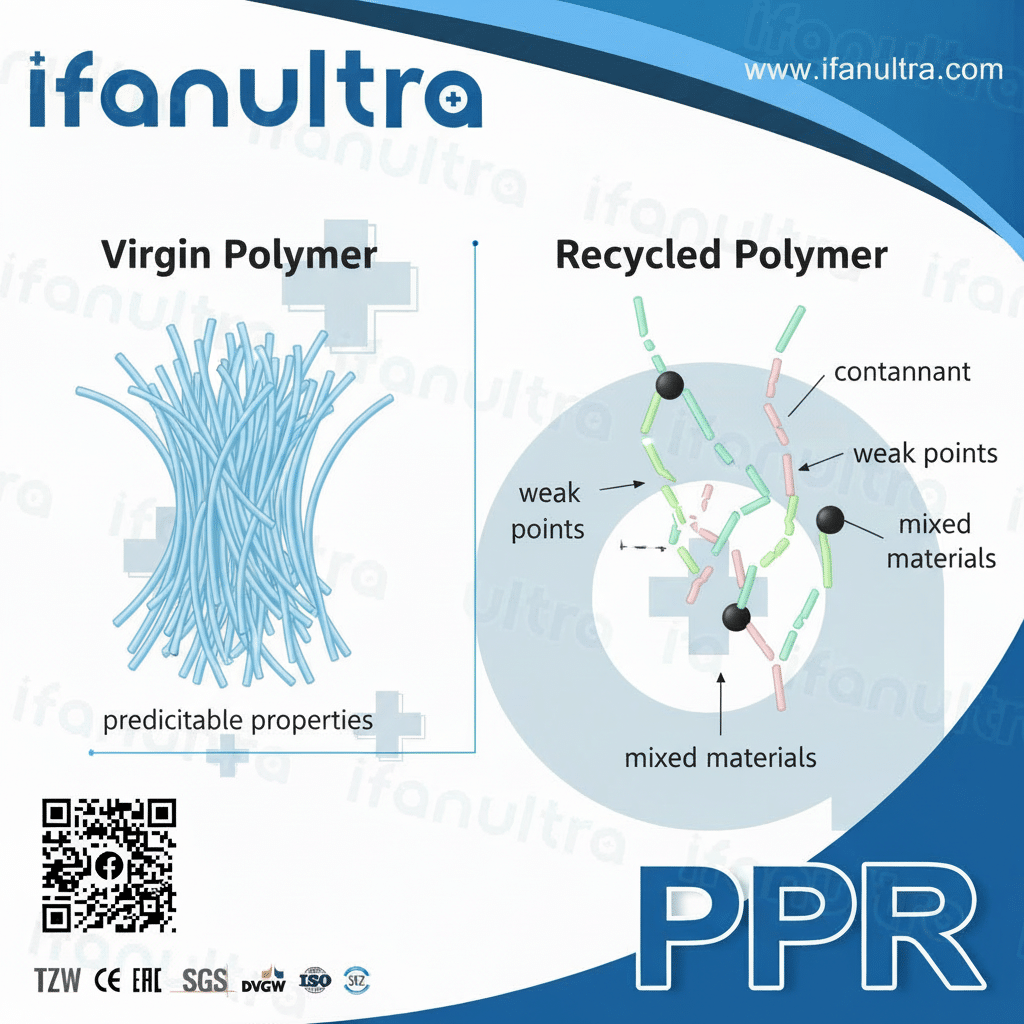
Virgin polymers consist of uniform, long-chain molecules with predictable properties. Recycled polymers contain shortened molecular chains from repeated processing, plus contaminants like dirt, metal particles, and different plastic types. This molecular inconsistency creates weak spots throughout the pipe wall.
Understanding Polymer Chains
Think of polymer molecules as chains of linked units. Virgin material uses fresh raw materials to build long, uniform chains. Manufacturers control every aspect of the process, from catalyst selection to cooling rates. The result is a consistent material where every chain has similar length and strength.
Recycling changes this structure in two ways.
First, each time we melt and reprocess plastic, the heat breaks some molecular chains. The chains become shorter. Shorter chains mean weaker material. It’s like using shorter threads to weave a fabric—the fabric won’t hold together as well.
Second, recycling mixes different materials. A plastic bottle might use a different polymer type than a pipe. Even within the same polymer family, additives and colorants vary. These different materials don’t bond well together. They create interfaces where stress concentrates and cracks can start.
The Contamination Problem
Contamination represents another major issue. Recycled material often contains small amounts of:
- Metal particles from processing equipment
- Paper labels that didn’t fully burn
- Different plastic types with different melting points
- Dirt and dust from collection and sorting
- Chemical residues from previous product use
Each contaminant acts as a defect in the pipe wall. Under pressure, stress concentrates around these defects. This leads to premature failure.
Visual Comparison of Material Properties
The table below shows key differences between virgin and recycled PPR materials:
| Property | Virgin PPR | Recycled PPR | Impact on Performance |
|---|---|---|---|
| Molecular Chain Length | Long and uniform | Shortened and variable | Shorter chains mean weaker material |
| Contaminant Level | Near zero | Variable, often present | Contaminants create failure points |
| Consistency | Predictable batch to batch | Unpredictable | Makes engineering calculations unreliable |
| Melt Flow Index | Tightly controlled | Fluctuates | Affects fusion joint quality |
| Additive Distribution | Evenly mixed | Uneven | Antioxidants may not protect all areas |
When you choose virgin material pipes from IFAN, you get the molecular consistency needed for reliable long-term performance.
What Is the Impact of Recycled Content on Long-Term Pressure and Creep Resistance?
Pressure ratings look good on paper, but real-world performance tells the truth. I’ve seen recycled pipes fail at pressures well below their stated ratings.
Recycled content significantly reduces long-term pressure capacity and creep resistance because contaminants and shorter molecular chains accelerate material degradation under constant stress. A pipe with recycled content may pass initial pressure tests but fail years earlier than a virgin material pipe under the same operating conditions.
Understanding Creep Failure
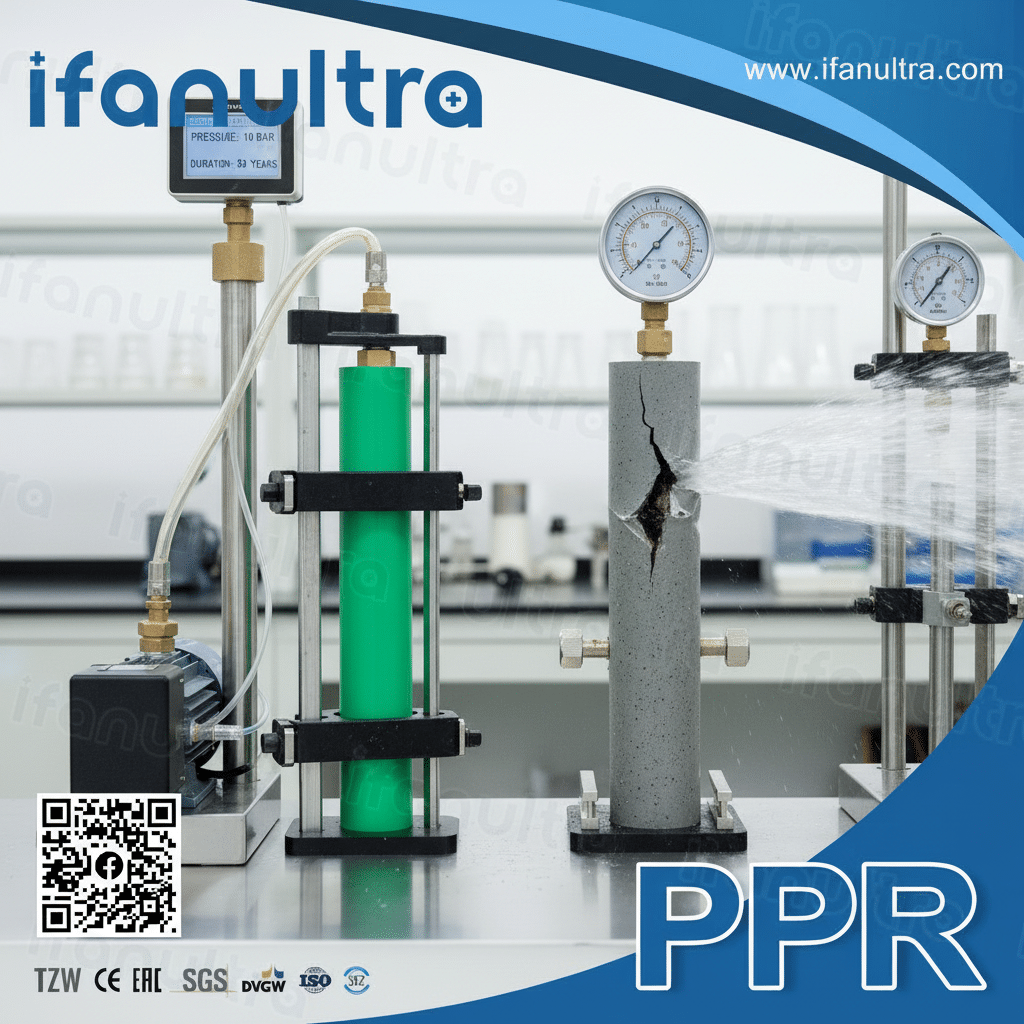
Creep is the gradual deformation of material under constant load. In pipes, this means the diameter slowly expands over years of water pressure. Eventually, the material stretches so much that it cracks and fails.
Virgin PPR resists creep extremely well. Its long molecular chains slide past each other but remain entangled. They hold together under stress for decades.
Recycled PPR behaves differently. The shortened chains don’t entangle as effectively. Contaminants act as stress concentrators where chains separate more easily. Under constant pressure, the material creeps faster. What might take 50 years in virgin material could happen in 10 years or less with recycled content.
The 50-Year Design Life Problem
Pipe standards like ISO 15874 base their 50-year design life on testing with virgin materials. Engineers calculate pressure ratings assuming consistent material properties. Recycled material invalidates these calculations.
Consider a real example. A PPR pipe rated for 10 bar at 70°C with virgin material might handle that pressure for 50 years. The same pipe with 30% recycled content might fail in 5-10 years. The initial pressure test at installation shows no problem. The failure happens gradually, years later.
Accelerated Aging Factors
Several factors accelerate aging in recycled material pipes:
| Aging Factor | Effect on Virgin PPR | Effect on Recycled PPR |
|---|---|---|
| Constant Pressure | Gradual, predictable creep | Faster creep at stress concentrators |
| Temperature Cycles | Material expands and contracts uniformly | Different materials expand differently, creating internal stress |
| Chlorine Exposure | Antioxidants protect the material | Uneven antioxidant distribution leaves weak spots unprotected |
| UV Exposure | Stabilizers provide protection | Mixed material quality reduces UV resistance |
| Freeze-Thaw Cycles | Flexible material handles expansion | Weak points crack under stress |
For critical applications like high-rise buildings or industrial processes, the safety margin disappears with recycled content. Virgin material provides the predictable performance that engineers rely on.
Are There Specific Applications Where Recycled Material Pipes Are Unsuitable?
Not every application demands virgin material. But some applications simply cannot tolerate the risks of recycled content.
Recycled material pipes are unsuitable for potable water systems, high-temperature applications, pressure-critical installations, and any system where failure would cause property damage or health risks. The potential for contamination release and premature failure makes them dangerous choices in these situations.
Potable Water Systems: A Health Concern
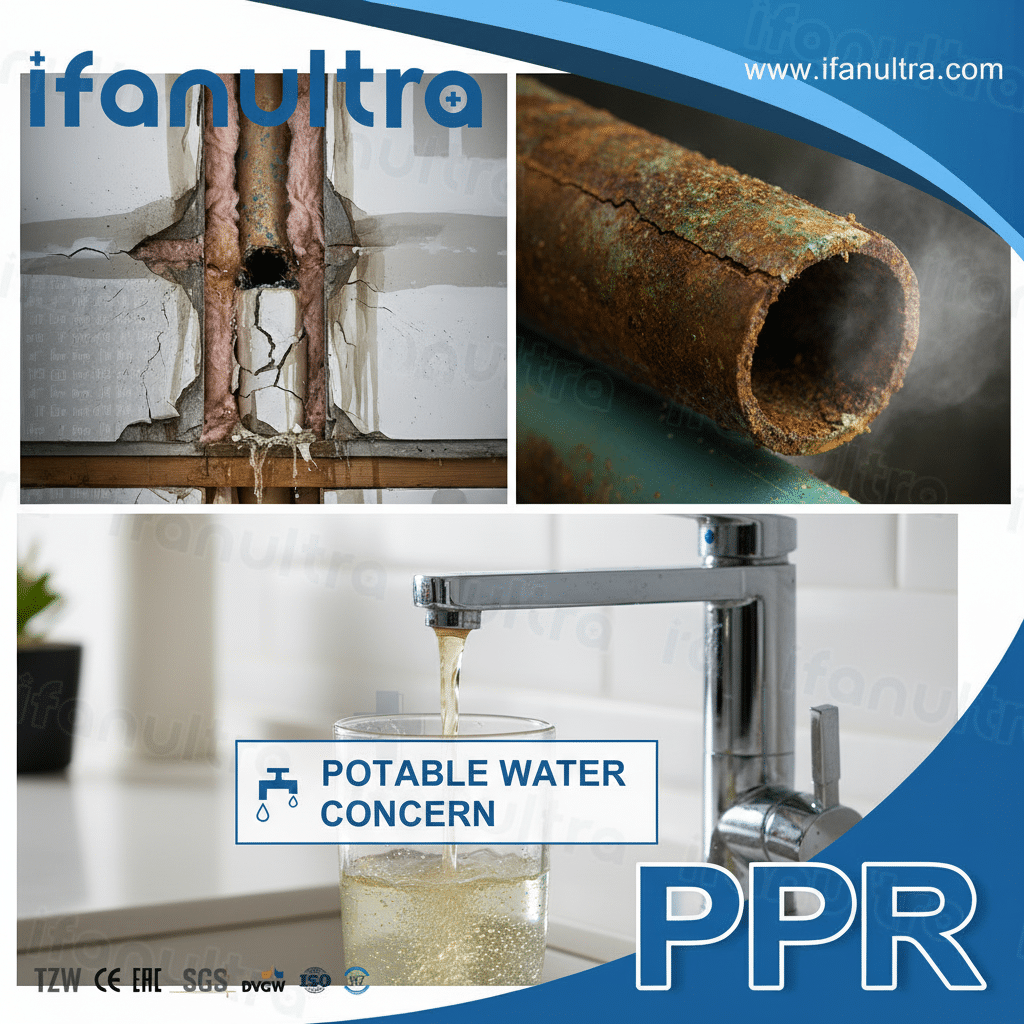
Drinking water safety requires absolute material purity. Recycled plastics may contain:
- Heavy metals from previous product use
- Phthalates and other plasticizers
- Chemical residues from industrial containers
- Bacteria or mold from improper recycling
- Unknown additives from mixed plastic sources
These contaminants can leach into drinking water over time. Testing may not detect them immediately. Slow leaching means water quality degrades gradually, unnoticed by residents.
Many countries prohibit recycled content in pipes for drinking water. Standards like NSF 61 require testing of the final product. Recycled material pipes cannot reliably pass these tests.
High-Temperature Applications
Hot water accelerates everything. Chemical reactions happen faster. Creep progresses quicker. Contaminants migrate more readily.
In underfloor heating systems, pipes operate at 40-60°C for decades. Virgin PPR handles this comfortably. Recycled PPR may soften excessively at these temperatures. The weakened structure around contaminants fails sooner.
Pressure-Critical Installations
Consider these applications where pressure failure causes serious problems:
| Aplicativo | Consequence of Failure | Why Recycled Material Is Unsuitable |
|---|---|---|
| High-Rise Buildings | Water damage to multiple floors below | Cannot predict failure time or location |
| Hospitais | Service interruption, infection risk | Reliability is critical for patient care |
| Industrial Processing | Production shutdown, chemical release | Process safety requires predictable materials |
| Fire Sprinkler Systems | No water when needed | Life safety systems demand zero compromise |
| Concealed Installations | Expensive wall/floor removal to repair | Repair costs exceed any material savings |
Buried Applications
Underground pipes face additional stresses from soil movement, traffic loads, and groundwater. The material must remain ductile and strong for decades. Recycled content makes pipes more brittle. They may crack under loads that virgin material handles easily.
For any application where failure means digging up floors, walls, or ground, virgin material provides the only sensible choice. The small upfront savings on recycled pipes disappear with the first repair.
How Can You Verify the Actual Percentage of Recycled Content in a Pipe?
Manufacturers don’t always tell the truth. I’ve tested pipes labeled “virgin” that clearly contained recycled material.
You can verify recycled content through laboratory testing, including melt flow index testing, thermal analysis, and spectroscopy. For field verification, simple burn tests and visual inspection of pipe ends can reveal signs of contamination, though only lab testing provides definitive proof.
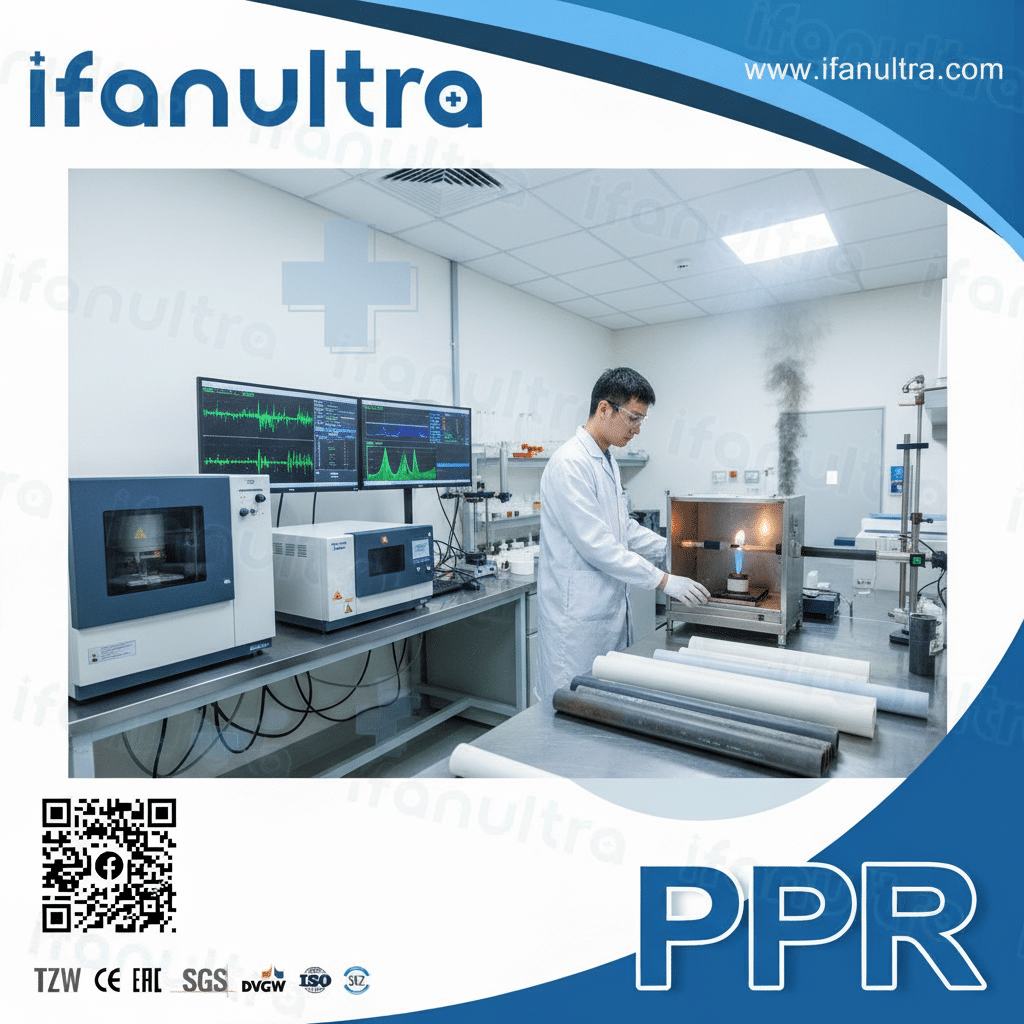
Laboratory Testing Methods
Professional testing provides definitive answers. Several methods can detect and quantify recycled content:
Melt Flow Index (MFI) Testing: This measures how easily the melted plastic flows. Virgin material has a consistent MFI range. Recycled material shows higher MFI because chains are shorter. A single pipe with varying MFI across samples strongly indicates recycled content.
Differential Scanning Calorimetry (DSC): This measures melting points. Different polymers melt at different temperatures. Multiple melting peaks indicate mixed materials. Virgin PPR shows one clean melting peak.
Fourier-Transform Infrared Spectroscopy (FTIR): This identifies chemical composition. It can detect additives and contaminants not present in virgin material. It also identifies different polymer types in the mix.
Ash Content Testing: Burning the sample leaves ash behind. Virgin PPR leaves minimal ash. Recycled material with fillers or contaminants leaves more ash.
Field Verification Methods
For quick checks without laboratory access, try these methods:
| Test Method | O que procurar | Indication of Recycled Content |
|---|---|---|
| Visual Inspection | Dark spots, color variation, rough surface | Contaminants or inconsistent mixing |
| Burn Test | Soot, unusual flame color, bad smell | Different plastic types burning |
| Cut Surface Examination | Grainy texture, visible specks | Poor mixing or contamination |
| Density Check | Pipe sinks or floats unexpectedly | Different materials change density |
| Heat Gun Test | Uneven melting, smoking | Mixed materials melt at different rates |
The Simple Burn Test
Take a small sample from the pipe end. Hold it with pliers and apply a flame.
Virgin PPR burns with a clean, blue-tipped flame. It drips as it burns. The smell is mild, like burnt candle wax. It leaves little residue.
Recycled material may:
- Produce black smoke
- Smell like burning rubber or chemicals
- Drip inconsistently
- Leave charred residue
- Self-extinguish (if containing flame retardants)
What IFAN Does Differently
At IFAN, we maintain strict quality control. Every batch undergoes:
- Incoming Material Testing: We test all raw materials before production
- In-Process Testing: We monitor MFI during production
- Finished Product Testing: We randomly sample finished pipes
- Third-Party Certification: Independent labs verify our claims
We provide certificates of analysis with every shipment. Our customers know exactly what they receive.
Red Flags to Watch For
When sourcing pipes, watch for these warning signs:
- Price significantly below market rates
- Reluctance to provide test certificates
- Inconsistent color or surface finish
- No brand markings or traceability codes
- Vague answers about material source
- No third-party certifications
If something seems too good to be true, it probably is. The extra cost of virgin material buys decades of reliable service.
Conclusão
Virgin material pipes deliver predictable performance, long service life, and water safety that recycled pipes cannot match. For guaranteed quality and certified virgin material, choose IFAN’s PPR pipes—tested and proven for 50-year service life in residential and commercial applications.









 English
 Español
 Français
 Português do Brasil