
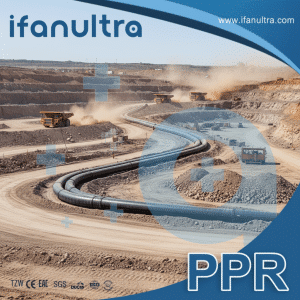
I once visited a mine where steel slurry lines were being replaced every two years due to wear. The constant downtime and expense were staggering, which made the switch to HDPE an obvious solution.
HDPE pipes are ideal for mining slurry transportation because they offer superior abrasion resistance, complete immunity to corrosion, and leak-proof fused joints. These properties lead to dramatically longer pipeline life, lower maintenance costs, and fewer unplanned shutdowns, directly boosting a mine’s operational efficiency and bottom line.
The harsh environment of slurry transport demands a tough material. Let’s explore why HDPE consistently outperforms traditional alternatives like steel.
How Does HDPE’s Abrasion Resistance Outperform Steel in Slurry Pipelines?
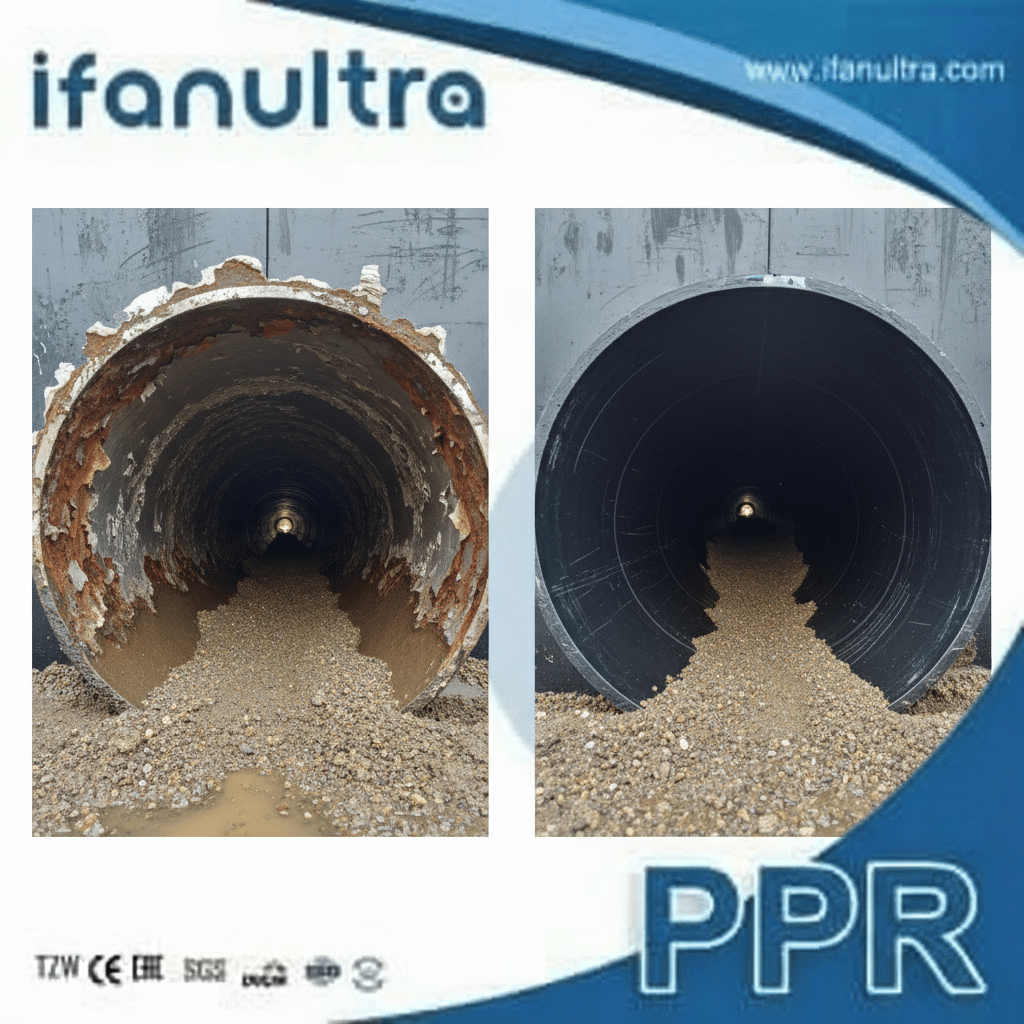
We saw a steel pipe section worn paper-thin by abrasive tailings. In contrast, the HDPE replacement in the same location showed minimal wear after years of service.
HDPE’s abrasion resistance often outperforms steel because its viscoelastic polymer surface allows abrasive particles to “bounce off” or embed without causing significant material loss. Unlike brittle steel which erodes and pits, HDPE’s flexible, smooth surface maintains integrity, frequently lasting 4-10 times longer in highly abrasive slurry service.
The Science Behind the Wear Resistance
To understand why HDPE lasts longer, you need to know how different materials wear down. Slurry is a mix of water and hard, solid particles like sand and rock. When these particles hit a pipe wall, they cause damage.
Steel is a hard, rigid material. When a sharp, fast-moving particle hits it, the impact can cause a small piece of the steel to chip or flake away. This process is called erosive wear. Over time, this creates pits and grooves, thinning the pipe wall until it fails.
HDPE behaves very differently. It is a viscoelastic material, meaning it has both viscous (liquid-like) and elastic (rubber-like) properties. When a particle hits an HDPE wall, the surface gives slightly upon impact, absorbing the energy. Instead of chipping, the surface may allow the particle to embed ou glance off. The natural smoothness of HDPE also reduces friction, so particles cause less scouring.
Real-World Performance and Key Factors
Field studies and customer reports consistently show HDPE outlasting steel in abrasive applications. In one copper mine’s tailings line, steel pipes required replacement every 9-12 months. After switching to high-grade HDPE, the pipeline lasted over 7 years before needing attention.
However, not all HDPE is equal, and performance depends on several factors:
| Fator | Effect on Abrasion Resistance | Recommendation |
|---|---|---|
| Pipe Material Grade | Higher Molecular Weight HDPE (e.g., PE100) offers greater toughness and wear resistance. | Always specify PE100 or higher-grade resins for slurry. |
| Slurry Velocity | Excessively high flow speed increases wear on any material. | Design the system to keep slurry velocity within an optimal range (often 4-7 ft/sec). |
| Particle Size & Shape | Large, sharp, and angular particles are more abrasive. | Understand your slurry profile. HDPE handles sharp particles better than steel. |
| Installation Practice | Improperly fused joints or dragging pipes over rough ground can create weak points. | Ensure proper handling and qualified fusion procedures. |
For the toughest applications, manufacturers like IFAN offer HDPE pipes with wear-resistant additives. These compounds can further extend service life in extreme conditions, providing an even greater return on investment.
Why Is HDPE’s Natural Corrosion Immunity Vital for Acidic Mining Slurries?
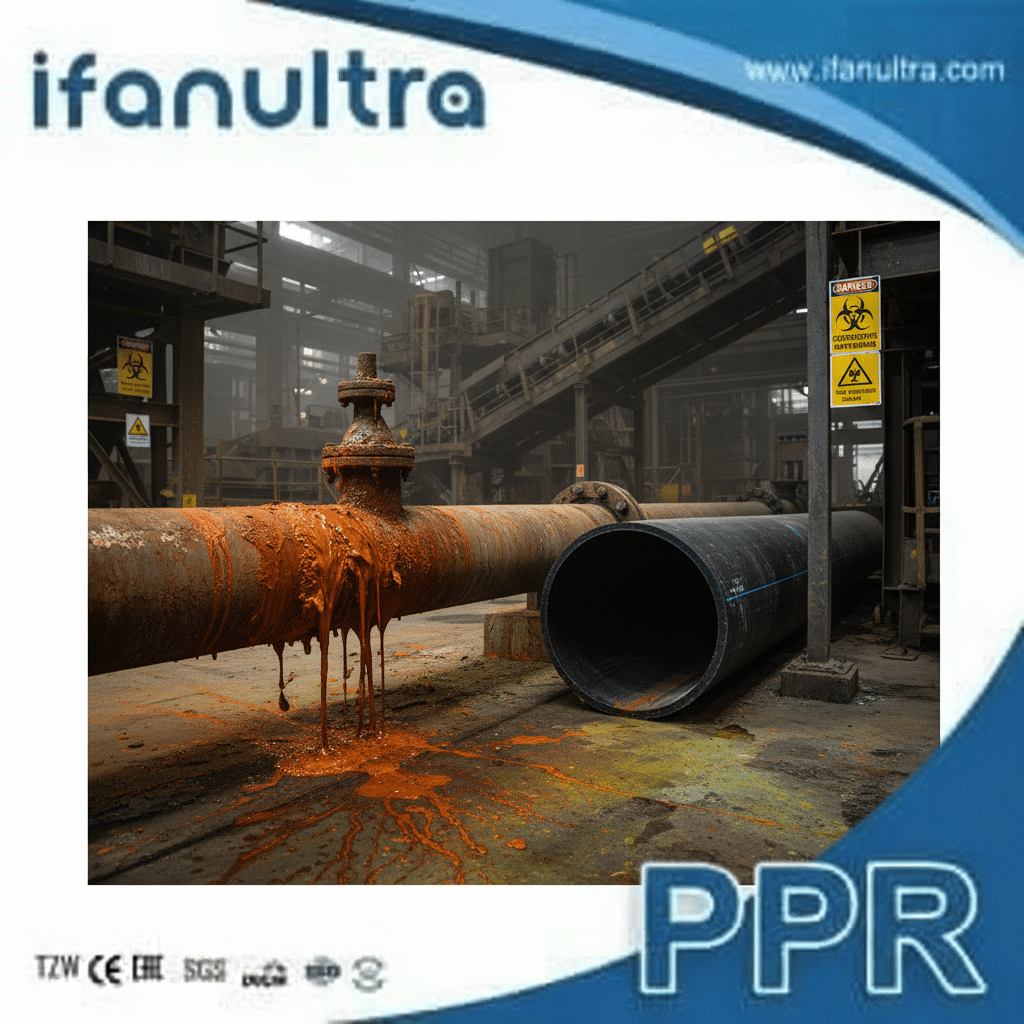
A mining engineer once showed me a steel pipe corroded from the inside out by acidic slurry. The leak caused environmental and safety issues that HDPE would have completely prevented.
HDPE’s natural corrosion immunity is vital because mining slurries are often acidic or caustic due to the ore processing chemicals and mineral content. Unlike steel, which chemically reacts and dissolves, HDPE is inert. It does not rust, pit, or lose wall thickness to chemical attack, ensuring long-term structural integrity and preventing contaminating leaks.
The Chemical Challenge in Mining
Mining is a chemical-intensive process. Slurries can have a wide range of pH levels. For example:
- Acidic Slurries (low pH): Common in gold, copper, and nickel extraction where sulfuric acid is used. This acid rapidly attacks steel.
- Alkaline Slurries (high pH): Found in some bauxite or phosphate processing. Caustic solutions also degrade steel over time.
- Saltwater/Saline Slurries: In coastal mines, salt accelerates the corrosion of steel through electrochemical reactions.
Steel pipes require expensive internal linings (like rubber or epoxy) or external cathodic protection systems to fight this corrosion. These solutions add cost and are prone to failure if the lining is damaged during installation or service.
HDPE as the Inert Solution
High-Density Polyethylene is a saturated hydrocarbon polymer. This means it has no chemical sites for acids, alkalis, or salts to attack. You can think of it like a plastic bottle holding bleach or vinegar – the material does not react.
This inertness provides massive advantages:
- No Lining Needed: HDPE is homogenous. Its corrosion resistance runs through the entire wall thickness, so scratches or dents don’t create a weak point for attack.
- No Maintenance: There is no need to monitor or replace sacrificial anodes, reapply coatings, or inspect for rust.
- Consistent Flow: Unlike corroding steel, HDPE does not develop internal rust scale that reduces pipe diameter and increases pumping costs.
Cost and Safety Implications
The immunity to corrosion directly translates to lower lifetime costs and higher safety. Leaks from corroded steel pipes can lead to:
- Environmental Spills: Contaminating soil and groundwater.
- Production Loss: Halting operations for emergency repairs.
- Safety Hazards: Creating sinkholes or unstable ground.
By using HDPE, mines eliminate this entire category of risk. The pipe you install on day one will have the same wall thickness and chemical resistance on day 10,000, guaranteeing predictable performance and protecting the surrounding environment.
How Do Butt-Fused Joints Eliminate Leaks in Long-Distance Slurry Lines?
On a long-distance tailings project, the client’s biggest fear was a leak along the pipeline. We demonstrated how HDPE fusion creates a seamless, monolithic system, turning that fear into confidence.
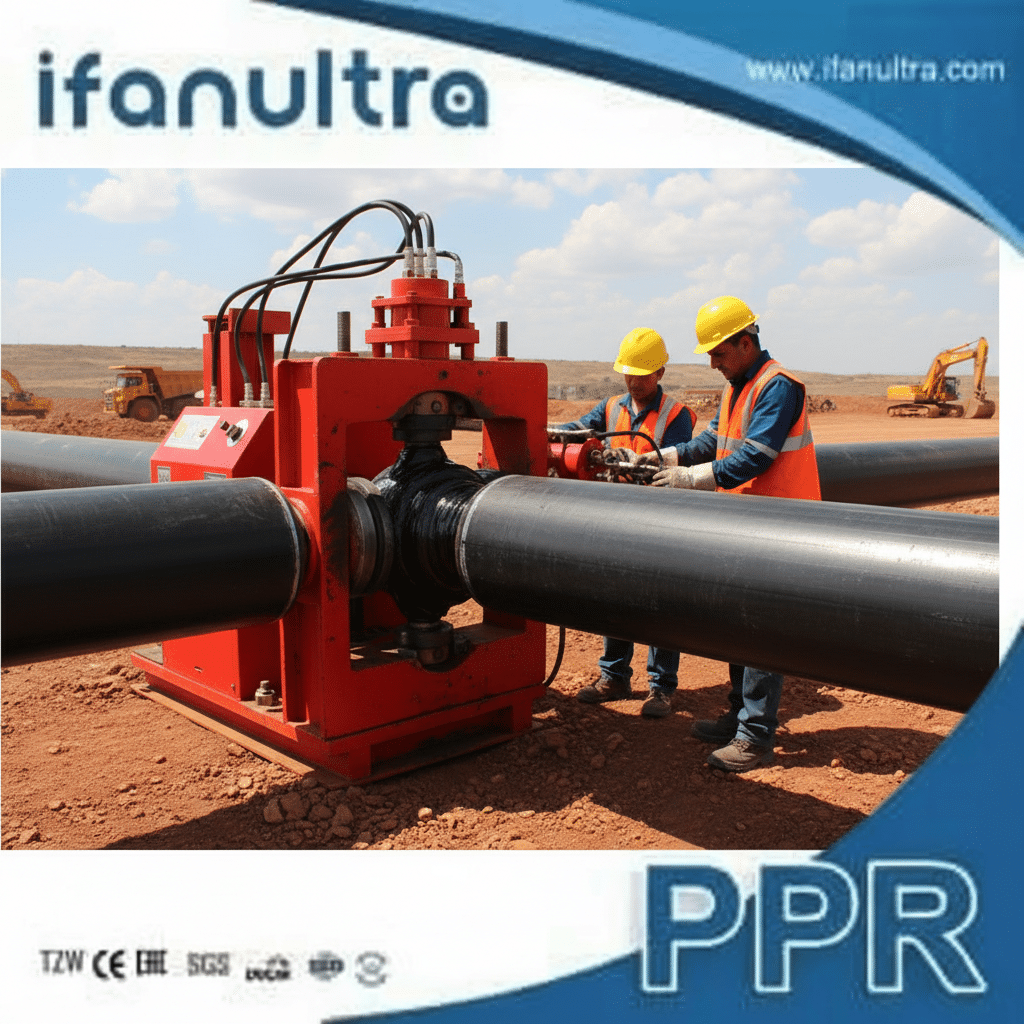
Butt-fused joints eliminate leaks by permanently melting the ends of two pipe sections together, forming a single, homogeneous piece of plastic. This joint is as strong as—or even stronger than—the pipe itself, creating a continuous, leak-free system with no mechanical weak points like bolts, gaskets, or seals to fail under pressure or vibration.
The Fusion Process: Creating a Monolithic Pipe
The strength of an HDPE pipeline lies in its joints. The fusão de bumbum process is straightforward but highly controlled:
- Facing: A hydraulic machine clamps the two pipe ends. A facing tool trims them to ensure perfectly square, clean surfaces.
- Heating: A hot plate is inserted between the ends. The pipes are pushed against the plate until the material melts and forms a bead.
- Joining: The hot plate is removed. The two molten ends are quickly pushed together with a precise amount of force.
- Cooling: The joint is held under pressure as it cools, forming a solid, permanent bond.
The result is not a connection but a continuation of the pipe. The molecular chains of the two sections intertwine, making the joint zone undetectable and immune to leakage.
Why This Is Critical for Slurry Lines
Long-distance slurry pipelines face unique stresses that challenge traditional flanged or mechanical joints:
- Constant Pressure & Vibration: Slurry pumps create pulsating pressure and vibration. Bolted flanges can loosen over time, and gaskets can wear out.
- Ground Movement: Pipelines laid over changing terrain can settle or shift. Rigid, bolted joints are stress points that can crack. The slight flexibility of fused HDPE allows it to absorb minor ground movement.
- Internal Abrasion: In steel pipelines, gaskets and flange faces inside the pipe can be eroded by the slurry, creating a leak path. A butt-fused HDPE joint has a smooth, flush interior with no protruding parts to wear.
Comparing Joint Integrity
The table below highlights why fusion is the superior method for critical slurry transport:
| Joint Type (Steel/PVC) | Weak Points | Joint Type (HDPE) | Key Strength |
|---|---|---|---|
| Flanged & Bolted | Gasket failure, bolt corrosion/loosening, internal lip erosion. | Butt-Fused | Homogeneous joint, no separate parts to fail, smooth interior. |
| Rosqueado | Threads cut into pipe wall (weakens it), prone to stress cracks. | Electrofusion | Uses integrated heater coils for strong, reliable branch connections. |
| Bell & Spigot (Gasketed) | Gasket degradation, improper seating during installation. | Socket Fusion | Used for smaller diameters, creates a permanent, leak-tight seal. |
For mines, this means zero-maintenance joints and the elimination of a major source of pipeline failure. Once the fused pipeline is pressure-tested and buried, it can be largely forgotten, providing decades of reliable service.
What Are the Total Cost Savings from HDPE’s Longevity and Low Maintenance?
The finance manager at a large mine calculated the numbers. The initial quote for HDPE was higher than steel, but the 10-year projection showed savings of over 40%. That’s the power of total cost analysis.
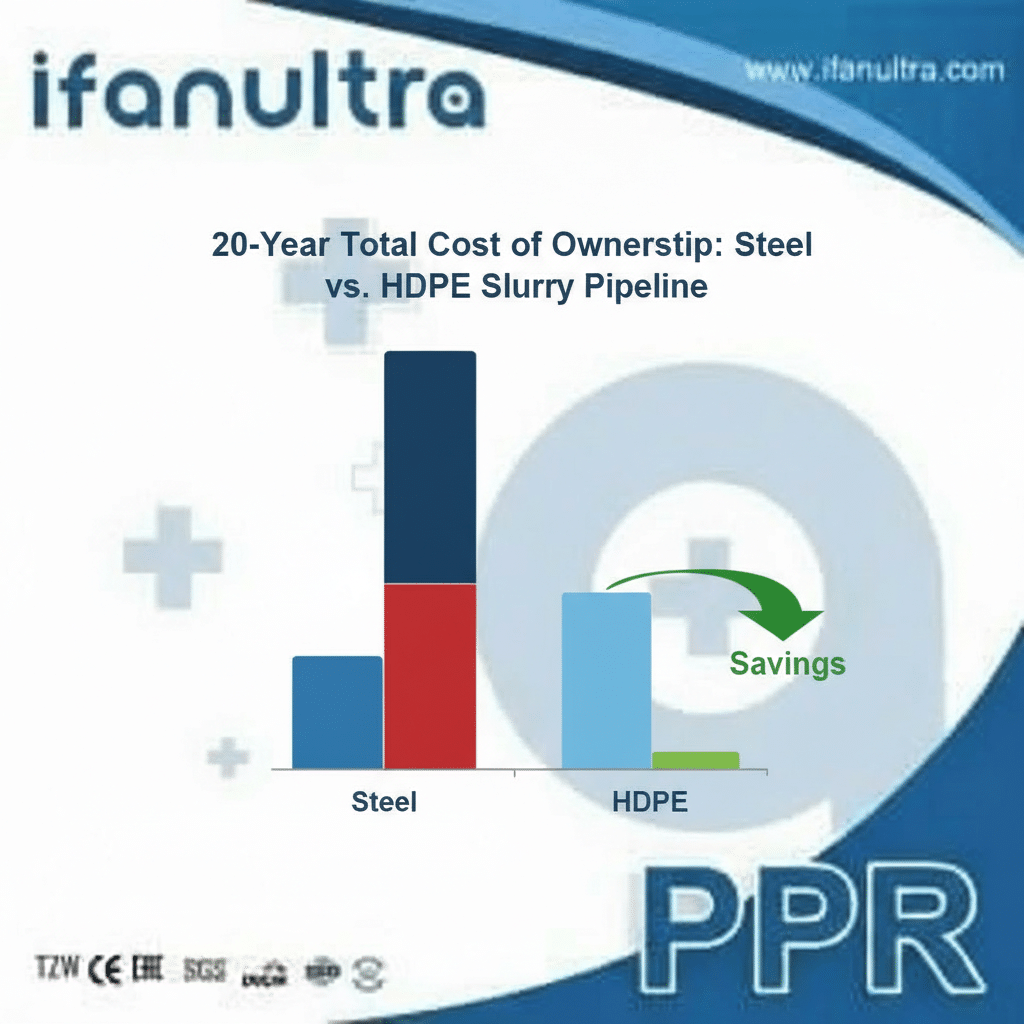
The total cost savings from HDPE come from its extended service life (4-10x longer than steel), near-zero maintenance, and lower installation costs. Savings arise from eliminating corrosion protection, frequent replacements, unplanned downtime, and high energy pumps needed to overcome friction in scaling steel pipes.
Breaking Down the Total Cost of Ownership (TCO)
The true cost of a pipeline isn’t the price per meter on the delivery truck. It’s the total expenditure over its operational life. HDPE wins on TCO through savings in four key areas:
1. Capital & Installation Cost (CapEx):
- Material: While HDPE resin cost per kg can be competitive, its lighter weight means lower transport costs. A 20-foot section of HDPE can be carried by two people; steel requires machinery.
- Installation: Butt fusion is fast and requires a small crew. No need for welding rigs, X-ray inspection, or lining application. Trenching can be narrower due to HDPE’s flexibility, reducing earthwork costs.
2. Operational & Maintenance Cost (OpEx):
This is where HDPE delivers massive savings.
- Maintenance: HDPE systems require no painting, cathodic protection, or lining repairs. Fused joints don’t need retightening.
- Pumping Energy: HDPE’s smooth interior maintains a constant Hazen-Williams C-factor (typically 150). Steel’s C-factor drops from 130 to below 100 due to corrosion and scaling, forcing pumps to work harder and use more energy to move the same slurry.
- Downtime: The reliability of HDPE drastically reduces unplanned shutdowns for emergency repairs.
3. Replacement & Lifetime Cost:
This is the most significant factor. A steel slurry line might last 5-10 years before needing full replacement. An HDPE line in the same service can last 30-50 years. Avoiding one or two complete pipeline rebuilds saves millions.
A Simplified TCO Comparison Model
Consider a hypothetical 2km, 16-inch slurry line operating for 20 years:
| Cost Category | Steel Pipeline (Lined) | HDPE Pipeline (PE100) | Notes |
|---|---|---|---|
| Initial Material & Installation | $1,000,000 | $1,200,000 | HDPE CapEx can be slightly higher. |
| Maintenance (20 yrs) | $400,000 | $50,000 | Steel requires lining inspection, repair, corrosion control. |
| Energy Cost (20 yrs) | $800,000 | $600,000 | HDPE’s smooth bore reduces friction loss. |
| Replacement Cost (at Year 10) | $1,200,000 | $0 | Steel likely requires one full replacement. |
| Total 20-Year Cost | $3,400,000 | $1,850,000 | HDPE saves ~$1.55 million. |
4. Environmental & Liability Costs:
HDPE’s leak-free nature minimizes the risk of expensive environmental cleanup, regulatory fines, and community relations issues—costs that are hard to quantify but very real.
Conclusão
For reliable, cost-effective, and durable slurry transport, HDPE is the clear choice. For your next project, source premium HDPE pipes and fittings from IFAN to ensure maximum performance and savings.









 English
 Español
 Français
 Português do Brasil