
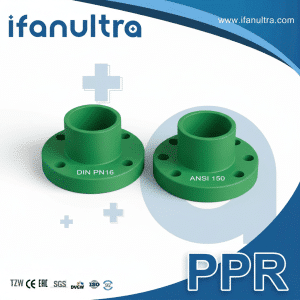
I once saw a project stall for weeks because of mismatched flange holes. That costly lesson taught me that knowing your flange standards is not optional—it’s essential.
Our adapters commonly meet both DIN (European) and ANSI (American) flange standards. Specifically, they are widely available in PN10/16 DIN and 150lbs ANSI pressure ratings. These represent the most globally requested specifications for general water and industrial applications, ensuring broad compatibility.
Selecting the wrong standard can lead to installation failure. Let’s break down what these standards mean and how to specify them correctly for your project.
Are Adapters Commonly Available in PN10/16 DIN or 150lbs ANSI Ratings?
Yes, absolutely. These are the workhorse ratings of the industry. In fact, they are often the first options we discuss with new clients.
Yes, PN10/16 DIN and 150lbs ANSI are the most commonly available and stocked ratings for flange adapters. They cover a vast majority of standard pressure applications in municipal water, building services, and general industrial systems, making them the default choice for global procurement.
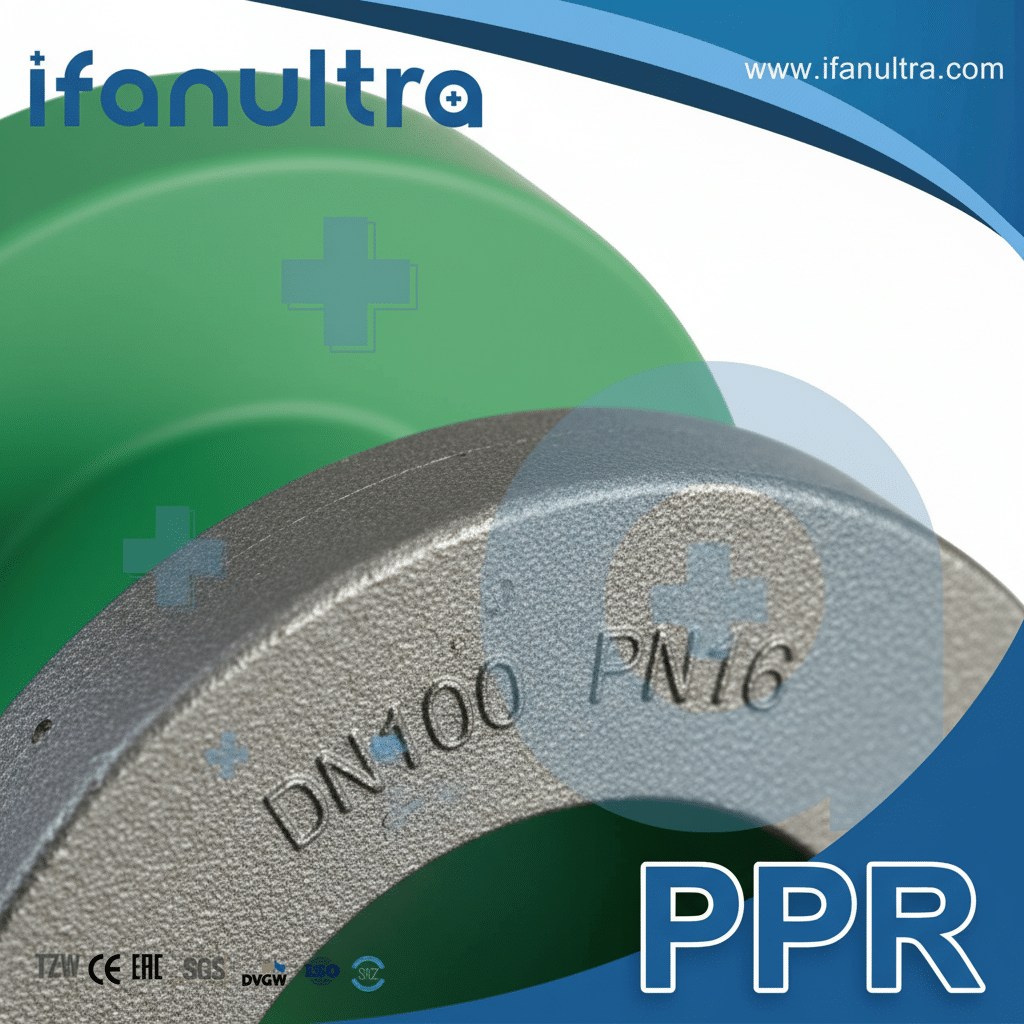
Understanding Pressure Class vs. Pressure Rating
First, it’s important to clarify the terminology, as this often causes confusion. The pressure class (like PN16 or 150lbs) does not mean the flange can only handle that pressure.
- PN (Pressure Nominal): A DIN standard. PN16 means the flange is designed for a maximum operating pressure of 16 bar at 20°C. The pressure capacity decreases at higher temperatures.
- Class (150lbs, 300lbs): An ANSI standard. Class 150 indicates a pressure rating that varies with material and temperature. For example, a Class 150 carbon steel flange might be rated for ~19 bar at room temperature.
So, while they are different systems, PN16 and Class 150 are generally considered comparable for many low-to-medium pressure cold water applications. This is why they are so commonly paired as standard offerings.
Why These Ratings Are the Default
Suppliers like IFAN stock these ratings because they solve the most common problems for the largest number of buyers. Here’s why:
- Market Demand: Projects in Europe, the Middle East, Africa, and Asia frequently specify DIN/PN standards. Projects in the Americas and often for international oil & gas use ANSI. Supporting both covers a global customer base.
- Cost-Effectiveness: These ratings use less material than higher-pressure classes (like PN40 or Class 300), keeping unit costs lower for standard applications.
- Interchangeability Focus: Many systems are designed around these pressure classes. Having them readily available speeds up maintenance and retrofit projects.
The table below shows their typical application scope:
| Flange Rating | Aplicativos comuns | Typical Media |
|---|---|---|
| PN10 / PN16 | Municipal water supply, HVAC systems, irrigation, low-pressure chemical lines. | Water, Air, Mild Chemicals |
| ANSI 150lbs | Building plumbing, process water, industrial cooling lines, oil & gas auxiliary lines. | Water, Steam, Oil, Gas |
For most standard projects, starting your search with PN16 or Class 150 adapters is the right move.
How Do You Specify the Correct Flange Standard and Drilling Pattern?
A correct specification requires four key pieces of information. Missing one can result in the wrong part.
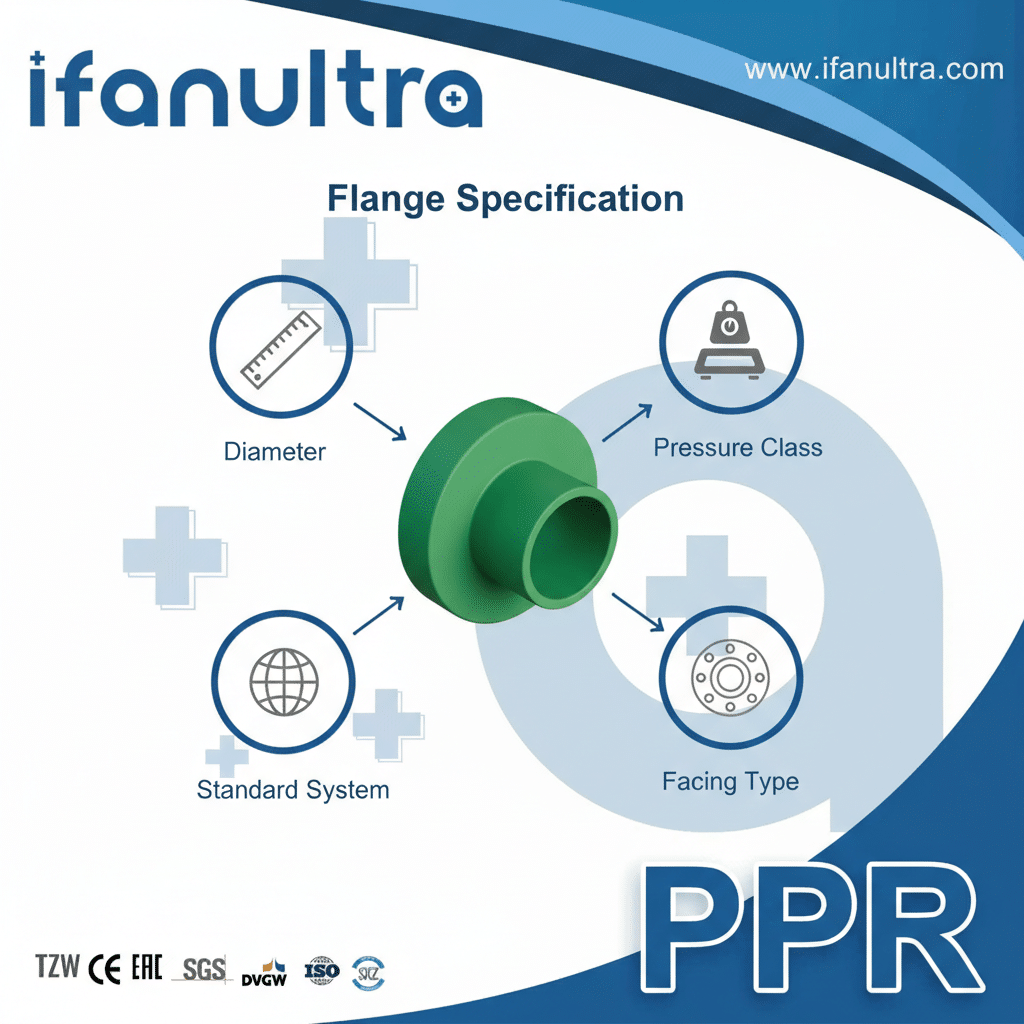
You specify the correct flange by providing these four elements: 1) Standard System (e.g., DIN or ANSI), 2) Pressure Class (e.g., PN16 or 150lbs), 3) Nominal Diameter (e.g., DN100 or 4″), and 4) Facing Type (e.g., Raised Face or Flat Face). The drilling pattern (bolt hole count and spacing) is automatically defined by this combination.
The Step-by-Step Specification Process
Let’s walk through how to get these four details right every time.
Step 1: Identify the Standard System.
This is the biggest fork in the road. Look at the existing flange you need to connect to.
- Is it from a European or Asian machine? It’s likely DIN.
- Is it from an American supplier or an international oil & gas project? It’s likely ANSI.
- Tip: If you’re unsure, take a clear photo of the flange face and the bolt holes. A professional can often identify it visually.
Step 2: Determine the Pressure Class.
Check the marking on the existing flange. It is often cast or stamped on the outer edge with codes like “PN16”, “CL150”, “EN 1092-1”, or “ASME B16.5”. If no marking exists, you must rely on system design documents or pressure ratings.
Step 3: Confirm the Nominal Size.
Measure the inner diameter of the pipe or the bore of the flange. Do not measure the outer diameter of the flange. A DN100 (DIN) or 4″ (ANSI) adapter connects to a 100mm / 4″ pipe, not a 100mm-wide flange.
Step 4: Choose the Facing Type.
This is critical for sealing. The two most common types are:
- Raised Face (RF): A small raised ring on the sealing surface. Common in ANSI systems.
- Flat Face (FF): A completely flat sealing surface. Common in DIN systems and for connecting to cast iron equipment.
The Drilling Pattern is Key
Once you have the four elements above, the drilling pattern is standardized. For example:
- A DN100 PN16 DIN EN 1092-1 flange will always have 4 bolt holes on a 180mm bolt circle diameter (BCD).
- A 4″ Class 150 ANSI B16.5 flange will always have 8 bolt holes on a 190mm BCD.
Mixing these up means the bolts won’t line up. Use this quick-check table:
| Specification | Standard & Class | Nominal Size | Key Drilling Pattern Info |
|---|---|---|---|
| Example 1 | DIN EN 1092-1, PN16 | DN80 | 4 Holes, 160mm Bolt Circle |
| Example 2 | ANSI B16.5, Class 150 | 3″ | 8 Holes, 127mm Bolt Circle |
Always provide the complete specification: “DIN EN 1092-1 PN16 DN100 Flat Face Adapter” ou “ANSI B16.5 Class 150 4″ Raised Face Adapter.”
Does It Include Matching Bolt Holes and Facing for a Standard Gasket?
This is the core of compatibility. A flange adapter is useless if it cannot physically bolt up and seal.
Yes, a certified flange adapter includes the precise drilling pattern (bolt hole count, diameter, and spacing) and the correct facing surface (like Raised Face or Flat Face) required by its standard. This ensures it will accept standard bolts and form a seal with the corresponding standard gasket.
Why “Matching” is Non-Negotiable
The entire purpose of a standardized flange is interchangeability. The bolt holes and facing are not arbitrary; they are meticulously defined so that a flange from Germany will bolt directly to a flange from Japan, provided they share the same standard, class, and size.
1. Bolt Holes:
- Count & Spacing: The standard dictates exactly how many bolt holes there are and the diameter of the circle they sit on (Bolt Circle Diameter – BCD).
- Hole Size: It also specifies the diameter of each bolt hole to accommodate the correct bolt size.
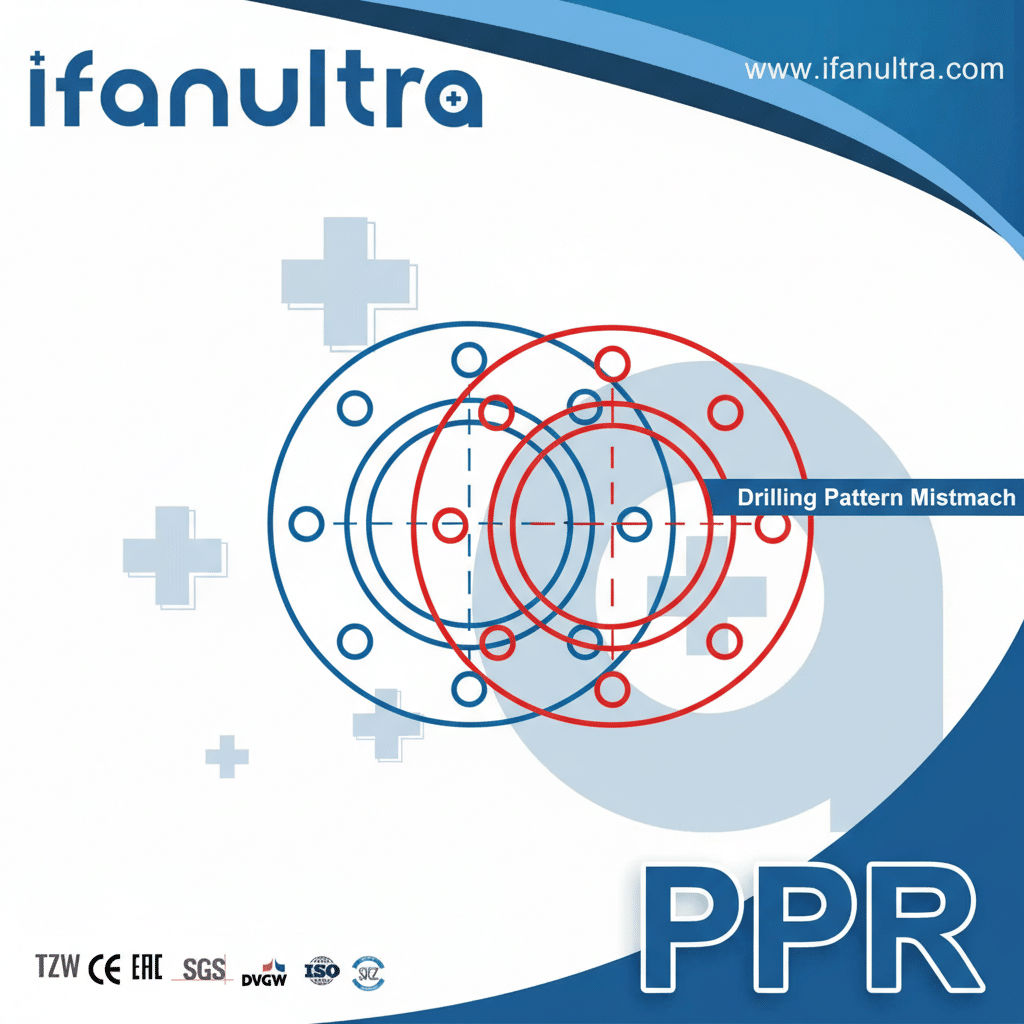
- Consequence of Mismatch: If these don’t match, you cannot physically bolt the flanges together. The only solutions are to drill new holes (which voids certifications and is risky) or order a new, correct adapter.
2. Facing Surface:
- Sealing Interface: This is the machined finish where the gasket sits. A Raised Face flange must pair with another Raised Face flange. A Flat Face must pair with Flat Face.
- Surface Finish: Standards also define the texture (serration) of the facing to help the gasket bite and seal properly.
- Consequence of Mismatch: Mating a Raised Face to a Flat Face creates a gap. The gasket will not seal, leading to immediate and catastrophic leakage.
The Role of the Gasket
The adapter’s facing is designed for a specific gasket type. The gasket’s inner/outer diameter and thickness are standardized.
- A PN16 Flat Face flange uses a full-face gasket that covers the entire face and has holes for the bolts.
- A Class 150 Raised Face flange uses a ring gasket that sits inside the bolt circle on the raised portion.
When you order a standard adapter, you are guaranteed that off-the-shelf, standard gaskets and bolts will fit perfectly. This table shows the alignment:
| Component | Must Match the Adapter’s… | Purpose |
|---|---|---|
| Mating Flange | Standard, Class, Size, Facing | Creates the connection pair. |
| Gasket | Facing Type & Pressure Rating | Creates the seal between faces. |
| Bolts & Nuts | Hole Diameter & Quantity | Clamps the assembly together. |
Always verify that your supplier’s adapters are manufactured to the exacting tolerances of the published standard, not just “similar to” it.
Why Is Flange Standard Compatibility Critical for International Projects?
On international jobsites, a flange mismatch doesn’t just cause a delay—it can stop an entire multi-million dollar project.
Flange standard compatibility is critical because international projects source equipment from multiple countries. Incompatible flanges (DIN vs. ANSI) cannot physically connect, causing costly installation failures, weeks of delay for replacement parts, and potential safety risks from makeshift solutions.
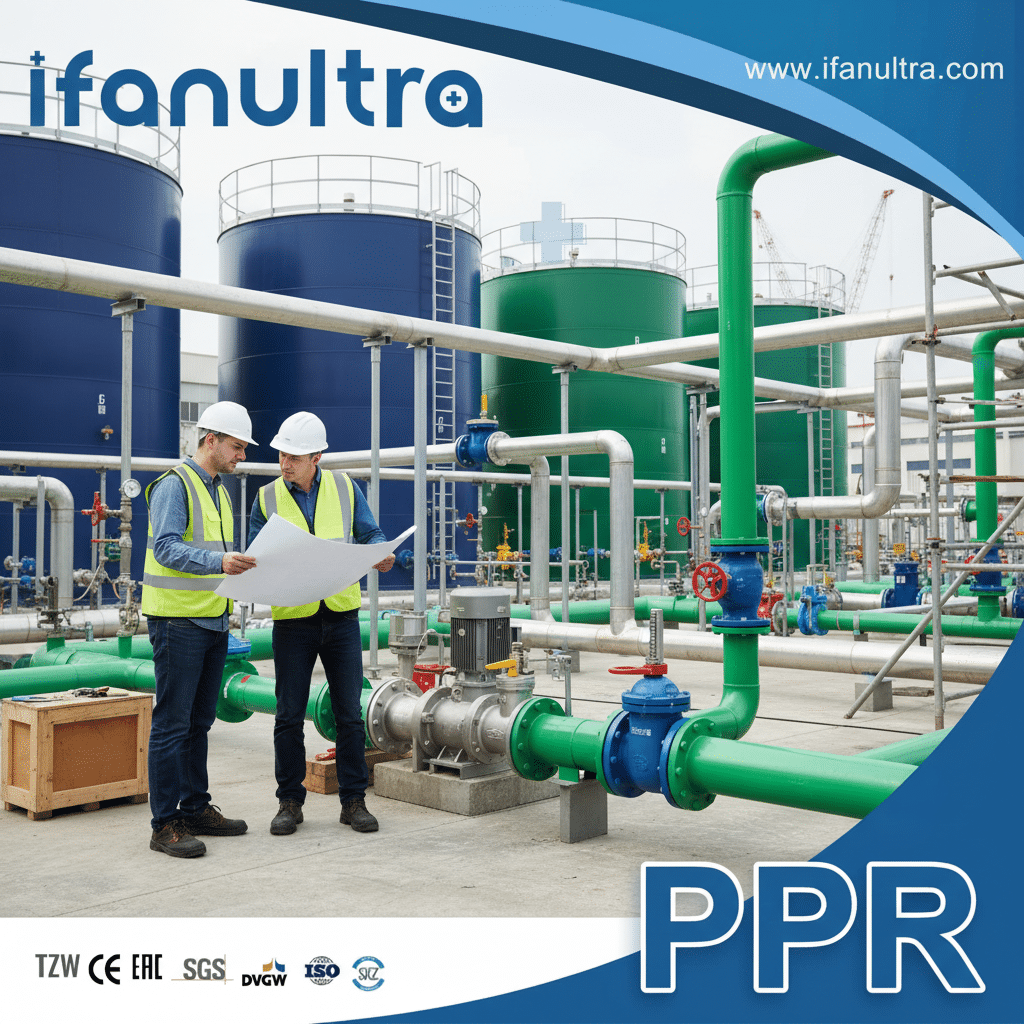
The Domino Effect of Incompatibility
A single wrong flange adapter can trigger a chain of problems that impact budget, schedule, and safety.
1. Installation Failure and Work Stoppage:
When the piping crew goes to install the valve from Italy (DIN) to the pump from the USA (ANSI), they find the bolt holes are off by a few centimeters. All work on that pipeline stops immediately. Skilled labor sits idle, and the project schedule begins to slip from day one.
2. Costly Emergency Logistics:
Procuring the correct adapter becomes an emergency air freight order. The cost for the $50 part can balloon to $500 with overnight shipping. More importantly, the delay can cost thousands per day in lost labor and postponed project milestones.
3. Safety and Integrity Risks:
Under pressure, site teams might try risky workarounds: drilling new holes, using only half the bolts, or creating custom spacers. These “solutions” compromise the structural integrity of the connection, creating a potential future point of failure, leak, or even rupture under pressure.
How to Mitigate This Risk
Successful project managers enforce standardization early. Here is a practical approach:
- Define the Primary Standard in the Design Phase: The project’s basic engineering design (BED) should mandate one primary flange standard for all interconnected systems, e.g., “All pipe-to-equipment connections shall use ANSI B16.5 Class 150 flanges.”
- Audit All Supplier Quotations: Require that all vendors (pump, valve, tank suppliers) confirm their equipment’s flange standard and rating in their quotes. Do not assume.
- Use a Compatibility Matrix: For projects mixing equipment origins, create a simple table to track requirements.
| Equipment Item | Supplier Country | Required Flange Standard | Confirmed (Y/N) |
|---|---|---|---|
| Centrifugal Pump | Germany | DIN EN 1092-1 PN16, DN150 | Yes |
| Isolation Valve | USA | ANSI B16.5 Class 150, 6″ | Yes |
| Adapter Needed | → | DIN to ANSI, 150mm/6″ | To be procured |
As a supplier, IFAN’s role is to provide the adapters that bridge these world standards, ensuring seamless integration no matter where the equipment originates.
Conclusão
Choosing the correct flange standard is fundamental for a leak-free, installable system. For reliable DIN and ANSI flange adapters, specify IFAN’s PP-R flange adapters, manufactured to exact international standards for global project success.









 English
 Español
 Français
 Português do Brasil