


Approve external heat tracing on PP-R only as an identified pipe-and-heating-system combination. Check the exact pipe instructions, cable suitability for plastic, temperature limitation, controls, insulation and electrical installation requirements together. “Self-regulating” on a cable label does not establish that a particular PP-R assembly is approved.
Key Takeaways
- Define freeze-maintenance duty and the lowest design conditions.
- Obtain instructions for the exact pipe, fittings and cable.
- Distinguish pipe surface temperature from water setpoint.
- PPI and named-manufacturer limits have different scopes.
- Plan what happens when electrical power is lost.
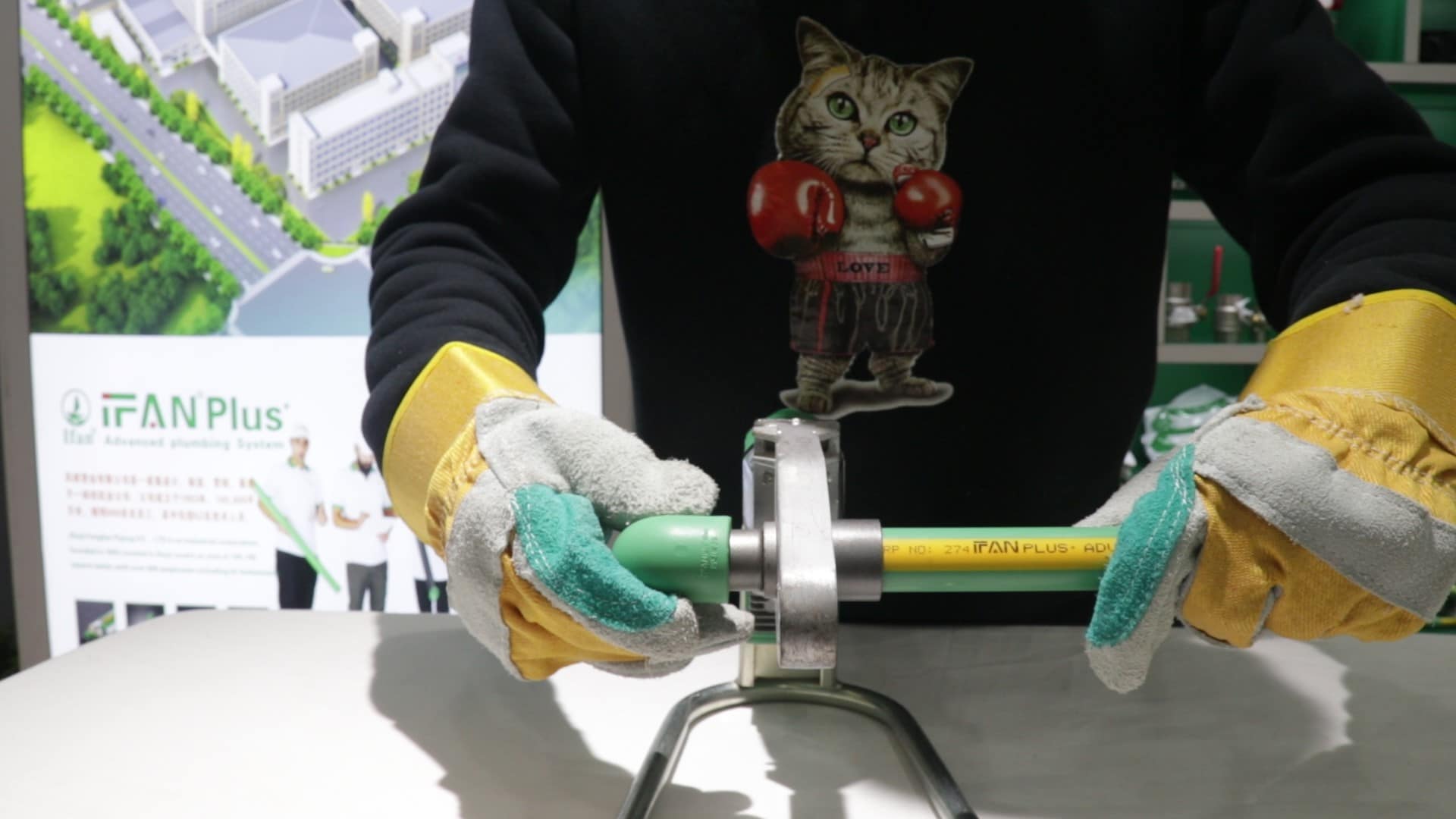
Heat-Line manufacturer demonstration, not a neutral test or IFAN approval. Independent relevance and vendor-suitability review pending. Playback has not been manually verified.
Load related video
Start with the cold duty and the proposed pair

A heat-trace enquiry begins with what must remain unfrozen, where it is installed and what happens during a cold event. Record the pipe system and wall series, sizes, fittings and valves, water service, pressure and temperature, exposure, lowest design ambient and insulation arrangement. The designer needs those inputs to select a protection system; the word PP-R does not identify them.
This is a different task from selecting a glycol concentration for a closed hydronic loop. External tracing adds electrical heat to the pipe surface. Glycol changes the circulating fluid. Neither is a substitute for the other’s approval, and a closed-loop fluid strategy cannot simply be copied into a drinking-water line. Here the reader’s output is a documented accept-or-HOLD screen for the proposed pair, not a cable installation recipe.
Read the two published temperature limits in their own scopes

PPI MS-8, revised April 2025, is a model specification for PP-R and PP-RCT plumbing and mechanical pressure systems. Its heat-tracing section specifies exterior installation, suitability for plastic piping, a self-regulating type, and a pipe-surface limit of 150°F (66°C). The foreword describes the document as industry guidance and calls for manufacturer information for specific applications. It is not a product approval certificate.
Aquatherm bulletin 201503A-AQTTB, revised May 2023, addresses its named pipe systems. For an external heat source it requires plastic-pipe suitability, self-regulation and a surface temperature not exceeding 158°F (70°C), together with installation instructions, listings and local codes. Its warranty statement belongs to the named Aquatherm products under those conditions.
Do not choose the larger number as a general PP-R allowance. These documents describe different scopes. Neither supplies an IFAN ULTRA heat-tracing permission. Establish the project’s governing requirements and obtain the exact pipe-system and cable instructions. Where they differ or cannot both be met, return the proposal for resolution rather than averaging limits or transferring a warranty.
A suitable cable still needs a complete installation design
Self-regulating describes a heating behaviour; it does not document every surface temperature in the proposed installation. Cable selection, attachment, insulation, controls and exposure belong in the reviewed arrangement. Ask the cable manufacturer or responsible designer how the design meets both the required freeze-protection duty and the applicable pipe temperature limit. A water-temperature controller setting alone does not demonstrate the temperature at the heated pipe surface.
Preserve instructions for fittings, valves and terminations rather than approving only a straight pipe sample. The cable system’s installation, product listings and local electrical requirements remain separate from the pipe material’s pressure-temperature data. Electrical work and protective arrangements require qualified design and installation under the applicable rules. This article gives no circuit sizing, attachment spacing or universal cable output.
A proposed-system screen with a countercheck
Hypothetical proposal A identifies a PP-R pipe but supplies only a cable brochure saying self-regulating. Pipe-maker approval, surface-temperature evidence and the insulation design are absent. The decision is HOLD. A marketing label cannot complete the missing interface checks.
Proposal B includes the exact pipe and cable instructions, the governing project requirements and a design showing how the complete proposed installation meets them. The responsible project parties can assess that package for approval. This article cannot certify it; its usable result is knowing which evidence must agree before acceptance.
Now change just one input: the cable is replaced with a different product while the pipe and insulation remain the same. Reopen the pair assessment. The previous approval does not automatically cover the substitution. Conversely, changing the pipe system also requires reassessment even if the cable stays unchanged. This countercheck prevents a system review from becoming a general material endorsement.
| Evidence | Published scope | Decision boundary |
|---|---|---|
| PPI MS-8 | Exterior; self-regulating; suitable plastic;150°F (66°C) surface | Model specification, not IFAN approval |
| Aquatherm 201503A | Named systems;158°F (70°C) surface | No warranty or limit transfer |
| Cable brochure only | Self-regulating label | HOLD exact-pair approval |
Include supply loss and keep the procurement boundary clear
Electrical tracing depends on its power supply. Insulation slows heat loss but does not provide an indefinite heat source. Ask the designer for the loss-of-power response appropriate to the service: monitoring and alarm, a supported backup arrangement, an approved shutdown or another designed strategy. Do not promise a safe outage duration without a calculation for the actual system and conditions.
The handover record should identify the approved pipe-and-cable pair, duty and exposure, governing temperature criteria, insulation and control arrangement, installation instructions, responsible electrical approval, commissioning evidence and outage response. Keep unknown items explicit; a missing answer is a HOLD item, not a presumed standard detail.
For the pipework portion, submit the pipe schedule, country, service, pressure-temperature conditions and proposed tracing arrangement through the IFAN ULTRA enquiry route. Ask whether a matching pipe-and-fitting system and written compatibility information are available. No cable supply, electrical design service, traced-system approval or Aquatherm warranty is promised.
Send the pipework requirements for an availability check
Related: closed-loop glycol protection guide.
Related: IFAN ULTRA product series.
- PP-R external heat tracing review
- 1 Identify exact pipe, cable and cold duty
- 2 Check both makers instructions
- 3 Confirm plastic suitability, surface temperature and complete installation design
- Missing evidence: HOLD
- 4 Resolve power-loss response
- 5 Record approved pair
- Do NOT transfer another brands temperature or warranty.


| Review item | Missing answer |
|---|---|
| Exact pipe/cable instructions | HOLD pair approval |
| Insulation and controls | Resolve complete installation design |
| Power-loss plan | Resolve service continuity |
Conclusión
Review the exact pipe-and-cable pair against the duty and governing documents. Resolve temperature scope, installation and supply-loss behaviour before acceptance. Retain the evidence with the approved configuration and reopen it whenever a component changes.
Frequently asked questions
Does self-regulating mean safe on every plastic pipe?
No. The exact pipe-and-cable combination, temperature limitation and complete installation still need approval.
Can I use Aquatherm’s 70°C limit for IFAN ULTRA?
No: that bulletin concerns named Aquatherm systems. Obtain instructions for the actual proposed pipe system.
Is the thermostat setpoint the pipe-surface limit?
They are different quantities. The design must show how the actual installation satisfies its applicable surface-temperature limit.
Sources



 English
 Español
 Français
 Português do Brasil