

For a new PPR installation, buy an identified, matched pipe-and-fitting system rather than a shop assortment of brand X pipe and brand Y/Z fittings. Parts may appear to fit or fuse, but that alone establishes neither documented system compatibility nor warranty or home-insurance coverage. A mixed combination needs its own supporting manufacturer documentation; a shared nominal diameter does not supply it.
A real 2014 HaustechnikDialog question describes exactly this purchase. Christoph saw one maker’s pipe sold beside other makers’ fittings. An employee advised against mixing because of insurance; a forum reply then predicted an insurer would pay nothing after a failure. The useful question is what to buy before making the joints. The insurance prediction is an unverified forum claim.
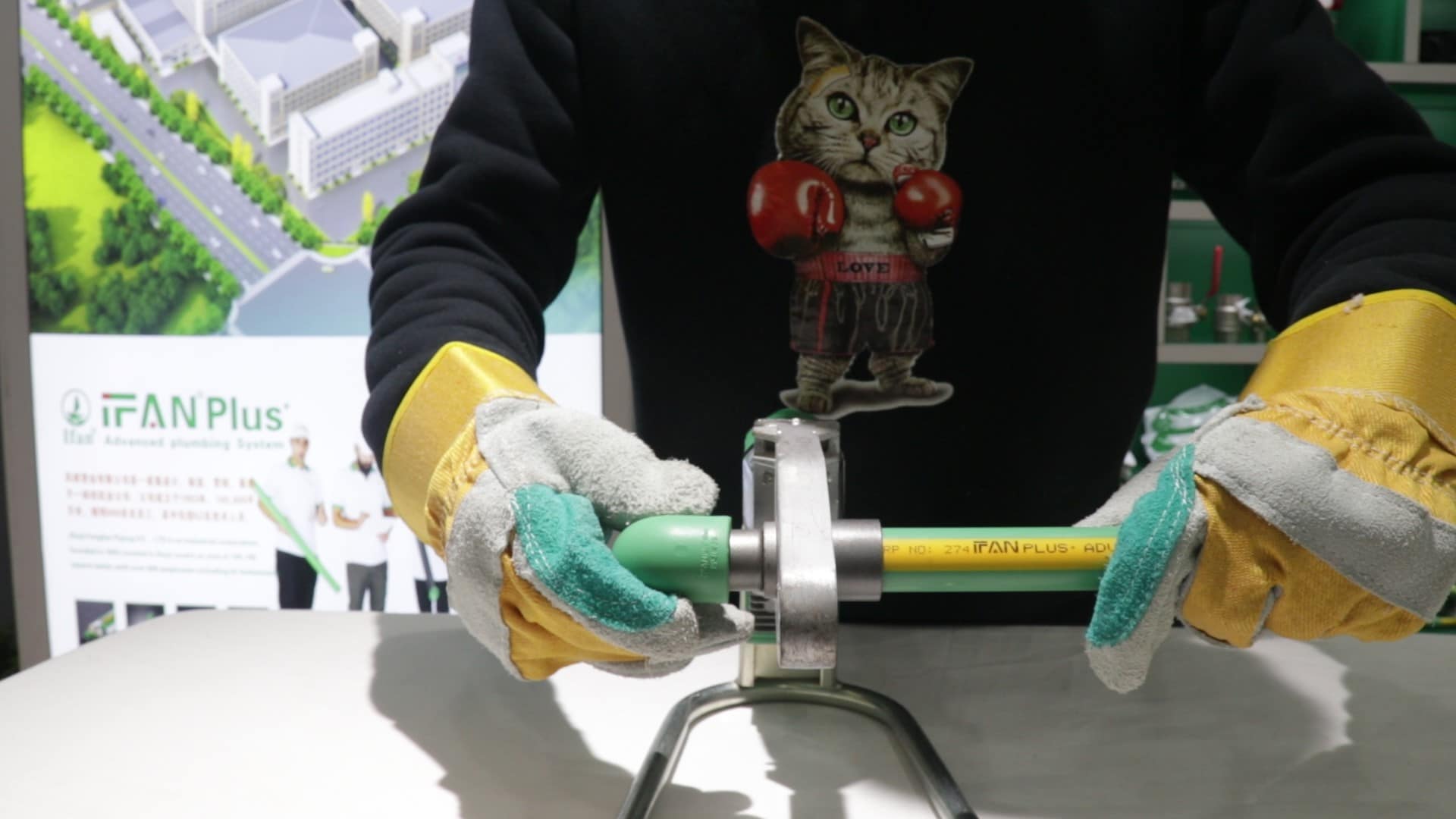
Plastics Pipe Institute training context for the fusion process; it does not approve a mixed-brand combination. Watch on YouTube if the embedded player is unavailable.
Four separate questions behind “Can I use these together?”
At the counter, “compatible” can mean that a pipe enters a socket. On a specification, it should identify the pipe and fitting combination intended for the stated service. At a claims desk, it may be shorthand for conditions in a particular warranty or insurance policy. Moving between those meanings without saying so is how a simple fitting purchase becomes a misleading promise.
| Question | What would answer it? | What does not settle it? |
|---|---|---|
| Can the parts physically join? | Correct product identification and the relevant dimensions and joining method. | A shared trade name, color or nominal size. |
| Is this a documented system combination? | Manufacturer documentation identifying the intended pipe/fitting family, service conditions and joining instructions. | A joint that looks satisfactory, or two separate product claims with no stated combination. |
| What manufacturer warranty applies? | The actual warranty terms for the supplied products, market and installation. | A general service-life claim or another brand’s warranty. |
| Will property insurance cover a loss? | The applicable policy and the facts and terms relevant to that claim. | A salesperson’s warning, a forum prediction, or a manufacturer warranty alone. |
The published scope of ISO 15874-5:2013 concerns fitness for purpose of the piping system, including pipes, fittings and joints under application classes and design conditions. That is a broader question than matching outside diameters. The public scope does not approve a named X/Y/Z combination. It also does not provide a test recipe that a buyer can apply to qualify one. ISO lists the proposed replacement as a committee draft; that draft is not a published replacement.
Our PPR fittings guide explains the fitting families and their published size ranges. Use it to identify the part you need. This purchase decision comes next: identify which pipe that particular part is intended to join, under which service conditions.
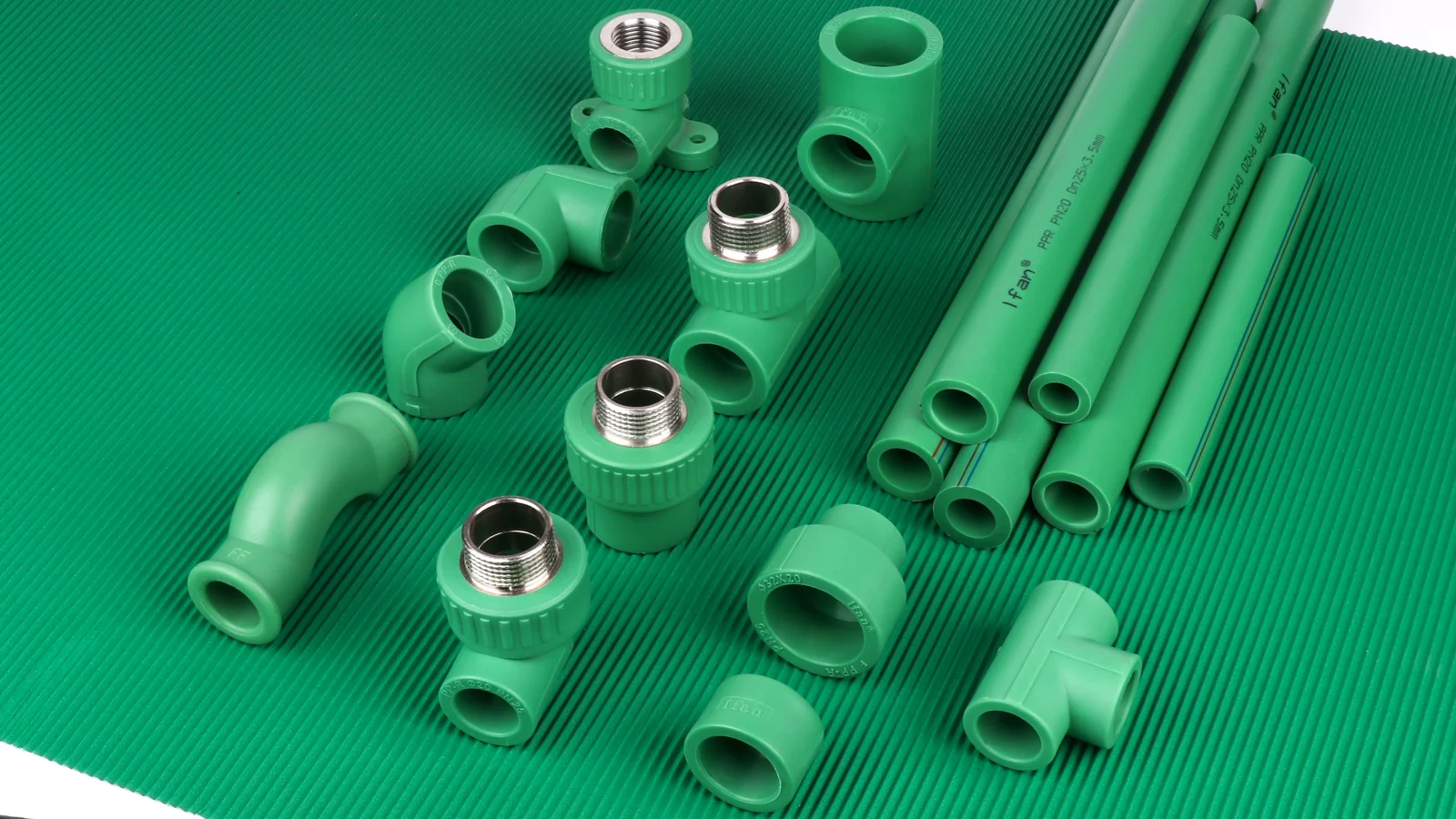
A PP-R fitting on PP-RCT pipe can be an intentional combination
A rule saying “the material labels must be identical” would reject a real manufacturer-specified arrangement. Wavin’s Turkey PP-R/PP-RCT product guide, printed page 4, specifies Type 3 PP-R fittings for use with its PP-R or PP-RCT pipes. The fitting range stated there is 20–125 mm.
That matters because a buyer could see PP-R on the fitting and PP-RCT on the pipe and incorrectly conclude that they must be incompatible. Here, the manufacturer identifies the combination inside a named product system. The product documentation provides the connection between the two labels.
The same statement gives no permission to substitute brand Y’s fitting on brand X’s PP-RCT pipe. It does not identify those products, their assembly or their intended service. Nor does it establish compatibility between Wavin parts and IFAN ULTRA parts. The transferable lesson is to follow an identified combination, not to treat “both are polypropylene” as a mixing license.
This also changes how to ask the supplier. Instead of “Do you sell PPR fittings?”, name the existing or proposed pipe family, its size and wall designation, and the application. Then compare the fitting’s stated intended use and joining instructions. A material label is one part of that identification, not the whole answer.
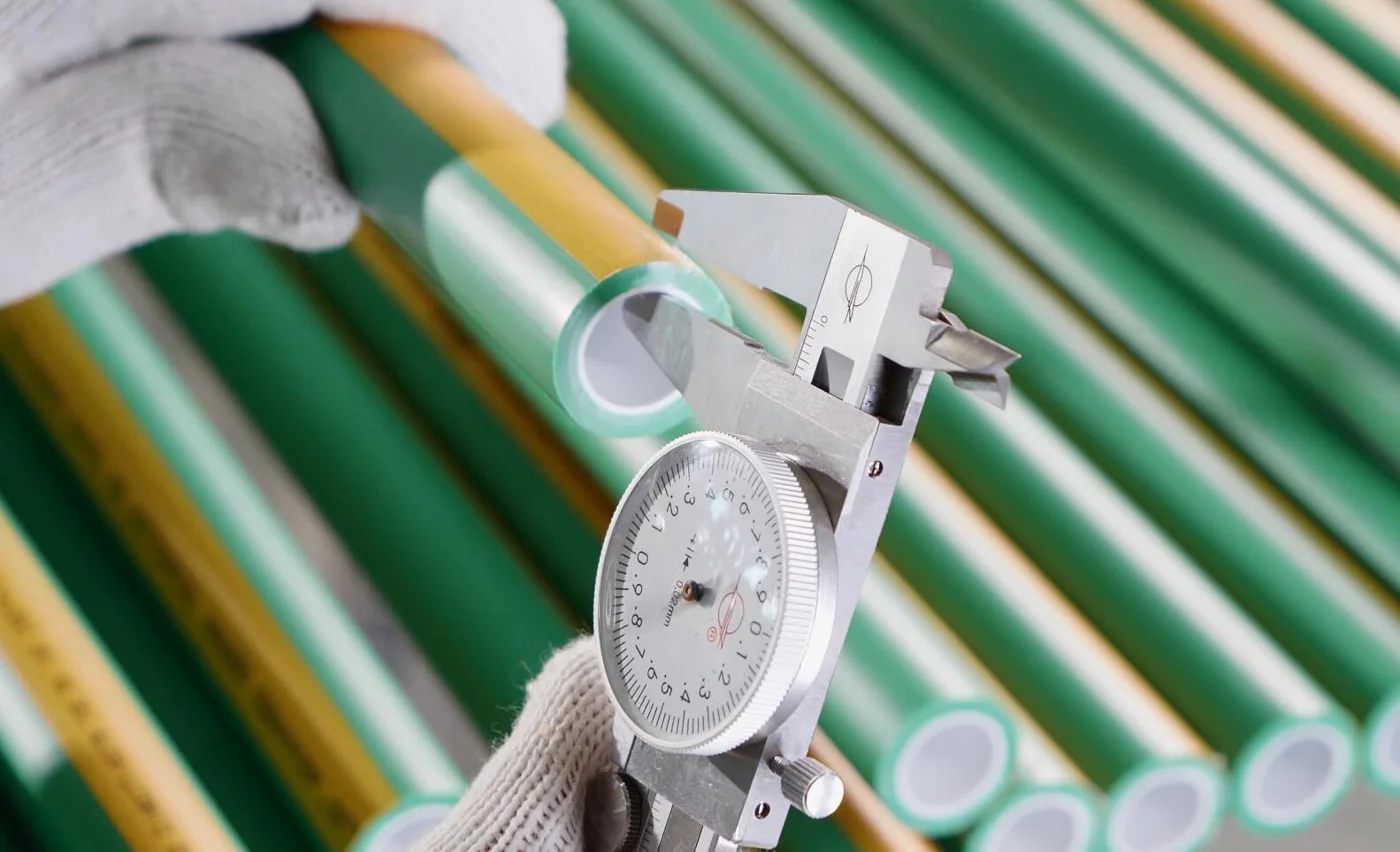
A manufacturer warranty does not decide home insurance
The original forum question combines a technical choice with an insurance warning. Separate them before accepting either “it is fine” or “you will never be paid.” The thread provides no policy, insurer decision or loss investigation supporting the second claim.
Manufacturer terms can nevertheless contain real conditions. For example, Aquatherm’s published B2B terms, sections 8.1–8.3, describe an extended warranty for specified plastic pipes and fittings, address defects attributable to their material, and set conditions involving installation rules and application clearance for media or operating conditions. This is an example from Aquatherm’s stated business and regional terms. It is not IFAN ULTRA’s warranty.
The example shows why a warranty cannot be reduced to the brand name printed on a pipe. The relevant terms describe the products, defect and conditions covered. A claim that all mixed brands automatically void every warranty would go beyond this evidence. So would a promise that a successful fusion guarantees coverage.
Property insurance is a separate contract. Do not convert this manufacturer example into a prediction about a homeowner’s claim. If coverage is central to the purchase, obtain an answer tied to the actual policy and proposed installation. The practical purchase choice remains available now: for new work, select a documented matched system rather than relying on a retailer’s mixed assortment and an unsupported assurance about insurance.

Three completed purchase decisions
- Identify the pipe and fitting family.
- If the named combination is documented, check size, service and joining instructions before selecting it.
- If a new installation has no documented mixed combination, buy an identified matched set.
- For a repair, source the intended fitting; if unavailable, replace the affected connection with an identified compatible arrangement.
The following cases are hypothetical applications of the source boundaries above. They are not project approvals, customer results or test reports.
1. Named Wavin pipe and fitting family
Situation: A buyer selects a Wavin PP-RCT pipe and a Type 3 PP-R fitting from the family described in its Turkey guide. The different resin labels cause concern.
Decision: Keep that named family as the candidate selection; do not reject it solely because the fitting says PP-R and the pipe says PP-RCT. The guide expressly describes that combination. Before placing the order, match the exact product designations, size, service conditions and joining instructions to the job. The page-4 statement establishes the family relationship, not every product’s suitability for every temperature or pressure.
2. Equal-size X/Y/Z parts on a shop shelf
Situation: Brand X pipe and brand Y/Z fittings are offered for a new installation. All are marked 25 mm. The seller says they can be welded, but provides no documentation identifying the mixed combination.
Decision: Purchase an identified matched pipe-and-fitting set instead. The shared 25 mm designation does not establish documented system compatibility, and a trial weld would not answer the warranty or insurance questions. This is a purchasing decision, not a demand to certify the shop’s entire stock. Choose the supported alternative before the installation creates permanent joints.
If the seller later produces documentation for the exact mixed combination and its intended service, assess that combination on its own evidence. Do not apply a blanket “different brands can never work” rule. Equally, do not use the Wavin example to fill the missing documentation for X/Y/Z.
3. An identified pipe needs a repair fitting
Situation: An existing pipe’s maker, family, size and wall designation are legible. The intended replacement fitting is identified, but its published instructions do not establish use with that pipe. A same-color fitting is available immediately.
Decision: Do not install the color-matched substitute on that basis. Source the fitting intended for the identified pipe family, or obtain manufacturer documentation for the exact alternative connection and service. If no suitable part can be established, replace the affected connection or section with an identified compatible arrangement designed for the actual interfaces. Do not assume that a generic mechanical coupling solves the problem: its stated pipe suitability and service limits still matter.
After the repair, follow the applicable joining and system-testing requirements. A passing site pressure test is useful verification of the installed section under the test conditions. It does not retrospectively turn an unsupported combination into a manufacturer-approved design. Our fusion-joint acceptance guide addresses inspection separately; repeating its bead and angle criteria would not settle this parts-selection question.
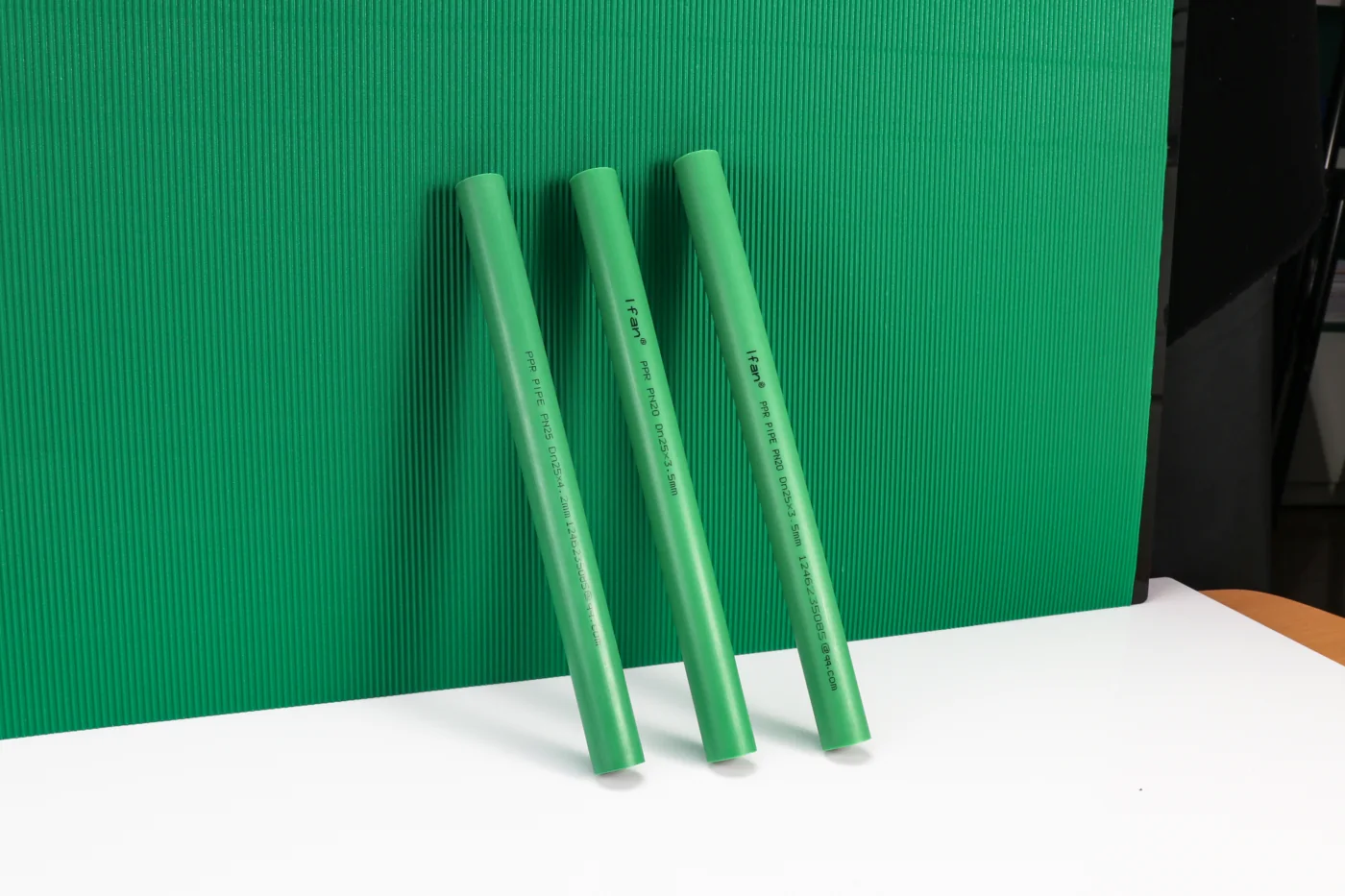
| Escenario | Completed choice | Boundary |
|---|---|---|
| Named Wavin family | Keep the documented family as the candidate | Confirm the exact products and service |
| Undocumented X/Y/Z new work | Buy an identified matched set | Equal OD is insufficient |
| Identified repair | Source the intended fitting or replace the affected connection | Color does not establish suitability |
Choosing an IFAN ULTRA pipe-and-fitting range
IFAN ULTRA publishes PPR pipe and fitting ranges in its Global and Quality series. A buyer planning new work can start with an identified range and reconcile its pipe, fitting and transition parts against the project. The published fitting-family guide also makes the size boundaries visible: do not assume that every valve or transition exists at every pipe diameter.
Use the range selection to answer the original shop problem: which identified pipe and fitting set are you purchasing together? Confirm the exact supplied product designations, service documentation and joining instructions before treating that selection as project-ready. This article supplies no IFAN ULTRA approval for joining other brands and no new warranty terms.
Planning a matched PPR order? Compare the published IFAN ULTRA pipe and fitting families, then identify the required sizes and transitions in the same selection. Review the PPR fitting ranges. Availability and product-specific documentation need confirmation for the proposed order.
Conclusión
For Christoph’s new-installation purchase, the defensible choice is an identified matched system instead of undocumented X/Y/Z parts. The reason is the missing system relationship, not a proven universal ban on mixed brands or an established insurance refusal.
Wavin’s named PP-R/PP-RCT combination illustrates what useful compatibility evidence looks like. Aquatherm’s terms illustrate why manufacturer warranties must be read in their own scope. Keep those two lessons separate, and neither a successful trial weld nor an alarming forum reply has to make the purchase decision for you.
Frequently asked questions
Does matching the pipe diameter prove different brands are compatible?
No. The nominal diameter helps identify the required part, but does not establish a documented combination for the intended service, its joining procedure or warranty terms.
Can a PP-R fitting be used on PP-RCT pipe?
Within a manufacturer-specified combination, yes: Wavin’s Turkey guide explicitly describes its Type 3 PP-R fittings for its PP-R or PP-RCT pipes. That statement does not authorize arbitrary brands or any IFAN ULTRA mixed combination.
Will mixing brands automatically invalidate home insurance?
The cited forum does not establish that. A manufacturer warranty and property insurance are separate arrangements; neither blanket refusal nor guaranteed cover follows from the evidence in this article.
Does a pressure test approve a mixed-brand system?
No. Testing verifies the installed section under the applicable test conditions. It does not create manufacturer documentation approving the pipe/fitting combination.



 English
 Español
 Français
 Português do Brasil