
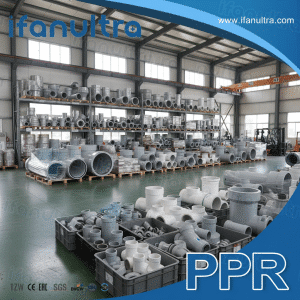
I once had a client call me in a panic because his production line was stopped, waiting for a custom fitting. That stressful moment taught me that lead time is more than a date on a calendar.
For custom large-diameter fittings, typical lead times range from 4 to 12 weeks, depending on design complexity, mold availability, material sourcing, and factory workload. However, this is just the production window. The total time from order to delivery must also include quality inspection and shipping, which can add another 2 to 6 weeks.
Many factors influence this timeline, and understanding each one helps you plan better and avoid costly delays. Let’s break down the key elements that affect lead time for these specialized components.
How Does Mold Availability and Tooling Production Affect Custom Fitting Timelines?
A new design often means a new mold. I’ve seen projects stall because the tooling wasn’t ready, and that delay rippled through the entire supply chain.
Mold availability is often the biggest bottleneck for custom fittings. If an existing mold can be used, lead time may be as short as 2‑3 weeks. But if a new mold must be designed and manufactured, add 4‑8 weeks for tooling alone. The complexity of the fitting (size, wall thickness, special features) directly impacts how long this stage takes.
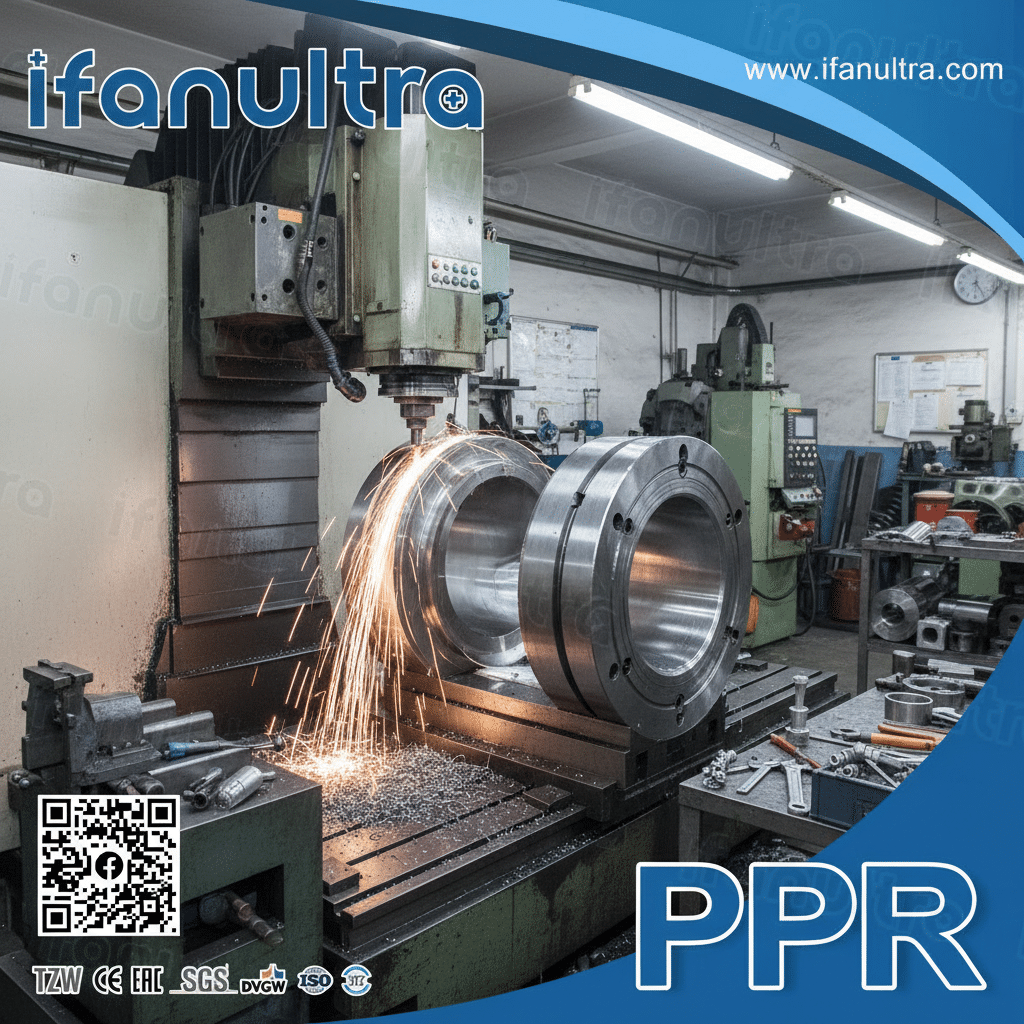
The Mold: The Heart of Production
Every injection-molded fitting starts with a mold. For standard sizes, manufacturers already have molds ready, so production can begin almost immediately after order confirmation. But for large-diameter or non-standard fittings, a new mold is usually required.
Design and Engineering (1‑3 weeks): Before any metal is cut, engineers must create detailed 3D models and drawings. They need to account for material shrinkage, cooling channels, and ejection mechanisms. For large fittings, the mold design is more complex because the part is bigger and may require special cooling to prevent warping.
Mold Manufacturing (3‑6 weeks): This is the most time-consuming step. High-quality molds are machined from hardened steel (for long runs) or aluminum (for prototypes or short runs). CNC machining, electrical discharge machining (EDM), and hand finishing are all involved. Large molds may require custom orders for steel blocks and can tie up a machine for days.
Mold Tryout and Adjustments (1‑2 weeks): Once the mold is built, it is installed in an injection molding machine for a trial run. Technicians check the parts for dimensional accuracy, surface finish, and any defects. Often, small adjustments (polishing, venting, gate resizing) are needed. This iterative process can take several cycles before the mold produces acceptable parts consistently.
Table: Mold Lead Time by Complexity
| Mold Type | Typical Lead Time | Suitable For |
|---|---|---|
| Existing mold (off-the-shelf) | Immediate – 1 week | Standard sizes, high‑volume products |
| Modified existing mold | 2‑4 weeks | Small changes to an existing design |
| New aluminum prototype mold | 3‑5 weeks | Short runs, testing, low‑volume custom |
| New production steel mold | 6‑10 weeks | High‑volume, long‑term production runs |
IFAN’s Approach to Mold Management
At IFAN, we maintain a library of common large-diameter molds to reduce lead times. For truly custom designs, we work closely with our tooling partners to compress the schedule without sacrificing quality. We also advise clients early if a new mold is needed, so they can plan accordingly.
What is the Impact of Order Quantity and Material Sourcing on Production Lead Time?
A small order and a huge order don’t move at the same speed. I’ve learned that material availability often dictates the pace.
Order quantity determines whether a job runs continuously or is batched with others, which affects scheduling. Material sourcing is equally critical: standard PP-R pellets may be in stock, but special compounds (like fire-retardant or UV-resistant grades) often require separate procurement with 2‑4 week lead times. Combining these factors can add significant time to the overall schedule.
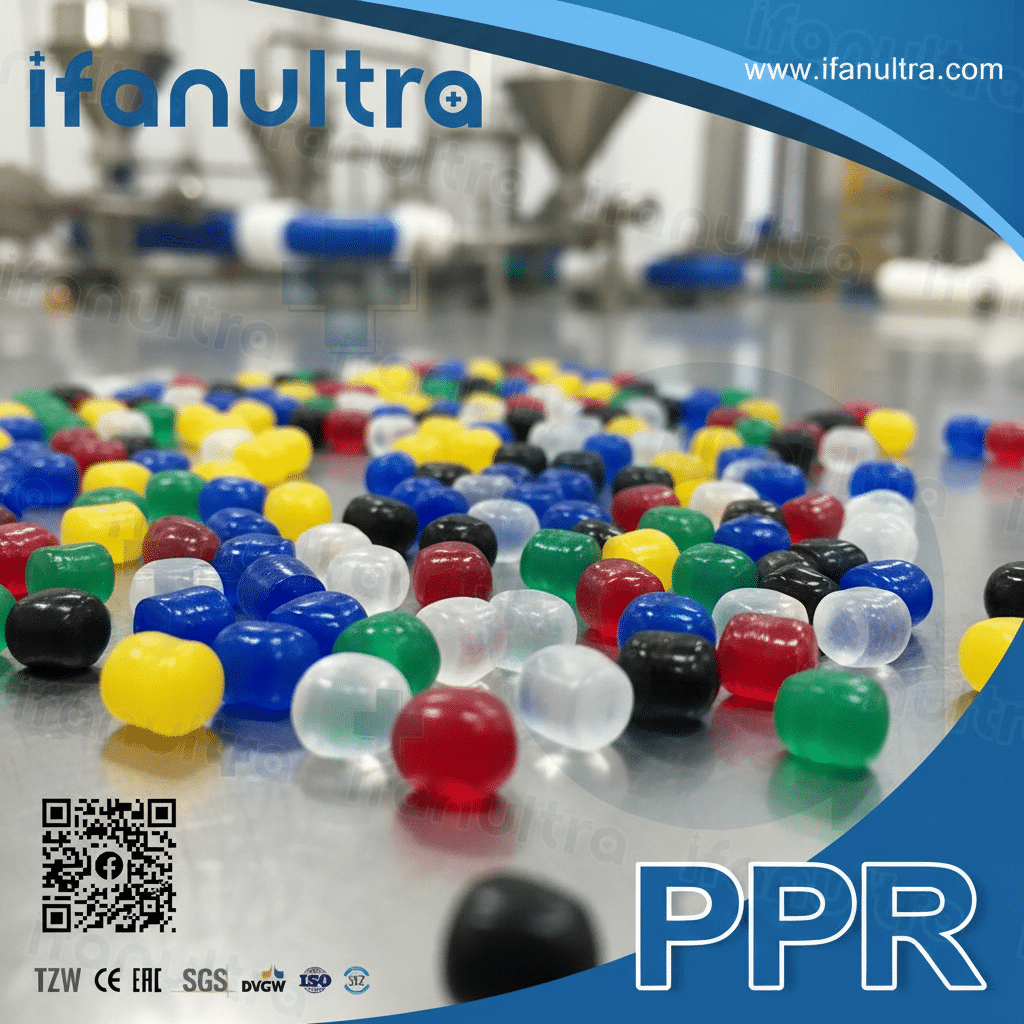
Material Sourcing: The Hidden Delay
Most large-diameter fittings are made from PP-R or similar thermoplastics. Manufacturers typically stock the most common grades (e.g., PP-R 100). However, custom orders sometimes require:
- Special colors – requiring color masterbatch that must be ordered.
- Reinforced materials – like glass-fiber filled PP, which may not be regularly stocked.
- Compliance grades – materials certified for specific markets (NSF, WRAS, etc.) which might come from specific suppliers.
Each of these can add 1‑4 weeks for material procurement, depending on supplier location and availability.
Order Quantity: The Production Run
Once material is ready, production scheduling depends on volume:
- Small quantities (e.g., 50‑200 pieces): These can often be produced quickly because they don’t tie up a machine for long. However, they may be queued behind larger runs. At IFAN, we try to schedule small custom orders within 1‑2 weeks of material readiness.
- Medium quantities (e.g., 200‑1000 pieces): These require a dedicated production block, typically 1‑3 weeks of machine time, depending on cycle time and cavity count.
- Large quantities (1000+ pieces): These may require multiple molds or long production runs. Lead time extends because the factory must allocate significant capacity.
Table: Estimated Production Time per Quantity (for a typical large-diameter fitting)
| Order Quantity | Material Sourcing Time | Production Time (approx.) | Total Production Lead Time* |
|---|---|---|---|
| < 200 pcs | 1‑2 weeks (if special) | 3‑5 days | 2‑3 weeks |
| 200‑1000 pcs | 1‑3 weeks | 1‑3 weeks | 3‑6 weeks |
| 1000‑5000 pcs | 2‑4 weeks | 3‑6 weeks | 5‑10 weeks |
| *Does not include tooling time. |
Practical Advice for Buyers
To minimize delays, confirm material specifications early. If you need a special grade, ask if the factory can pre-order it while the mold is being made. Also, consider ordering a small sample run first to validate the product before committing to a large quantity.
How Do Factory Capacity and Seasonal Peaks Influence Delivery Schedules?
Factories are not infinite resources. I’ve seen clients shocked when their order gets pushed because of a sudden rush from other buyers.
Factory capacity fluctuates throughout the year. During peak seasons (typically before major holidays or construction booms), machines run at full capacity, and new orders may wait 2‑4 weeks just to enter production. Understanding a factory’s workload and planning around seasonal peaks can save you from unexpected delays.
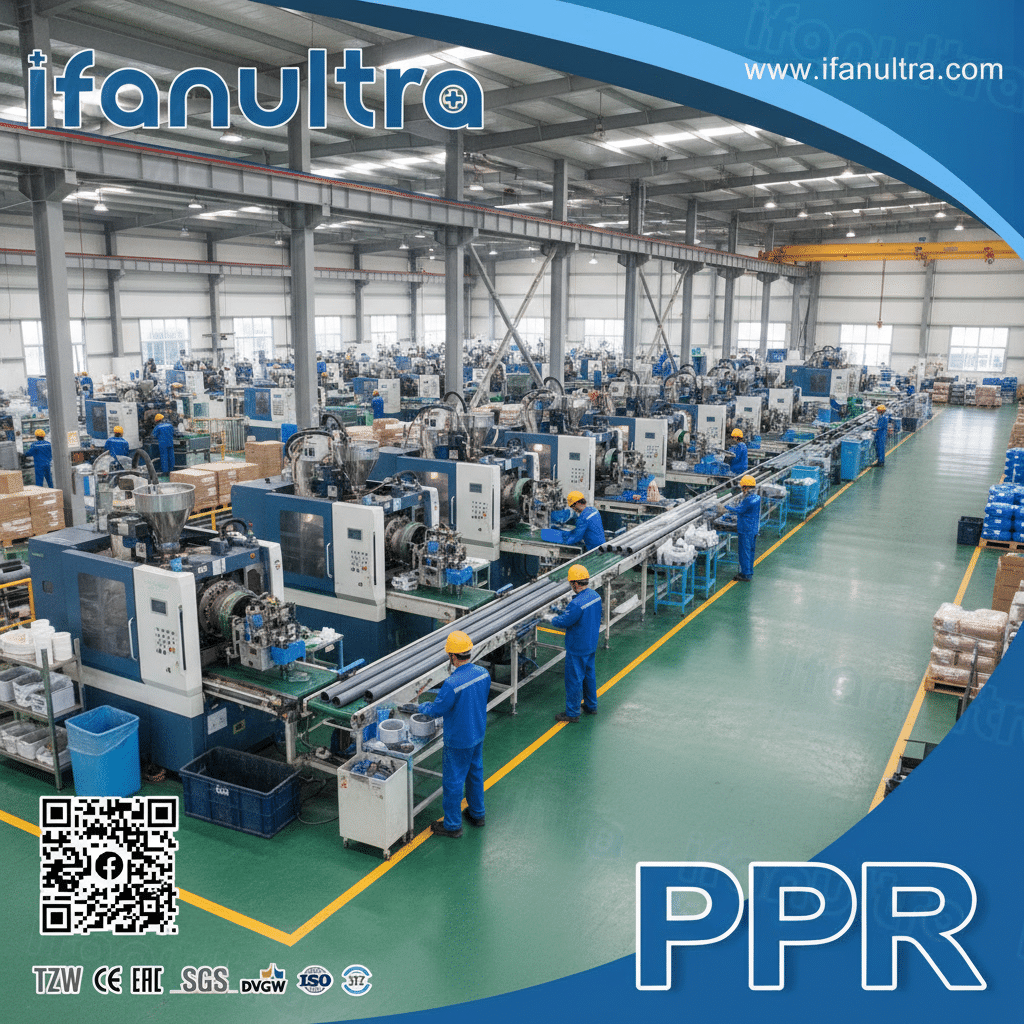
Understanding Factory Workload
A factory has a fixed number of injection molding machines, each capable of running 24/7 if staffed. However, real-world constraints include:
- Maintenance downtime: Machines need regular servicing.
- Changeover time: Switching from one product to another takes hours to days, especially for large molds.
- Labor availability: Skilled operators and technicians are needed to run large machines.
During slow periods, a factory may have idle capacity and can start your order immediately. During busy periods, queues build up.
Seasonal Peaks in the Plumbing Industry
Based on IFAN’s experience, demand for large-diameter fittings often spikes:
- Spring (March‑May): Construction season starts in many countries.
- Pre‑holiday rushes: Before Chinese New Year (Jan‑Feb) and before major Western holidays (Nov‑Dec), buyers stock up.
- End of financial year: Some companies rush to use budgets.
Conversely, the weeks right after Chinese New Year (late Feb‑March) are often slower as the supply chain ramps back up.
Table: Seasonal Capacity and Typical Lead Time Adjustments
| Season | Typical Capacity Level | Impact on Lead Time |
|---|---|---|
| January‑February (pre‑CNY) | High (rush to ship before holiday) | +2‑4 weeks queue |
| March‑April (post‑CNY) | Low to medium (ramping up) | Minimal delays |
| May‑August | Medium to high | Normal lead times |
| September‑December | High (year‑end demand) | +1‑3 weeks queue |
How to Work with Factory Schedules
At IFAN, we keep a close eye on capacity and advise clients to book production slots in advance. If you have a large project, consider placing a forecast order 2‑3 months ahead to secure capacity. Also, be aware of major holidays in the manufacturing country (e.g., Chinese New Year, National Day) and plan shipments accordingly.
Why Should You Factor in Quality Inspection and Logistics When Calculating Total Lead Time?
Production finish date is not the same as delivery date. I’ve learned the hard way that inspection and shipping can add weeks to the timeline.
Quality inspection and logistics are often the last mile—but they can take as long as production itself. Inline inspection may add a few days, but third-party inspections or testing can add 1‑2 weeks. Then sea freight from China to, say, Europe or the US takes 4‑6 weeks, plus customs clearance. Ignoring these steps means your goods arrive much later than expected.

Quality Inspection: More Than a Quick Check
For custom large-diameter fittings, quality control is critical. Dimensional tolerances must be verified, especially for fittings that will connect to existing systems. The inspection process can include:
- In-process checks: During production, workers may measure samples every hour. This doesn’t add extra days.
- Final inspection: After production, a batch may be set aside for a full inspection. If you request a third-party inspection (like SGS or Bureau Veritas), you must coordinate their visit, which can take 1‑2 weeks to schedule and complete.
- Testing: Some specs require pressure testing or material certification, which can add time if samples must be sent to a lab.
Logistics: The Long Haul
Once goods are packed, they must travel to your warehouse. Typical ocean freight times:
- China to US West Coast: 15‑20 days
- China to US East Coast: 25‑35 days (via Panama)
- China to Europe (North): 30‑40 days
- China to Russia (overland): 10‑20 days by train
- China to Middle East: 20‑30 days
Add customs clearance at both ends (2‑7 days) and inland transportation.
Table: Typical Post-Production Timeline
| Step | Estimated Duration | Notes |
|---|---|---|
| Final QC (in-house) | 1‑3 days | Can be done concurrently with packing |
| Third‑party inspection | 5‑10 days | Requires scheduling |
| Packing and documentation | 2‑5 days | Preparing for shipment |
| Sea freight (main routes) | 4‑6 weeks | Varies by destination |
| Customs clearance | 2‑7 days | Depends on country |
| Inland delivery | 1‑5 days | Final mile |
Total Lead Time: A Realistic Picture
Let’s add it all up for a typical custom large-diameter order shipped from China to Europe:
- Mold making (if new): 6 weeks
- Material procurement: 2 weeks
- Production: 3 weeks
- QC + packing: 1 week
- Sea freight: 5 weeks
- Customs + delivery: 1 week
Total = 18 weeks (over 4 months). Even if no new mold is needed, production + QC + shipping can easily take 8‑10 weeks.
IFAN’s Integrated Approach
At IFAN, we manage the entire chain—from mold sourcing to shipping. We provide a detailed timeline upfront, including realistic estimates for inspection and logistics. We also offer consolidated shipping options to reduce costs and delays. By coordinating all steps, we help you avoid surprises.
Conclusion
Understanding lead time for custom large-diameter fittings requires looking beyond production. Mold creation, material availability, factory capacity, and post-production steps all add weeks. IFAN manages these complexities for you, delivering quality fittings on a schedule you can trust.









 English
 Español
 Français
 Português do Brasil