
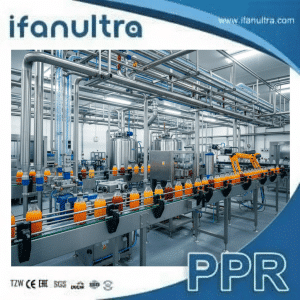
I once visited a juice bottling plant where a strange, plastic-like taste had ruined a whole production batch. The culprit was a non-compliant hose. This experience burned into me the critical importance of genuine food-grade piping standards, not just marketing claims.
Yes, strict, enforceable food-grade standards for piping are absolutely essential in the beverage industry. These standards, like NSF/ANSI 61, 3-A Sanitary Standards, and FDA CFR 21, ensure that pipes and fittings do not contaminate beverages with chemicals, affect taste, or pose a health risk. Compliance is not optional; it is a fundamental requirement for product safety and brand protection.
The world of food-grade certifications can seem complex. Let’s clarify the key standards, explain why they matter beyond just legality, and show you how to ensure your supply chain is truly compliant.
What is the Global Benchmark Standard for Food-Grade Plastics like NSF/ANSI 61?
When clients ask for “food-grade,” NSF/ANSI 61 is often the first certificate they name. It’s the foundation.
NSF/ANSI 61 is the globally recognized minimum benchmark standard for all materials and products that contact drinking water. It certifies that a pipe, fitting, or material will not leach harmful levels of contaminants—like lead, chemicals, or heavy metals—into the water above strict safety thresholds, thus ensuring the water’s chemical safety.
The Scope and Purpose of NSF/ANSI 61
NSF/ANSI 61 sets the baseline for safety. Think of it as a “do no harm” standard. Its primary job is to answer one critical question: Will this product make the water unsafe to drink?
Independent certifying bodies test products against this standard. They use aggressive extraction methods, soaking product samples in both acidic and alkaline water to simulate worst-case scenarios over the pipe’s lifetime. The labs then analyze the water for a long list of potential contaminants. If any contaminant exceeds its specific, very low Maximum Allowable Level (MAL), the product fails.
What it Covers and What it Doesn’t
It’s crucial to understand the limits of NSF/ANSI 61:
- It Covers: Chemical contamination (leaching). This includes metals, plasticizers, stabilizers, and other compounds used in manufacturing.
- It Does NOT Cover: Taste or odor transmission, microbial growth (biofilm) resistance, material durability, or pressure ratings. A pipe can be NSF 61 certified but still make your orange juice taste like plastic.
For the beverage industry, this means NSF/ANSI 61 is a necessary first step, but rarely the only step. It ensures basic chemical safety but doesn’t guarantee the product is suitable for all beverage types, especially those with acids, sugars, or flavors that can interact with materials differently than plain water.
Common Materials and Their Compliance
Most plastics used in piping can be formulated to meet NSF/ANSI 61. However, the specific compound and manufacturer matter greatly.
| Plastic Material | Common Use in Beverage Lines | NSF/ANSI 61 Compliance Note |
|---|---|---|
| PP-R (Polypropylene Random) | Hot/Cold water lines, some juice transfer. | Excellent. Virgin-grade PP-R readily complies and is widely used. |
| PVC (Polyvinyl Chloride) | Drain lines, some cold water. | Must be specially formulated without certain plasticizers (e.g., phthalates) to comply. |
| HDPE (High-Density Polyethylene) | Main supply lines, dairy, water. | Excellent. Very inert and commonly certified. |
| Silicone | Flexible tubing connections. | Must be platinum-cured (not peroxide) for taste/odor-free compliance. |
In short, always demand to see the official NSF certification listing for the exact product you are buying, not just a claim that the “material” is compliant.
Are There Stricter Certifications Specifically for Beverages like 3-A or FDA CFR 21?
Absolutely. For many beverages, NSF/ANSI 61 is just the starting line. Stricter standards exist for higher-risk or more sensitive products.
Yes, stricter certifications like 3-A Sanitary Standards and FDA CFR 21 Title 21 exist specifically for food and beverage applications. 3-A focuses on cleanability and hygiene for dairy and high-sensitivity products, while FDA regulations provide the legal framework in the USA, governing all food-contact materials to ensure they are “generally recognized as safe” (GRAS).
3-A Sanitary Standards: The Gold Standard for Hygiene
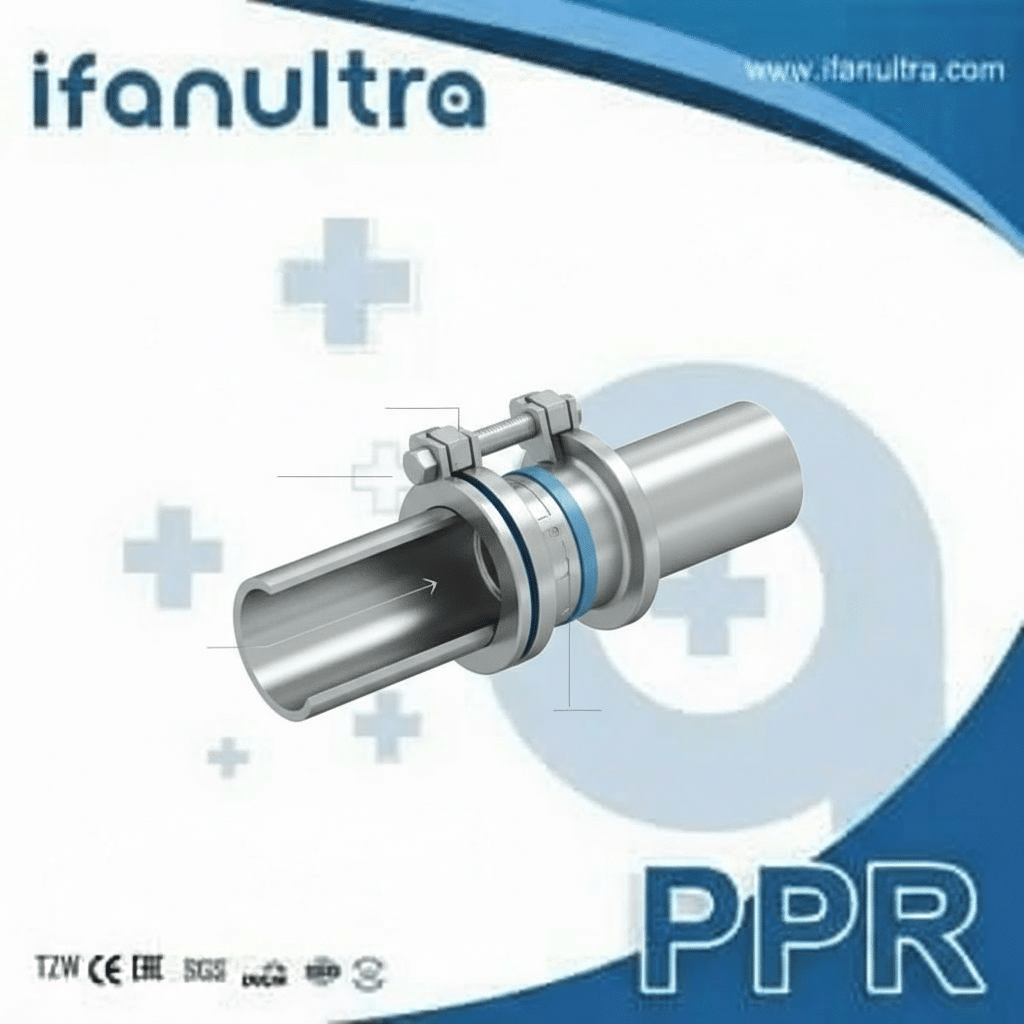
If NSF/ANSI 61 is about chemistry, 3-A is about physics and microbiology. Developed for the dairy industry, 3-A standards are now the benchmark for any beverage where hygiene, bacteria control, and cleanability are paramount (e.g., dairy, plant-based milks, infant formula, juices).
The core principles of 3-A design are:
- Sanitary Design: Surfaces must be smooth, non-porous, free of cracks and crevices, and self-draining to prevent bacteria from hiding and growing.
- Cleanability: Equipment must be easy to take apart (clean-out-of-place or CIP) and clean thoroughly to prevent biofilm.
- Material Safety: Materials must also be non-toxic and corrosion-resistant to cleaning chemicals.
A 3-A symbol on a fitting means it is designed to be taken apart and cleaned to a microbiological level, which is far beyond the scope of a standard plumbing fitting.
FDA CFR 21: The Legal Foundation in the USA
In the United States, the Food and Drug Administration (FDA) regulates all materials that contact food under the Code of Federal Regulations, Title 21 (CFR 21). Key sections include:
- CFR 21 Part 177: Specifically covers “Indirect Food Additives: Polymers,” listing conditions under which various plastics (like polypropylene in Part 177.1520) are approved for food contact.
- The GRAS Principle: Materials must be “Generally Recognized As Safe” for their intended use.
Crucially, FDA compliance is a legal requirement for sale in the US market, not a voluntary certification. A manufacturer must ensure their formulations use only approved ingredients and processes. Reputable suppliers, like IFAN, will provide a FDA Compliance Statement or a Letter of Guarantee for their products.
Comparing the Standards for Beverage Applications
Choosing the right standard depends on your beverage product.
| Standard / Regulation | Primary Focus | Best For Beverages Like… | Verification Method |
|---|---|---|---|
| NSF/ANSI 61 | Chemical leaching into drinking water. | Bottled water, basic beverage plant utility water lines. | Third-party certification mark and listing. |
| 3-A Sanitary Standards | Hygienic design, cleanability, microbial control. | Dairy, liquid eggs, infant formula, high-acidity juices, craft beer. | Third-party certification by a 3-A Authorized Conformity Assessment Body. |
| FDA CFR 21 | Legal safety of all food-contact materials in the USA. | All beverages sold in the United States. | Manufacturer’s Compliance Statement or Letter of Guarantee. |
For a juice or soda producer, you might need piping that meets all three: FDA compliance as a legal base, NSF/ANSI 61 for water safety, and 3-A design principles for cleanability in your flavor-mixing areas.
Why Do Material Taste and Odor Transmission Tests Matter for Beverage Lines?
A safety certificate cannot protect your brand’s flavor. This is where sensory testing becomes critical.
Material taste and odor transmission tests matter because plastic pipes can absorb and later release volatile compounds, or their own polymer chains can interact with sensitive beverage ingredients, altering the product’s delicate flavor profile. Even a safe pipe can ruin the taste of coffee, fruit juice, or bottled water, leading to costly product recalls and brand damage.
The Science of “Taint” and “Scalping”
Two main phenomena threaten beverage flavor:
- Taint (Off-Flavor Migration): This is when chemicals from the pipe material migrate into the beverage. Sources can include:
- Residual solvents from manufacturing.
- Additives like antioxidants or lubricants.
- Degradation products from the plastic itself.
These chemicals, even at parts-per-billion levels, can impart plastic, metallic, or “chemical” notes.
- Scalping (Flavor Absorption): This is the opposite problem. The plastic pipe can act like a sponge, absorbing desirable flavor and aroma compounds from the beverage. This is a major issue in products like fruit juices, where precious terpenes (which give orange its smell) can be absorbed by certain plastics, making the juice taste flat.
The Cost of Ignoring Sensory Quality
Imagine a new batch of expensive craft soda that tastes like the cleaning agent used on the line, or a premium mineral water that smells faintly of plastic. The costs are immense:
- Product Recall: Destroying entire production batches.
- Line Downtime: Stopping production to rip out and replace all piping.
- Brand Reputation Damage: Loss of consumer trust, which is hard to rebuild.
How to Specify Pipes for Flavor-Sensitive Applications
You cannot assume a certified pipe is flavor-neutral. You must specify and test for it.
- Ask for Specific Certifications: Some standards include taste and odor panels. For example, the KTW and W270 guidelines in Europe include rigorous sensory tests. Specify that your materials must comply with these.
- Demand Virgin Materials: Only 100% virgin, food-grade polymers should be used. Recycled materials are a major source of odor contamination.
- Conduct Your Own Trials: For critical applications, run a small-scale test. Circulate your actual beverage through a sample loop of the proposed piping for an extended period. Then, have a trained sensory panel compare it to a control sample.
- Choose Proven Materials: Some materials are known for excellent flavor and odor neutrality. Platinum-cured silicone tubing and high-quality, additive-free PP-R are industry favorites for this reason.
Protecting your product’s taste is a direct investment in protecting your brand.
How Can You Verify a Pipe or Fitting’s Compliance for Food Contact Applications?
Trust, but verify. Relying on a supplier’s word is a major business risk.
You verify compliance by demanding and cross-checking official documentation from the manufacturer. This includes a valid NSF/ANSI 61 certificate with a listing number you can check online, an FDA Compliance Statement or Letter of Guarantee, and for sanitary applications, a 3-A Certificate. Never accept a “Material Safety Data Sheet (MSDS)” as proof of food-grade status.
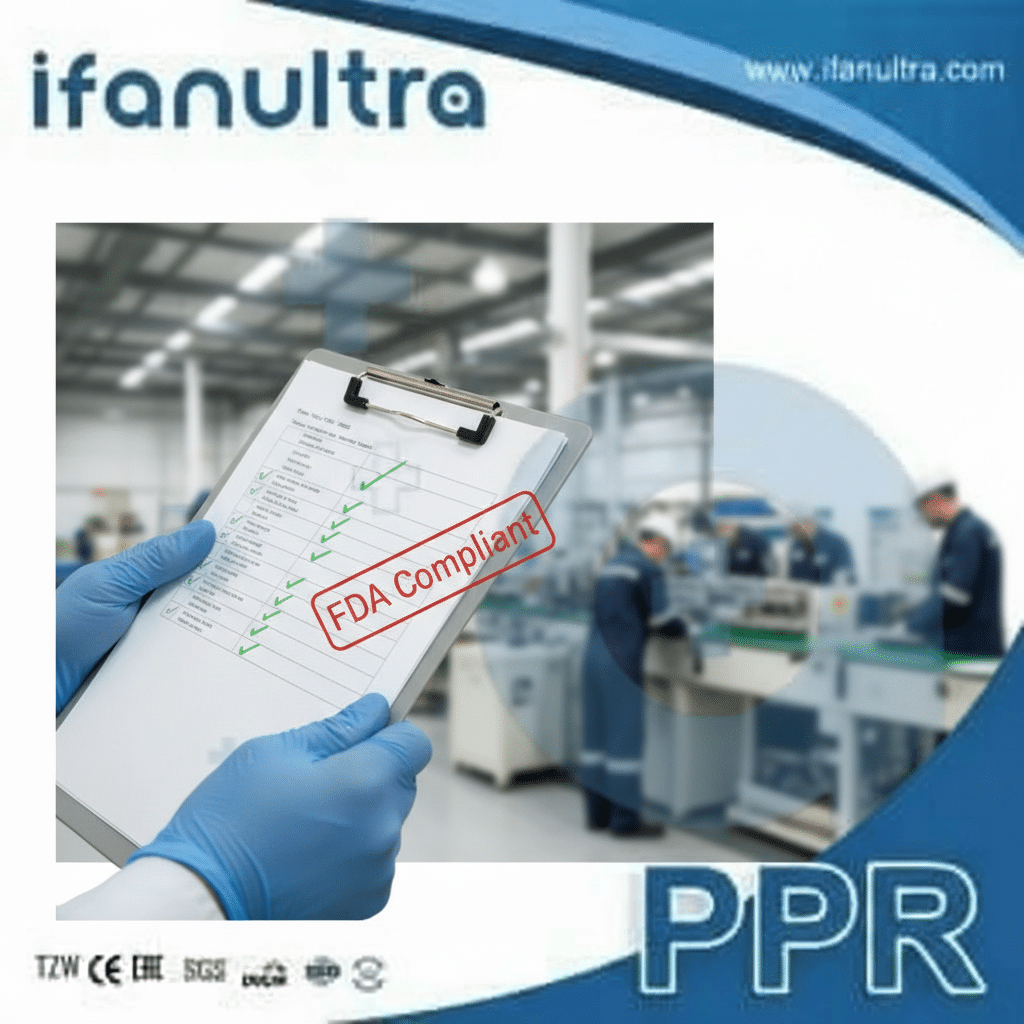
The Step-by-Step Verification Process
Don’t just check a box; follow a process. Here is a practical guide for procurement managers:
Step 1: Request Specific Documentation Upfront.
When getting a quote, explicitly ask for:
- NSF/ANSI 61 Certificate: Ask for the official certificate and the listing number.
- FDA Compliance Statement: A signed document from the manufacturer stating the product complies with relevant FDA regulations (e.g., CFR 21 Part 177.1520 for PP).
- 3-A Certificate (if applicable): The official certificate from a 3-A authorized body.
- Test Reports: For taste/odor or other specific properties like KTW.
Step 2: Actively Validate the Documents.
- For NSF: Go to the NSF website (www.nsf.org) and use their “Listing Search” tool. Enter the listing number from the certificate. Confirm the product name, model, and manufacturer match exactly what you are buying. Certifications are product-specific.
- For FDA: Review the Compliance Statement. A reputable manufacturer’s statement will cite the specific regulations. While you can’t “check” it online easily, a letter from a known, certified manufacturer like IFAN carries significant weight versus an unknown factory.
- For 3-A: Verify the certificate is from an authorized body and is current.
Step 3: Audit the Source.
For large projects, consider a factory audit or request evidence of the manufacturer’s own quality management system (e.g., ISO 9001). This shows they control their production process and consistently use the certified, virgin materials they claim.
The Critical Documents Checklist
Use this table as your verification checklist:
| Document | What It Proves | How to Verify | Red Flags |
|---|---|---|---|
| NSF/ANSI 61 Certificate | The specific product model is certified for safe water contact. | Search listing number on nsf.org. | Certificate is generic, lacks a listing number, or online details don’t match. |
| FDA Letter of Guarantee | The manufacturer legally attests to compliance with U.S. food-contact laws. | Check it is signed, on company letterhead, and cites specific CFR parts. | Vendor provides only an MSDS sheet (which is for safety, not compliance). |
| 3-A Certificate | The product meets hygienic design and material standards. | Check issuing body and certificate number. | Certificate is expired or appears copied/altered. |
| Material Certification | The raw resin used is food-grade. | Should trace back to a major chemical supplier (e.g., Borealis, SABIC). | Vague claims like “food-grade material” with no supporting batch traceability. |
Remember, if a supplier hesitates or cannot provide this documentation quickly, it is a major warning sign. Compliance is a non-negotiable cost of doing business in the beverage industry.
Conclusion
Food-grade piping standards are essential for safety and quality. For reliably certified pipes and fittings, choose IFAN’s food-grade PP-R and HDPE solutions, backed by full documentation.









 English
 Español
 Français
 Português do Brasil